Saturday, March 19, 2011

Jimmy's Kitchen

Beginning 87 years ago and finally coming back to Shanghai after 63 years is Jimmy's Kitchen, China's oldest Western restaurant with a selection of British and Continental classics. At the invitation through a connection, we were invited to attend a tasting at the restaurant before its soft opening. The entire meal was free and all we had to do was give feedback on the food and bring our own wine for the meal. How can you say no? The email indicated it was a fine dining establishment that lingered on timeless glamor. Jimmy's Kitchen is located on the first floor of the Old Jin Jiang Hotel.

Jimmy's Kitchen beef aging roomGoing up the stairs of the Jin Jiang Hotel, the restaurant shows little indication of its existence aside from strong gold lettering on dark wood paneling. The wine storage room is the first sight upon arrival, glowing blue. The restaurant has a timeless ambiance with its dark wood panels, leather booths, and elegant decor. There is a small bar to wait at with a view of the beef aging room. Peering through the thick glass, large slabs of meat sit on racks just waiting to be cut. The staff are warm, greeting you like old friends, taking your coat, showing you your seat, and being aware of every detail to make the experience more comfortable and accommodating.

The server informed us that anything on the menu was available for ordering except for the Wagyu beef and lobster. The oysters were also out of stock on this particular evening. No matter though. The menu is full of options to choose from, including an assortment of curries (none of which were tried on this particular visit), meat for the broiler, and Jimmy's classic dishes. The Baked Alaska on the dessert menu also seemed to be tempting although it was already assumed by this point there would be little stomach space for something sweet. The host reminded everyone to send feedback later instead of immediately after each course as not to interfere with the enjoyment of the Jimmy's Kitchen dining experience.

Jimmy's Lobster Bisque Jimmy's Traditional French Onion Soup
Jimmy's Caesar Salad Jimmy's Gourmet Salad

One of the soups the server and host recommended was the lobster bisque (68RMB) with garlic baguette croutons, "rouille" sauce, and Gruyere cheese. The roux used to thicken the bisque was well-browned, giving bisque a deep brown color. However, the actual bisque was not thick at all despite the splash of sherry. It still had a chalky taste from the flour. The best part of the bisque were the little chunks of lobster hidden at the bottom of the bowl. The traditional French onion soup (58RMB) topped with country bread and melted Gruyere cheese was really good. The crouton and bread pieces were abundant, soaking up almost all of the soup. It would have been better with a bit more broth so it actually looked like a soup. The broth had a rich, deep flavor and the cheese melted beautifully in the soup. The caesar salad (68RMB)of romaine lettuce, candied smoked bacon, anchovy dressing and shaved parmesan looked better than it tasted. The dressing lacked the nuttiness that anchovy is supposed to convey, perhaps from its minimal presence. Dressing usually makes the salad and brings together its parts, but not in this case despite the excellence of its individual parts. The gourmet salad (118RMB) consisted of mixed lettuce, duck leg and gizzard confit, smoked duck breast, duck "foie gras" mousse, roasted pine nuts, shaved black truffle with sherry and port wine vinaigrette. The salad featured more meat decadence than salad, making the dish a bit too salty although its presence alone was impressive. The individual meat parts were rich, fatty, and luscious so a salad leaf lightly coated in vinaigrette cut into the heaviness with a fresh bite.

Jimmy's Baked Escargots Jimmy's home-cured Norwegian salmon
Baked Seafood Vol au Vent Jimmy's Prawn Cocktail

The baked escargots (118RMB) with garlic and herb butter served on creamy mash were really tender and carried the strong flavors of the garlic and herb butter. The creamy mash they sat on was also really smooth and incredibly buttery. Some parts of the mash had great caramelization from cooking with the escargots creating a nice texture. The home-cured Norwegian salmon (128RMB) was thinly sliced with vodka, honey, pommery mustard, capers, fresh dill and Spanish onion accompanied with horseradish sour cream and toast. If you took the end of the salmon slice between the tines on the fork, you could roll up the entire piece including the onion to create a magnificent bite with all the flavors sitting on one fork. The horseradish sour cream and toast were almost unnecessary because the cured salmon was already good on its own. A thin layer of horseradish cream did give the salmon some heat despite it being a cold starter. The Baked Seafood "Vol Au Vent" (138RMB) with shrimps, scallops, mussels and clams in white wine and saffron cream and green asparagus were slightly sweet. The pieces of shrimp and mollusks were large and not overcooked. The white wine and saffron cream was light and the flavor not too strong, highlighting the seafood flavors. The classic poached prawn cocktail (128RMB) with iceberg shred, apple julienne, crisp cucumber, tomato Armagnac, and aioli. The prawn tails were quite large and the salad was crisp and fresh. We also ordered the pan-seared foie gras (148RMB), which had a crusty caramelization layer on the outside. The foie gras was lovely, smooth, and buttery easily melting in your mouth, though the piece showed hints of being in the pan a tad too long. If foie gras is cooking on a pan for a significant amount of time, it may shrink and melt away altogether.

Jimmy's Kitchen Tenderloin
Jimmy's New York Cut Strip Loin Jimmy's Kitchen broil sauces
Jimmy's Lemon Sole
Jimmy's Kitchen Chicken Kiev Jimmy's Kitchen Salmon

The highlights of the night were the selections from the broiler. The cut of meat is broiled to a desired temperature and came with a potato and vegetable side order of your choice as well as a selection of sauces. After the steaks came out, a server arrived with a tray of sauces and mustards and asked if diners wanted to try more from the selection. The tenderloin (338RMB) was very tender and juicy as was the New York cut strip loin (308RMB). The mashed potatoes were seasoned with white pepper, which I am not particularly a fan of. The sauteed mushrooms were really good and meaty. The green peppercorn sauce tasted more like a standard A1 steak sauce being slightly sweet and not so peppery. The truffle sauce and blue cheese cream were both thick and flavorful, complimenting the steak well. The fish dishes were not very impressive. Both the lemon sole and salmon were slightly overcooked and a bit dry. This could be due to the fish sitting under the heat lamps in order for all the main courses to be served at one time to the table. The flavors were there, but the fish texture was not. Jimmy's Classic Corn-Fed Chicken Kiev (148RMB) filled with garlic and herb butter served with mashed potato and seasoned vegetables was also well-received. The crunchy outside and moist meat absorbed the garlic and herb flavors nicely.

Baked Alaska
Jimmy's Famous Satellite Jimmy's Kitchen double espresso
Jimmy's Kitchen House Made Lemon Tart Jimmy's Kitchen Warm Chocolate Fondant
Passion fruit and coconut meringue parfait glace

Dessert was also another highlight of the night. After all the savory dishes, food comas were setting in and espressos were ordered. The espressos came out first and were brewed nicely with that creamy top that a good espresso should have. Jimmy's baked Alaska (suitable for 2)(108RMB) was huge and could have easily fed four people. Cake, vanilla and strawberry ice cream were encased in fluffy meringue dotted in fresh berries and was set aflame upon arrival to the table. The edges of the meringue browned and emitted a toasty aroma. Warm on the outside and cool on the inside, the baked Alaska was light and delicious. Jimmy's Famous Satellite (88RMB) is vanilla ice cream encased in Gran Marnier soaked sponge lightly battered and fried with vanilla anglaise and raspberry coulis. It looked like a giant fried dough ball and was also set aflame upon arrival. These desserts both had a contrast of hot and cold parts and were both light and satisfying. The house-made lemon tart (68RMB) with campari and blood orange granita was average. The lemon flavor had a candied taste and was reminiscent of the lemon meringue tarts served at university campuses in the United States, but with a firmer consistency. The blood orange granita that went with it tasted like medicine. The warm chocolate fondant (78RMB) with lava flowing center and pistachio ice cream was popular with the ladies at the table. It was nice to see a "molten chocolate" dessert paired with something other than a raspberry or berry-based sauce, sorbet, or ice cream. The pistachio ice cream was nutty and not too sweet. There was no indication where the pistachio ice cream was sourced from, but I am curious to know. The passion fruit and coconut meringue parfait glace (68RMB) with a rainbow tropical fruit ceviche was light and creamy. The fruit ceviche was probably the best part of this dish. The passion fruit flavor was quite subtle and could have had a stronger presence.

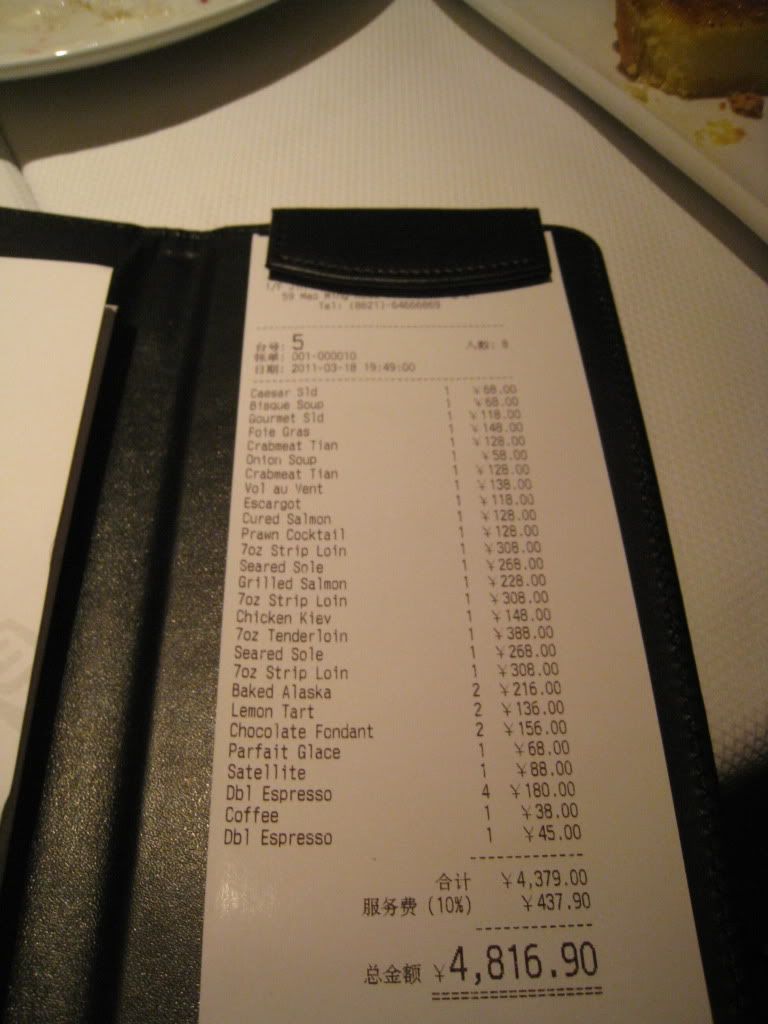
After the meal, everyone was very happy to be invited to this tasting while at the same time groaning from full bellies. The meal had some hits and misses, but this is to be expected as Jimmy's Kitchen is trying to perfect its menu before its soft and grand openings. The management was eager to hear the feedback both good and bad, which shows an understanding that there is always room for improvement. The dinner was a nice, long evening lasting from 19:30 to 23:30. As the dining room was completely full and service was running a bit slow, there was plenty of time for lots of wine and good conversation. The final bill without drinks was considerably more expensive than your average Western meal in Shanghai, but there are definitely some items worth checking out as well as an ambiance that made some diners feel like they landed in an episode of Mad Men. We are all looking forward to seeing how Jimmy's Kitchen progresses after its opening.

Jimmy's Kitchen. 1/F, Jin Jiang Hotel (Cathay Building), 59 Maoming Nan Lu (by Changle Lu), 茂名南路59号1楼 (近长乐路). Shanghai 200020, People's Republic of China.

Monday, March 14, 2011

Pi Day Pear Tart

Pi Day Pear Tart3.1415926535...March 14th has not been the same since the induction of Pi Day. Although it is a mathematical constant, Pi Day is also a great excuse to bake a pie (or tart). Given the limited availability of reasonably priced goods, the Pi Day pie / tart had to be made with limited ingredients to produce the finest result. Also, one of the potential Pi Day pie / tart eaters has an aversion to egg so none could be used in any part of the recipe. Hence, the Pi Day Pear Tart. It is simple, attractive, and incredibly tasty.

The pear-poaching and tart recipes came from David Lebovitz, both by a chance Google search. The tart dough recipe was quite impressive, allowing the baker to feel like a chemist as the hot, liquid mixture of butter, oil, sugar, salt, and water hissed and foamed at the addition of flour. The dough held together extremely well and produced a lovely, firm tart shell. After trying this method out, there is no need for cutting cold butter into flour anymore (this will eventually be mastered for that flaky pie crust). Even on the first try, the tart shell came out perfectly golden and without any cracks.

The resulting pear tart looked very pretty from its design of concentric pear slices and glistening surface. The pears used could have been more ripe and sweet as the ones available were relatively flavorless. Overall, the pear tart was a success being not too sweet and subtly elegant.

Poaching Pears (adapted)
Poached pears using David Lebovitz's recipe1 quart (1 liter) water
1 cup (200 g) sugar
4 large pears; peeled, cored, and quartered

In a large saucepan, heat the water and sugar until warm and the sugar is dissolved. Add any of the additions that you wish. Slide in the pears and cover saucepan partially. Keep the liquid at a very low boil and simmer the pears until cooked through, about 15 to 25 minutes, depending on the pears. Remove from heat and let the pears cool in their liquid.

(I did not have enough sugar. The original recipe called for about 256g sugar, but only about 200g was used.)

French Tart Dough (adapted)
French tart recipe from David Lebovitz90 g (3 ounces) unsalted butter, cut into pieces
1 tablespoon vegetable oil (I used canola)
3 tablespoons water
1 tablespoon sugar
1/8 teaspoon salt
150 g (5oz, or 1 slightly-rounded cup) flour

Preheat the oven to 410º F (210º C). In a medium-sized ovenproof bowl, such as a Pyrex bowl, combine the butter, oil, water, sugar, and salt. Place the bowl in the oven for about 15 minutes, until the butter is bubbling and starts to brown just around the edges. When done, remove the bowl from oven (and be careful, since the bowl will be extremely hot and the mixture might sputter a bit), dump in the flour and stir it in quickly, until it comes together and forms a ball which pulls away from the sides of the bowl. Transfer the dough to a 9-inch (23 cm) tart mold with a removable bottom and spread it a bit with a spatula. Once the dough is cool enough to handle, pat it into the shell with the heel of your and, and use your fingers to press it up the sides of the tart mold. Reserve a small piece of dough, about the size of a raspberry, for patching any cracks. Prick the dough all over with the tines of a fork about ten times, then bake the tart shell in the oven for 15 minutes, or until the dough is golden brown (10 minutes for a golden, partially cooked tart shell as the crust edges may get too brown in the second baking). Remove from the oven and if there are any sizable cracks, use the bits of reserved dough to fill in and patch them. Let the shell cool before filling.

Pear Tart
Pi Day Pear Tart pre-baked1 tart shell
4 large poached pears
Apricot jam or preserves

Preheat oven to 350ºF. Thinly slice pears and arrange whatever decorative design you like in the tart shell. Make sure that the layers of sliced pear overlap. Put in oven and bake for 50-60 minutes. The tart crust should turn a deep golden brown. Remove tart from oven. Bring to a boil apricot jam with two tablespoons of water in a saucepan to create a glaze. Spread glaze over the surface of the tart using a pastry brush.

Tuesday, March 8, 2011

B Real Banh Mi

B Real in ShanghaiStill in its soft-opening stage (so the sign says on the window) since November 2010, B Real is the Vietnamese sandwich sister shop to Pho Real across the street. Pho Real has already disappointed not once, but twice, but perhaps will still tempt a visit later in the year. In any case, B Real promises authentic Vietnamese banh mi sandwiches in a stylish and casual shop. Banh mi is commonly made with pickled sliced carrots, cucumber, cilantro, hot peppers, mayonnaise, pate, and meat all placed in a crusty, French-style baguette.

The B Real location is small, brightly lit, and clean from the light-colored wood and white paint. The walls are lined with mini-polaroid photos, Vietnamese coffee, and cans of condensed milk. There are bars and stools to eat at, though B Real also does take away.

There banh mi options are limited to grilled pork, grilled chicken, or combination meat. With the soft opening discount, the combination option is 36RMB (at a 20% discount), which is well-priced for a sandwich, especially in the French Concession. The person at the counter continually asked if I wanted a drink to go with the meal each time I changed my order. This happened about four times and the answer was always, "no." From the drink refrigerator, it looked like the options extended further than Coca-Cola to sodas made with lychee or guava.

B Real Combination Meat Banh Mi Bite into the combination meat banh mi at B Real

The sandwich came out accompanied by a salad with thinly sliced vegetables doused in a mayonnaise dressing. The pickled vegetables gave the salad a bite, but otherwise was not very interesting. Before consuming the banh mi, B Real offers three signature house-made sauces that may be added to the sandwich: B1) Vietnamese Lime Honey Mayonnaise, B2) Vietnamese Garlic Sriracha Mayo, and B3) Home-made Passion fruit Hoisin Sauce. Out of the three, B2 was selected. The sandwich was served with a garnishing of cilantro and chopped red chilis as well as heavily seasoned prawn crackers. From the looks of the sandwich, the "combination meat" was more grilled pork with a few slices of ham. There was also a thin layer of pate, mayonnaise, pickled vegetables, and lettuce. The baguette was warm, crusty, and not hard. It looked good, but was lacking balance in its flavors. The pork was marinated and brought a sweet touch to the sandwich, but was not balanced out by the saltiness of the pate (or lack thereof). The pickled vegetables brought a nice acidity and fresh crunch, though the sandwich could have used a little more. Even with the chilis, there could have been more heat. Basically, the banh mi was primarily meat and bread and could have done with a tad more vegetable.

Salad at B Real B Real Sauces

After the soft-opening period, B Real could be visited again as it works out the quirks in its sandwiches. Now, if only the 20% discount was available after its soft opening would B Real be a hot lunch spot.

B Real. 185 Fumin Lu (by Changle Lu), 富民路185号(近长乐路), Shanghai, People's Republic of China.

Monday, March 7, 2011

French Comfort at Franc

Inside Franck - Shanghai, ChinaAt the back of Ferguson Lane sits a lovely French bistro called Franck. The decor of the restaurant is decidedly French with a cozy, candle-lit feel. Franck is known in Shanghai to be one of the best if not the best restaurants for French food. Now, we must emphasize this is about French food and not service, which has received mixed reviews. In any case, an invitation to dine at Franck could not be refused.

Walking through the doors and past the red curtains, there is a little store seamlessly integrated with the decor selling cheese, meats, and other goods and a small waiting area on the left. The bistro extends further back revealing a bar and a wine room. The dining room has a quiet murmur of Chinese and expats alike taking time with their meals.

The server arrives with two menus written on blackboard: one for the starters and another for the mains. This gives the impression that the dishes are seasonal and based on availability, a sign of freshness.

Tomate Mozzarella di Bufala - Franck La Grande Charcuterie - Franck

From the selection of starters, the "tomate, mozzarella di bufala" (140RMB) and "la grande charcuterie" (290RMB) was chosen. The first was presented as a large ball of fresh mozzarella and a cluster of fresh, incredibly ripe tomatoes with pesto and balsamic reduction. It was quite rustic to cut into the juicy tomatoes and fresh mozzarella and sliding it in the sauce of choice. The portion of mozzarella was not equal to the tomatoes given, which lowered the mozzarella to tomato ratio per bite. The la grande charcuterie was quite generous with cured meats piled on the wooden board with a large slice of the house-made terrine de campagne, a heaping of caramelized onions, and a thick slice of foie gras which became even more buttery as it reached room temperature. About four types of thinly cured meats were counted. All this was accompanied by imported butter and warm, crusty bread. The board of meats was magnificently satisfying. With six people reaching for this board, most were already feeling full before the mains arrived.

As there were six eating, the table decided to order all but the most expensive entree, the côte de boeuf (Australia) at 640RMB.

Franck - poulet rôti
Franck - Lotte à américaine Franck - Pigeon Feuilleté

The best dish for most was the poulet rôti (180RMB) or roasted chicken, which covered mushrooms and rested on a cloud of potato pureé surrounded by jus with a few pods of blanched green beans and accompanied by fries. The chicken was moist and tender regardless of which angle it was cut from. The mushrooms and mashed potatoes were buttery and melted against your tongue. This dish is what many would think of when the idea of comforting French bistro cooking comes to mind. The fries were disappointing as they were nicely roasted on the outside, but a bit raw on the inside, revealing that these fries were cooked only once instead of twice. The lotte à américaine (200RMB) was a white fish cooked in a creamy orange sauce that tasted of French cognac and had a sweetness of saffron. The sauce was flavorful and carried the moist fish well. Another memorable dish was the pigeon feuilleté (220RMB), which was encased in a thin layer of puff pastry (or what looked like a few layers of phylo dough) and stuffed with foie gras and spinach (which was not evident after cutting the pigeon in half). The pigeon was indeed gamey and the foie gras carried the deep flavors even further. The thin layer of pastry covering the pigeon added a slightly crunchy texture to the tender meats. The dish was supposed to come with a pot of mushrooms as was seen earlier on another table, but never did arrive.

Franck - Tartare de boeuf Franck - Seliole grillée
Selle d'agneau rôtie

Out of all the plates that received the most hype, the tartare de boeuf (160RMB) did not live up to its reputation. The beef did not melt against your tongue as easily and was a bit chewy. Another disappointment was the seliole grillée (220RMB) or grilled monkfish (the English term for "seliole" was not clear). The flesh of the fish tasted, well, fishy. The ratatouille the monkfish was served with was not as thinly sliced as one would like, but it did still have a nice rustic texture to it. The selle d'agneau rôtie (220RMB) or roasted lamb was and accompanied by lentils. The lamb was cooked rare and was moist all the way through, but the lentils added nothing more than texture to the star of its dish.

Franck - Nougat GlaceFranck - crème brûlée

For dessert, everyone shared the nougat glacé and crème brûlée. The nougat ice cream had large bits of hard nougat and almonds with in the ice cream and drizzled with a fresh berry sauce. The crème brûlée was served in an extremely shallow ramekin. The custard was more milky than custard in taste and was a bit runny. Though, no one can deny they love a crispy sugar topping.

The dinner at Franck left you cozy and comfortable with service that was not intrusive, allowing you to simply enjoy the experience of eating good food. The French in Shanghai are right to call Franck among the best to represent their nation's gastronomic fare.

Franck. Ferguson Lane, 376 Wukang Lu (by Hunan Lu) 武康路376号 (近湖南路), Shanghai, People's Republic of China. www.Franck.com.cn

Friday, March 4, 2011

Shanghai's Central Park Cafe

Central Park Cafe in ShanghaiCentral Park Cafe is a piece of tranquility in busy Shanghai. Frenzied Palate stumbled upon one evening at the intersection of Shaanxi Nan Lu and Shaoxing Lu in Shanghai. The windows set into the brick building were warmly lit on the inside for the first two floors and there seemed to be a garden terrace on top. During summer, the leaves of the trees lining the street seem to protect the rooftop from the noise of the busy street below. Inside, you could see people reading and sipping on coffee. It looked very cozy and homely.

During a daytime visit, the entrance of the cafe gave an impression you were entering someone's home. There is a small staircase to going down to the ground floor, which has cute tables and a few wine racks. Taking a peek at the wine menu, the imported bottles are cheaply priced starting at 88RMB. If you decide to go up to the top of the cafe, you can take the winding staircase to the left of the entrance to the third floor, which opens up to the rooftop. Light-colored wicker garden furniture with thick cushions, an array of meticulously kept plants (with a visible shed) await on this green oasis. All the leaves from the trees protect you from direct sunlight and completely insulate the sound of traffic. At night with candles lit, the scene is magical and romantic.

Shanghai's Central Park Cafe on ground floorThe coffee at Central Park Cafe is pretty good (coffee bean origins are not yet known). It is not too bitter or burnt. After the order is placed, the drinks come out quickly. The serving is decently portioned as well.

One thing to be wary about is the food service. The kitchen is not prepared to handle a large volume of customers as everything is made to order. This could mean that you could wait forty-five minutes for a simple and forgettable toasted ham and cheese sandwich. The cream of mushroom soup was absolutely horrendous, barely resembling what it actually is supposed to be. The soup looked like water with a dash of cream added to it with diced carrots, cucumber, and mushroom. The proprietor said she did not know what cream of mushroom soup should look like and was sorry that the soup was not up to expectations. It is almost shameful to offer an item on the menu at a cafe that already seemed to have a lot of thought put into every detail. The least that she could have done was have a proper recipe looked up.

Central Park Cafe is a great place for coffee and drinks, especially on the small rooftop terrace, but the food should be avoided.

Central Park Cafe. 542 Shaanxi Nan Lu (by Shaoxing Lu), 陕西南路542号, Shanghai, People's Republic of China.

Wednesday, March 2, 2011

Eggs In a Basket

3 Eggs in a basketAmong the majority of expats in Shanghai, brunches are usually spent outside the home as it is more convenient to access a wider range of Western brunch dishes. A big group brunch at a home on a weekend and on a budget means something has to be cooked up with a few cheap ingredients in ample time. The first idea that came to mind was eggs in a basket. Pancakes or French toast would have been a nice thought, but maple syrup is overpriced and sold primarily in expat-oriented stores. Using an oven was out of the picture considering it is a rarity in China. In Shanghai, eggs, butter, and bread are readily and cheaply available, so something involving those three ingredients meant eggs in a basket would be the brunch contribution.

After toasting the bread in butter in a pan, the egg is cracked into the hole and cooked until the whites are no longer raw, but the yolk is still runny. This takes about 7-10 minutes per serving. It seemed even longer as the egg cooked from the bottom up and you have to be careful about not turning up the heat too high, which would burn the bottom of the bread and egg. Most things do tend to taste better heavily browned and not charred. With one pan, one burner, many people cooking, and more people, it was only possible to make one egg in a basket at a time. Something had to be done to speed up the process. The idea to cover the pan while the egg was cooking came to mind and tested. After a few minutes, the whites were cooked all the way through and the egg was still runny. Success! This process only took half of the original cooking time. Just be mindful to remove the egg in a basket immediately after the whites are done because the convection heat created by using the lid will cause the yolks to solidify as well.

The resulting egg in a basket is buttery and nicely browned. A simple, delicious start to the day!

Eggs In A Basket (serves 2)
2 bread slices
2 eggs
4-6 Tablespoons butter
Salt and black pepper to taste

Using a biscuit cutter or other sharp, round object, cut a hole in the center of the bread slice about 1 1/2 to 2 inches in diameter. On the stove, heat the pan to medium. Put 1 to 1 1/2 tablespoons of butter in the pan to melt. Swirl butter to cover the bottom of the pan and immediately put the bread slice and its hole until golden brown, about a minute and a half. Remove the half-toasted bread and melt another tablespoon to tablespoon and a half of butter in the pan. Put the uncooked side of the bread down to lightly brown. Immediately turn the heat down to low and crack the egg in the "basket" or hole. Cover the pan and wait about 3-4 minutes until the egg whites have cooked all the way through. If you prefer your yolks more cooked, leave on the burner for a bit longer. By this point, the bottom of the toast and egg is also nicely browned and can be removed from the pan. Sprinkle coarse salt and freshly-ground black pepper over the egg. Repeat with second egg and slice.

Eggs in a basket hole cutting Pan toasting bread for eggs in a basket
Cooking eggs in a basket with a cover Perfectly toasted bottom for eggs in a basket

Tuesday, March 1, 2011

Chicha 7-Course Set Meal

There is yet another Eduardo Vargas venture in Shanghai. With Chicha, located in Sinan Mansions, Vargas is again getting back to his Peruvian roots. The first floor is a lounge and the second floor is the restaurant, both dimly lit and incredibly cozy. Word has it that Vargas is spending six nights of the week in the kitchen, which should better guarantee the quality of food coming out on the floor. The theme here is Latin food with Asian influences. Along with the regular menu available, diners had the option of a 7-course meal (200RMB) or for 80RMB more, the 12-course meal. Recent reviews claim that the size of the portions are generous compared to most other tastings, so the Nazca 7-course option was more practical.

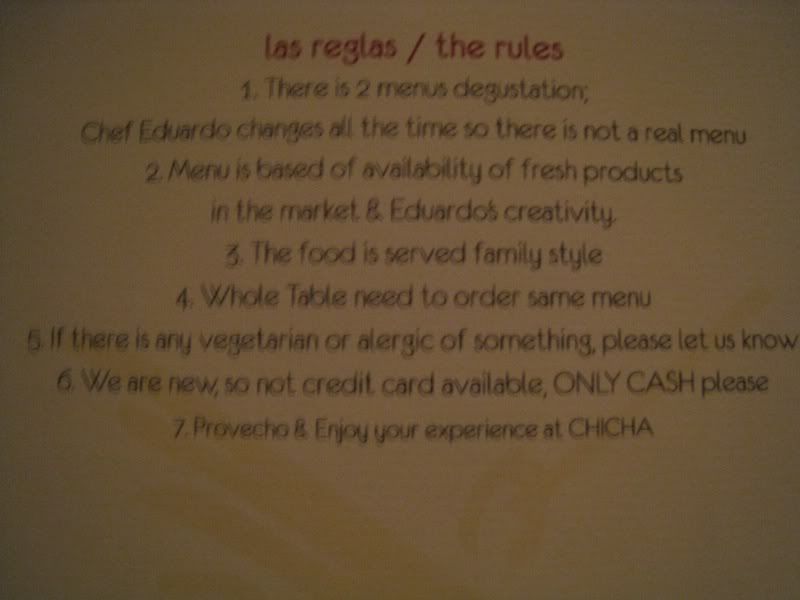
Before arrival, the group of twelve Frenzied Palate went with was advised that there are two sittings for those interested in the set menus: 18:30 and 20:30. The staff was really polite and helpful, welcoming and showing us to our table on the second floor. The menu presented had individual dishes listed as well as an explanation of the prix fixe meals. It is not a selection of just dishes from the menu, but an opportunity for Vargas to extend his creativity. The set menu also came with certain rules in poorly edited English printed on the menu so diners cannot deny that they had been warned in advance. Here are the rules (and a poor quality photo of the menu to prove it):
"Las Reglas / The Rules
1. There is 2 menus digestion; Chef Eduardo changes all the time so there is not a real menu
2. Menu is based on availability of fresh products in the market & Eduardo's creativity
3. The food is served family style
4. Whole Table need to order same menu
5. If there is any vegetarian or alergic of something, please let us know
6. We are new, so no credit card available, ONLY CASH please
7. Provecho & Enjoy your experience at CHICHA"

One of the diners asked the host if it was even remotely possible for the party to split into two and ten so the 12-course menu could be ordered. It was declared that this would not be possible as the whole table needed to select either the 7 or 12-course menu. However, the group was warned of the rules in writing. This may be an indication that an amendment can be made to the mantra of "the customer is always right."

Chicha Ceviche Chifero - Fresh Seabass with a twist of ceviche sauce and ginger wonton and pickle vegetable The first dish that came out was the Ceviche Chifero or fresh sea bass with a "twist" of ceviche sauce accompanied by ginger wonton shavings and pickled vegetables. The portion of ceviche was huge and the large cuts of fish were plump and fresh. This was an excellent start to the meal. You could even qualify this as the best dish from the meal. The rest of the dinner kind of went downhill from there.

The second course was a potato causa with crab meat or cold potato with crab meat with a Peruvian red chili sauce and sort of tartar sauce. It had an oddly sweet tinge to it, but neither of us could exactly pinpoint the flavor. The crab was undetectable, probably from all that tartar sauce. Still, there was something interesting about the potato starter - maybe the texture - that made it enjoyable. The third starter was the mushroom and cream cheese wonton with tamarind sauce. The wonton was fried and had a nice crunch and thickness. The small pocket of mushroom filling had a deep flavor and meaty texture that matched well against the texture of the wonton, but the cream cheese was also undetectable. The tamarind sauce gave the meatiness of the mushroom filling a light, acidic taste. The fourth starter was a seafood "jalea" or breaded and fried squid, fish, and shrimp with three different dipping sauces: huancaina (Peruvian yellow chili), tartar, and rocoto. The huancaina sauce had the strongest flavor and was a little reminiscent of a garlic aioli. The rocoto sauce was frothy and light, with a slight sweetness. The cuts of squid in this starter included both the shaft and the tentacles, which was nice to see as few Western restaurants in Shanghai prefer to serve the tentacles. The final starter was the lamb antichucho or lamb skewer with quinoa tabouli and mint yogurt sauce. This was probably the most disappointing dish during the entire meal. The quinoa tabouli got lost in the mash of mint yogurt and some other sweet barbecue-like sauce that was drizzled on the lamb. The lamb itself was three small cubes grilled on a toothpick, but would not adhere to the sauces. It was difficult to get the lamb, sauces, and quinoa tabouli together all in the same bite.

Potato Causa with Crab meat and Peruvian red chili sauce Chicha mushroom and cheese wonton with tamarind sauce
Seafood jalea with 3 Peruvian dip huancaina Peruvian yellow chili, tartar, and rocoto sauce Chicha Lamb Antichucho - lamb skewer, quinoa tabouli, mint yogurt sauce

The main course was the Lomo Saltado or stir-fried beef tenderloin "saltado style" with potato and fried rice. The texture of the beef tenderloin felt more medium well than rare to medium rare. The sauce that everything was cooked in took over the flavor of the blanched vegetables and meat. It went well atop the fried rice though. The dessert consisted of three mini tarts: a lucuma tart (Peruvian jungle fruit) covered in chocolate, a lime tart with a meringue, and a bite of Peruvian flan. The chocolate covered tart had a really thin shell, which for some reason made people think of the scene in the original film version of "Willy Wonka and the Chocolate Factory" where Gene Wilder bit into a flower cup. The chocolate on top was firm and the fruit had a nice tart bite to it. The lime tart must have been an alternative take on a lemon meringue. The meringue was dotted atop the tart and roasted like browned marshmallows. The flan was probably the best bite of the bunch with a creamy caramel sauce and firm custard texture.

Lomo Saltado or stir-fried beef tenderloin saltado style with potato and fried rice Lucuma tart covered with chocolate, lime tart, Peruvian flan at Chicha

The dinner was nice and the service was great, but none of the dishes were particularly memorable aside from the ceviche. Most of the dishes were tasty, but did not leave a great impression on most of the diners in this group. A fellow diner mentioned that the rave reviews on CityWeekend and SmartShanghai may have to do with what is considered relatively good to Shanghai - rather than international - standards. The collective high expectations may contributed to the disappointment that all the dishes did not match the hype. Vargas is said to change the menu daily, so it is reasonable to say one cannot expect an outstanding meal every time from this chef that has made a great name for himself in Shanghai. Perhaps the set menu would be an enjoyable dining experience for an evening, but at the moment, it is something that would only be done once, at least for this season.

Chicha. 33 Sinan Mansions 2/F, 47 Fuxing Lu (by Sinan Lu) 思南路47弄 (近复兴西路), Shanghai, People's Republic of China.

Friday, February 25, 2011

Morton's The Steakhouse Happy Hour

Morton's The Steakhouse Filet Mignon Sandwiches with mustard mayonnaise Morton's The Steakhouse Filet Mignon Sandwich side view

Morton's The Steakhouse is synonymous with American fine dining and prime beef. As a somewhat recent import to Shanghai, it still causes a stir with its quality steaks and high prices, deterring budget-minded diners. However, Morton's has a great happy hour which is not well-advertised on the lifestyle websites in Shanghai (so far). Arriving to the restaurant bar is painless as it is not packed, even during the second half of the happy hour. On the fourth floor of the IFC Mall, patrons are immediately greeted by hospitable staff and a sectioned bar area awaits. The happy hour "mortini" night runs from 17:00-19:00 Mondays to Fridays and includes complimentary filet mignon sandwiches with mustard mayonnaise. There are five martinis to choose from: gin mortini, cosmopolitan, vodka mortini, appletini, and chocolate mortini for just 38RMB each. For the classic martinis, there is a choice to have olives with or without blue cheese. The pours are not skimpy and the martinis are well-mixed.

Morton's claims the prime beef served is never frozen, always served fresh after being aged in a cyro-vacuumed bag. The idea of the care put into their beef will make any carnivore's tongue tingle. After the drink orders were placed, plates of mini filet mignon sandwiches arrive. The bar menu indicates that the filet mignon sandwiches are 120RMB per order should you desire to order it outside of happy hour. The complimentary filet mignon sandwiches make this happy hour an excellent deal because it is like eating a plate of money made with filet mignon. There are four mini sandwiches on a plate with a thin slice of filet mignon between a buttery, toasted, warm bun. The mustard mayonnaise is thinly spread in order to present the filet mignon as the star of this sandwich. The filet mignon is served rare, as a fine cut of beef should be. It was so rare that it even bled onto the bread (pictured). However, the filet mignon was inconsistent as some slices were less cooked than others so your jaw was locked around a chewy piece of raw beef while other slices melted in your mouth against the bun.

Happy hour at Morton's The Steakhouse has to be one of the better happy hour deals in Shanghai. Not only do you get a martini at a great price, but also complimentary filet mignon sandwiches to keep you from drinking on an empty stomach. Fans of the Morton's happy hour only have so long to wait until the rest of Shanghai finds out about their precious happy hour gem.

Morton's The Steakhouse Filet Mignon Sandwich is raw Morton's The Steakhouse gin martini with blue cheese olives

Morton's The Steakhouse. Shop 15-16, 4/F, Shanghai IFC Mall, 8 Century Avenue, Pudong New Area, Shanghai 200120, People's Republic of China. Tel: +86 21 6075 8888. www.mortons.com

Enoterra's Croque Monsieur

Enoterra's Croque MonsieurEnoterra (formerly Enoteca) updated its food menu and removed the duck sandwich in favor of a croque monsieur (about 68RMB if memory serves as the menu is not online), a French hot ham and emmental or gruyère cheese sandwich. After a couple of bottles of wine, why not try it? The sandwich is huge and a great value for what it is worth, especially considering the relative size of sandwiches in Shanghai. The kitchen will even cut up the croque monsieur to make its sharing easier in a group. The sandwich has an even balance of cheese, ham, and bread. The cheese was perfectly melted and slightly toasted on top, stretching into wires when pieces of the sandwich were removed from its whole. The bread was not soggy from the butter and cheese. The ham completed the sandwich with its slight sweetness. The duck sandwich is still missed, but Enoterra's decadent croque monsieur is not a bad substitute.

Enoterra. 53-57 Anfu Lu (near Wulumuqi Lu) 安福路53-57号, 近乌鲁木齐路, Shanghai, People's Republic of China.