A hard overnight coach from Saigon to Nha Trang combined with checking into an overpriced hotel room during the high season of Tet called for a breakfast splurge. After walking around the coastal streets looking for at least a street vendor for breakfast (none of which were in sight because it was the night before Tet began), I stumbled upon Le Petit Bistro. Food is cheap in Vietnam, even non-Vietnamese food. Why not?
Out of the bare menu, the eggs benedict looked like the most bang for the dong considering an omelette and baguette were not worth that much or a sad looking pastry with preserves. To accompany the meal, fresh mango juice was ordered.
Eggs benedict were fair. Baguette cut in half with a thick slice of ham and a helping of hollandaise sauce on top. Orange juice and more hollandaise sauce were served on the side in shot glasses. The hollandaise sauce was slightly citrusy. The best part was the mango juice, which was literally mangoes put through a juicer with bits of mango fibers in the juice. If only it was also made cold before serving.
Circumstances given, the breakfast was decent, especially for Western fare. Bear the heat and keep walking to taste Vietnam.
Le Petit Bistro. #26D D Tran Quang Khai, Nha Trang, Vietnam
Thursday, February 18, 2010

Pho In Vietnam
Let us breathe out a sigh of relief as we are once again reminded what real pho tastes like. It is heavenly. Light, but flavorful. Fresh. Comforting. And cheap. Real cheap. That 48RMB pho is a fortune compared to the 20,000VND paid to a street vendor in Saigon.
Oh and that pot of stock was full of lovely bones. And the bits of meat and marrow that that came off the bones are floating delicately in the broth. Whilst sitting on one of those little plastic squat chairs, the woman was scooping out the bones from her giant stock pot. There were a lot of bones. Ladle after ladle came out all these bones. Which sort of bones these are is a mystery.
The rice sticks are already softened and set aside in a bowl, which portions are pulled from and put in a sieve and dipped into the broth. The same treatment is given to the meat. Chopped spring onions and parsley are sprinkled on top. With the bowl of pho, you are given a giant basket of basil, lemon grass, bean sprouts, a saucer of chilis, and a saucer of quartered limes (this is not as available in Hanoi as in Saigon). In Hanoi, sometimes sticks of fried dough are offered to accompany the pho. The differences between pho in the north and the south are yet to be further distinguished.
Definitely beats anything in Shanghai. Ruining the memory of amazing pho by continuing to attempt to find a version of it in Shanghai should be avoided. Just like all the bad Mexican food.
Oh and that pot of stock was full of lovely bones. And the bits of meat and marrow that that came off the bones are floating delicately in the broth. Whilst sitting on one of those little plastic squat chairs, the woman was scooping out the bones from her giant stock pot. There were a lot of bones. Ladle after ladle came out all these bones. Which sort of bones these are is a mystery.
The rice sticks are already softened and set aside in a bowl, which portions are pulled from and put in a sieve and dipped into the broth. The same treatment is given to the meat. Chopped spring onions and parsley are sprinkled on top. With the bowl of pho, you are given a giant basket of basil, lemon grass, bean sprouts, a saucer of chilis, and a saucer of quartered limes (this is not as available in Hanoi as in Saigon). In Hanoi, sometimes sticks of fried dough are offered to accompany the pho. The differences between pho in the north and the south are yet to be further distinguished.
Definitely beats anything in Shanghai. Ruining the memory of amazing pho by continuing to attempt to find a version of it in Shanghai should be avoided. Just like all the bad Mexican food.
Sunday, February 7, 2010
Legend Taste
As a fan of spicy Yunnan dishes and looking for something slightly cheaper than Lost Heaven, Legend Taste seemed to fit the bill. The numerous reviews on the Shanghai websites built the hype. The actual restaurant is small and cozy, but there is a random large flat-screen television hovering in the back. It looks suitable for either impromptu KTV or sports viewing.
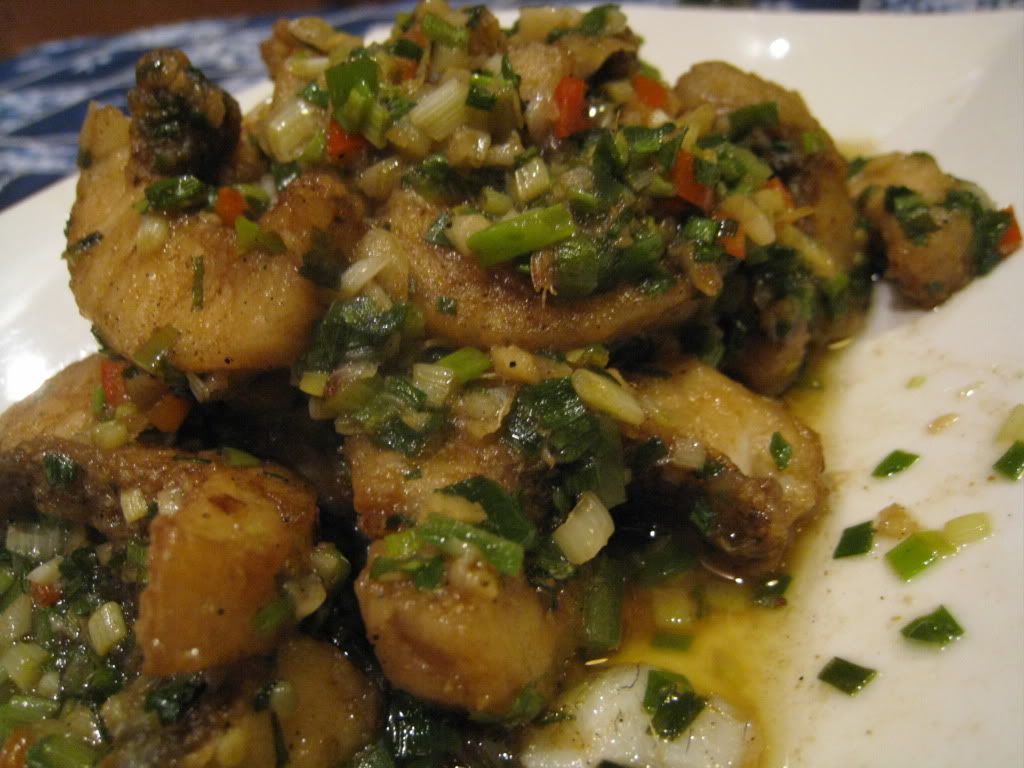
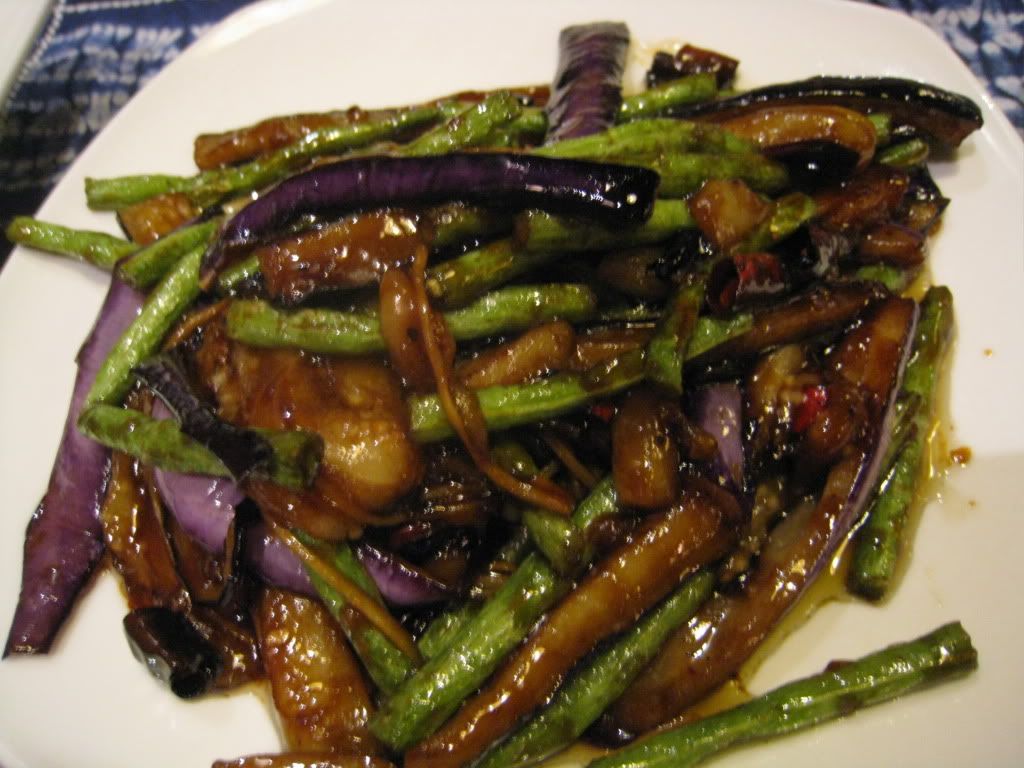
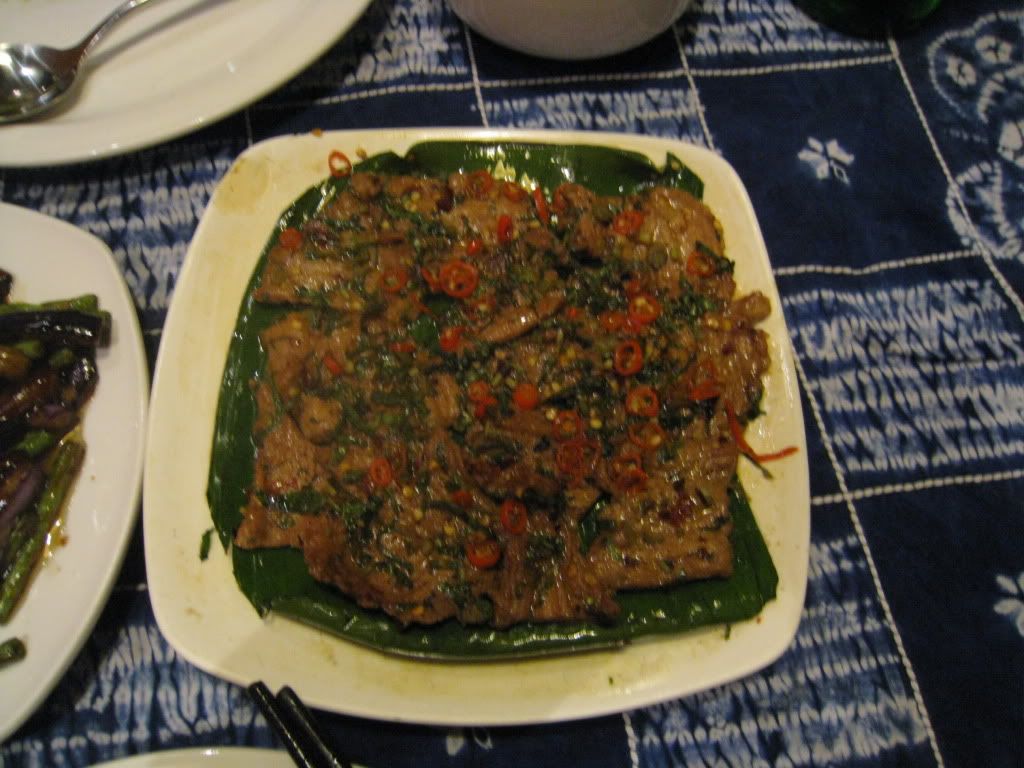
I am not sure if it what was ordered, but the dishes were not so exciting. It was a mixed bag of tricks. The morning glory was removed from the menu. Sadness! The fried egg with vegetables was very salty. The Haini fish was just fried lumps, but the actual flesh was light and not too dry. Aubergines were a good choice, but still very oily. The beef was good and spicy. The beer that accompanied the meal was probably equally exciting and cheap at 15-20RMB.
I feel let down. Another visit to this place is necessary to explore more dishes and the delight from the reviews that tempted the visit in the first place.
Legend Taste. 1025 Kanding Lu. Shanghai, China
I am not sure if it what was ordered, but the dishes were not so exciting. It was a mixed bag of tricks. The morning glory was removed from the menu. Sadness! The fried egg with vegetables was very salty. The Haini fish was just fried lumps, but the actual flesh was light and not too dry. Aubergines were a good choice, but still very oily. The beef was good and spicy. The beer that accompanied the meal was probably equally exciting and cheap at 15-20RMB.
I feel let down. Another visit to this place is necessary to explore more dishes and the delight from the reviews that tempted the visit in the first place.
Legend Taste. 1025 Kanding Lu. Shanghai, China
Pier 39
It is interesting in Shanghai that a city-themed restaurant should be based upon San Francisco, California. Pier 39 aims to bring what is San Francisco, including the clam chowder in a bread bowl. Other items on the menu are sandwiches, salads, and pastas. The salads and most of the sandwiches included avocado, a staple part of Californian fare. They also serve smoothies which are large and match its price. Come to think of it, the portions at this restaurant are large and you get more for what you pay for.
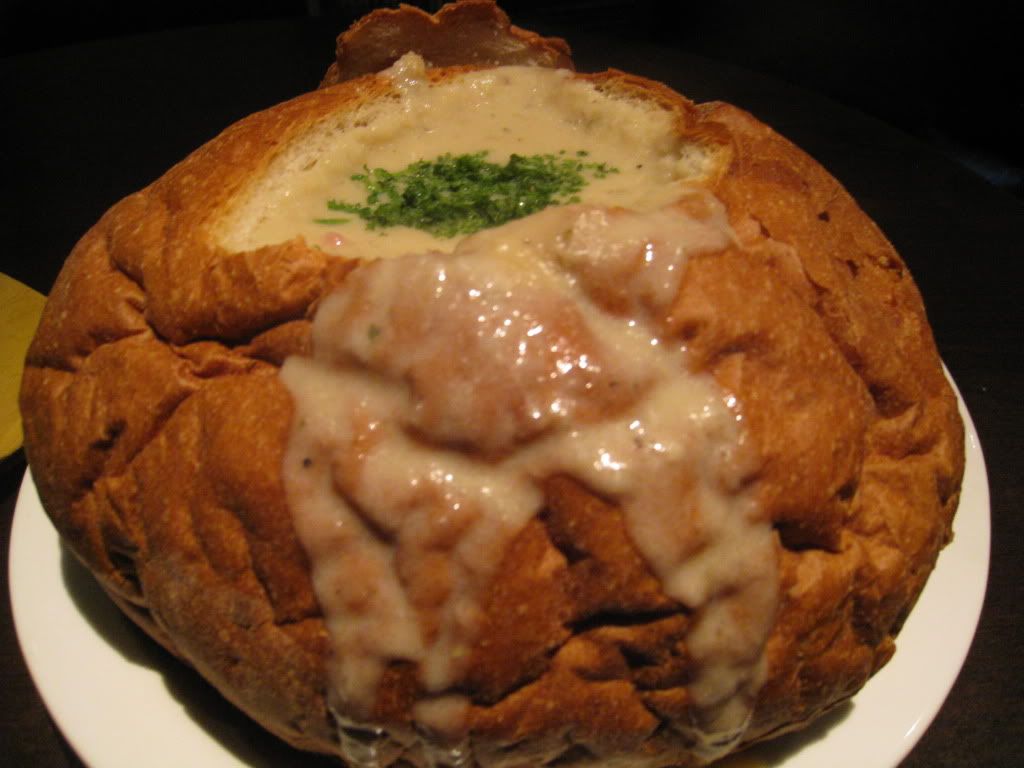
This clam chowder is barely passable. The only redeeming quality of the soup is that there are chunks of clam and it is still piping hot to the last drop. The soup is thickened with pureed potato and tastes like it instead of a creamy base thickened with roux. The other disappointment is the bread bowl, which is a French round instead of sourdough. Do they even sell sourdough in Shanghai? Perhaps someone should bring some bread yeasts over and the old wooden barrel in which to cure the dough to China so Pier 39 could at least get the crusty sourdough part so characteristic of "clam chowder in a bread bowl." The sandwiches on ciabatta bread look more exciting than how this chowder tasted.
The decor is charming and seats are comfortable, making it better for a cup o' Joe instead of San Franciscan comfort food.
Pier 39. 172 Jinxian Lu (near Maoming Lu). 进贤路172号 (茂名路) Shanghai, China
This clam chowder is barely passable. The only redeeming quality of the soup is that there are chunks of clam and it is still piping hot to the last drop. The soup is thickened with pureed potato and tastes like it instead of a creamy base thickened with roux. The other disappointment is the bread bowl, which is a French round instead of sourdough. Do they even sell sourdough in Shanghai? Perhaps someone should bring some bread yeasts over and the old wooden barrel in which to cure the dough to China so Pier 39 could at least get the crusty sourdough part so characteristic of "clam chowder in a bread bowl." The sandwiches on ciabatta bread look more exciting than how this chowder tasted.
The decor is charming and seats are comfortable, making it better for a cup o' Joe instead of San Franciscan comfort food.
Pier 39. 172 Jinxian Lu (near Maoming Lu). 进贤路172号 (茂名路) Shanghai, China
Kabb Revisited
Newly appointed head chef, Greg Gilvison, originally from the San Francisco Bay area in the United States, has taken on the challenge of the badly needed reform and refinement of Kabb's menu. The rather poor reviews of the quality and inconsistency of the food at Kabb means that Gilvison has a tough road ahead. He is up for the challenge. Already, he is revamping the seasonal menus before fleshing out the standard menu.
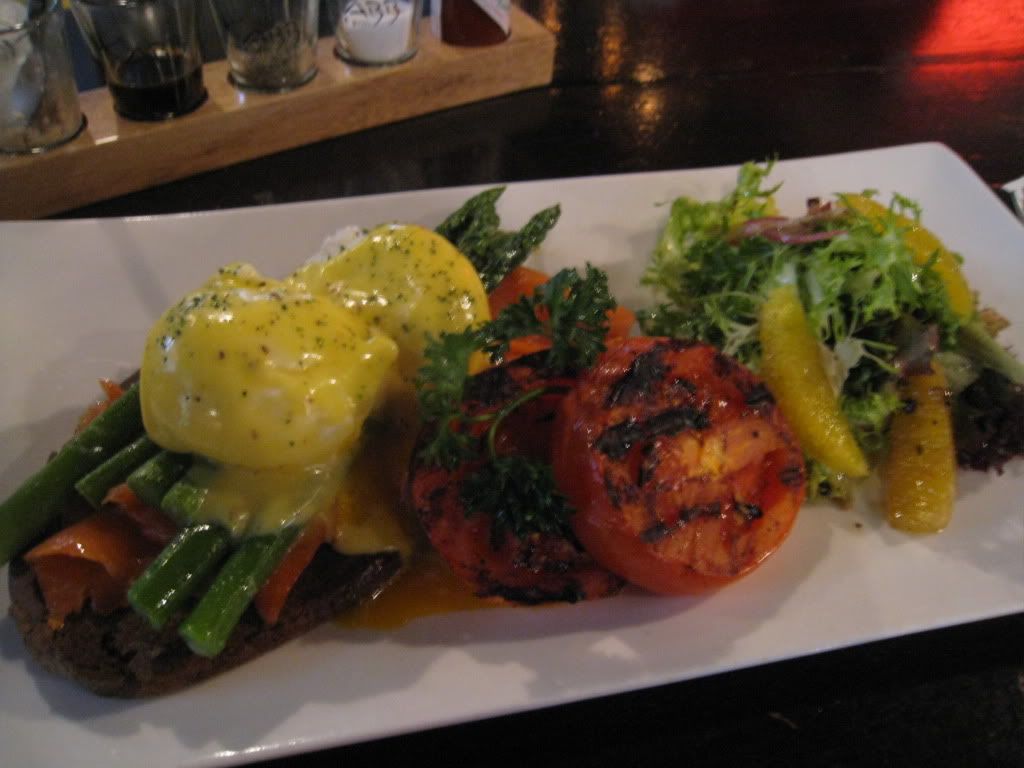
Saturday brunch time is still busy until about 15:00 packed with patrons for the weekend brunch or for the drinks. I asked Gilvison to make me whatever he wanted and let him have free range on my palate. For my brunch, he served eggs benedict on smoked salmon over dark bread, which was accompanied by a citrus salad and grilled tomatoes. The eggs were perfectly poached and the hollandaise sauce was not extremely acidic. The grilled tomatoes had nice grill marks and caramelization. This was quite promising compared to the disaster that was my first visit to Kabb.
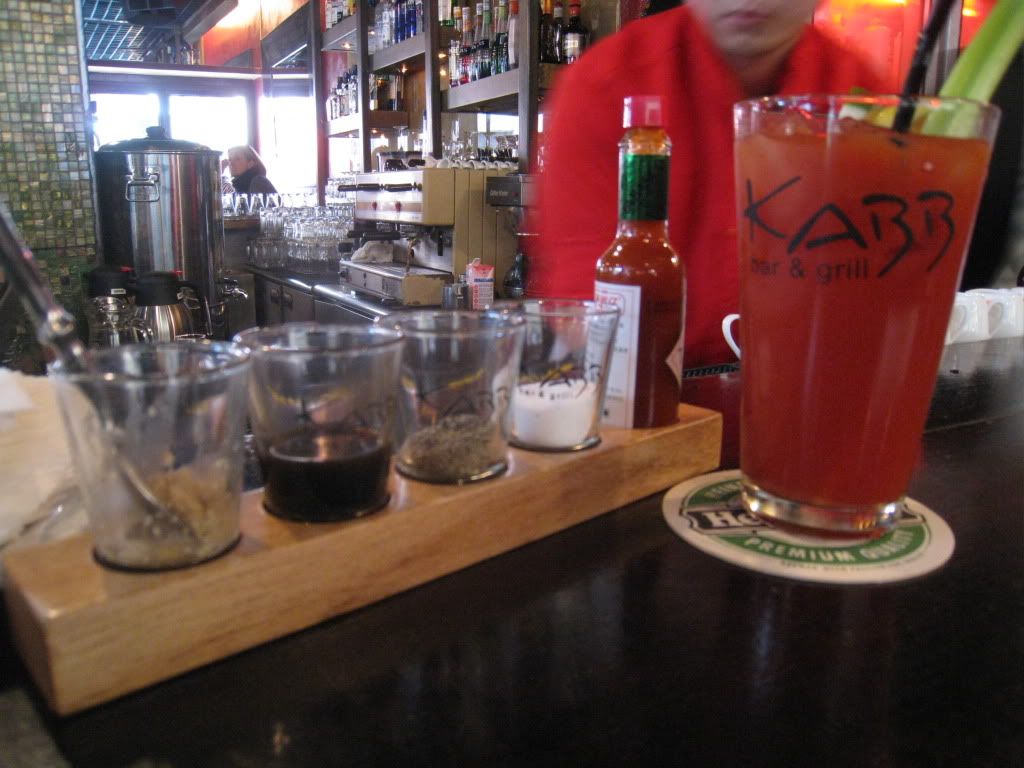
Another highlight of the Kabb menu is the DIY Bloody Mary. The pint glass receives a generous pour of Skyy vodka and a row of horseradish, Worcestershire sauce, pepper, and Tabasco sauce. Each bloody mary can be tailor-made by you to fit your personal taste. Now you cannot blame the bartender if the bloody mary is not up to your standards.
I am feeling quite optimistic for the new head chef. The character that Gilvison carries is open and bright, looking to keep negativity out of the kitchen. Discipline and firmness - yes. Negativity - no. The fare at Kabb is already looking up.
Kabb. Xintiandi North Block, Lane 181 Taicang Lu (near Madang Lu). 太仓路181号,新天地北里, 近马当路 Shanghai, China
Saturday brunch time is still busy until about 15:00 packed with patrons for the weekend brunch or for the drinks. I asked Gilvison to make me whatever he wanted and let him have free range on my palate. For my brunch, he served eggs benedict on smoked salmon over dark bread, which was accompanied by a citrus salad and grilled tomatoes. The eggs were perfectly poached and the hollandaise sauce was not extremely acidic. The grilled tomatoes had nice grill marks and caramelization. This was quite promising compared to the disaster that was my first visit to Kabb.
Another highlight of the Kabb menu is the DIY Bloody Mary. The pint glass receives a generous pour of Skyy vodka and a row of horseradish, Worcestershire sauce, pepper, and Tabasco sauce. Each bloody mary can be tailor-made by you to fit your personal taste. Now you cannot blame the bartender if the bloody mary is not up to your standards.
I am feeling quite optimistic for the new head chef. The character that Gilvison carries is open and bright, looking to keep negativity out of the kitchen. Discipline and firmness - yes. Negativity - no. The fare at Kabb is already looking up.
Kabb. Xintiandi North Block, Lane 181 Taicang Lu (near Madang Lu). 太仓路181号,新天地北里, 近马当路 Shanghai, China
Wednesday, February 3, 2010
Aniseed
The hunt for pho in Shanghai continues. Considering all the horrendous pho I have been trying here, it is a wonder I could even remember what good pho tastes like, much less looks like. The disasters of Pho Sizzling, Pho 26, Pho Real, and Pho 1 on Taikang Lu (from what I hear) are reason to lose faith enough of pho in Shanghai.
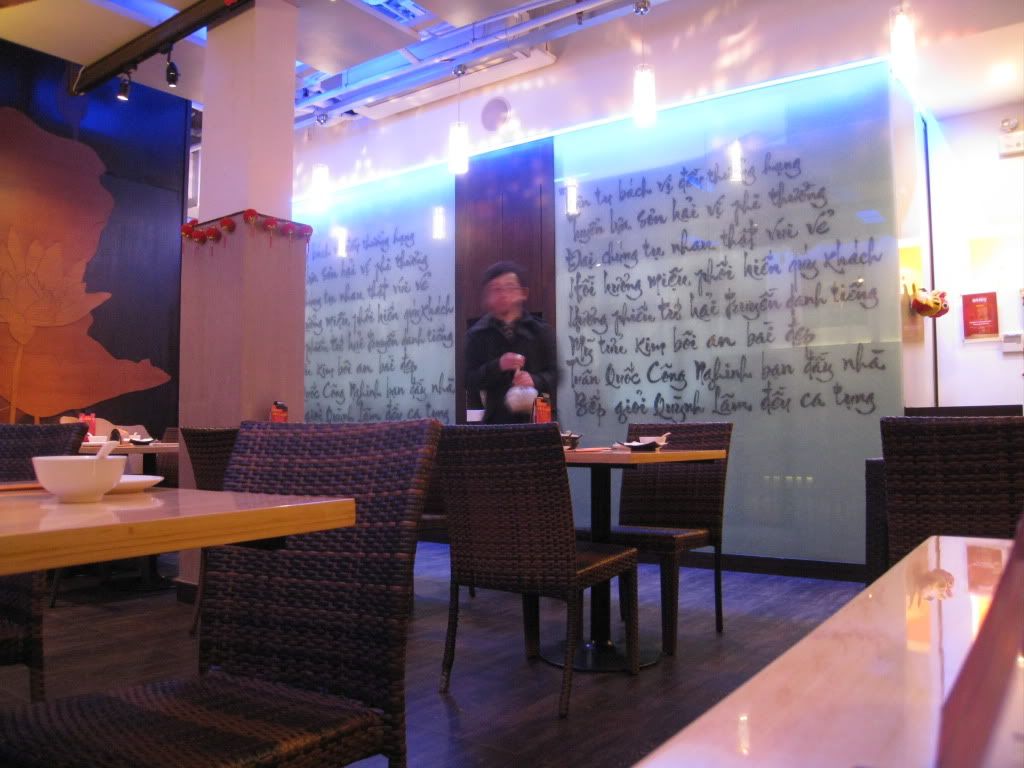
Decided to head over to the Aniseed location in Xintiandi. The reviews on CityWeekend were quite promising. Then again, a lot of the reviews of pho in Shanghai come from people who admittedly say they have never tried the real thing.
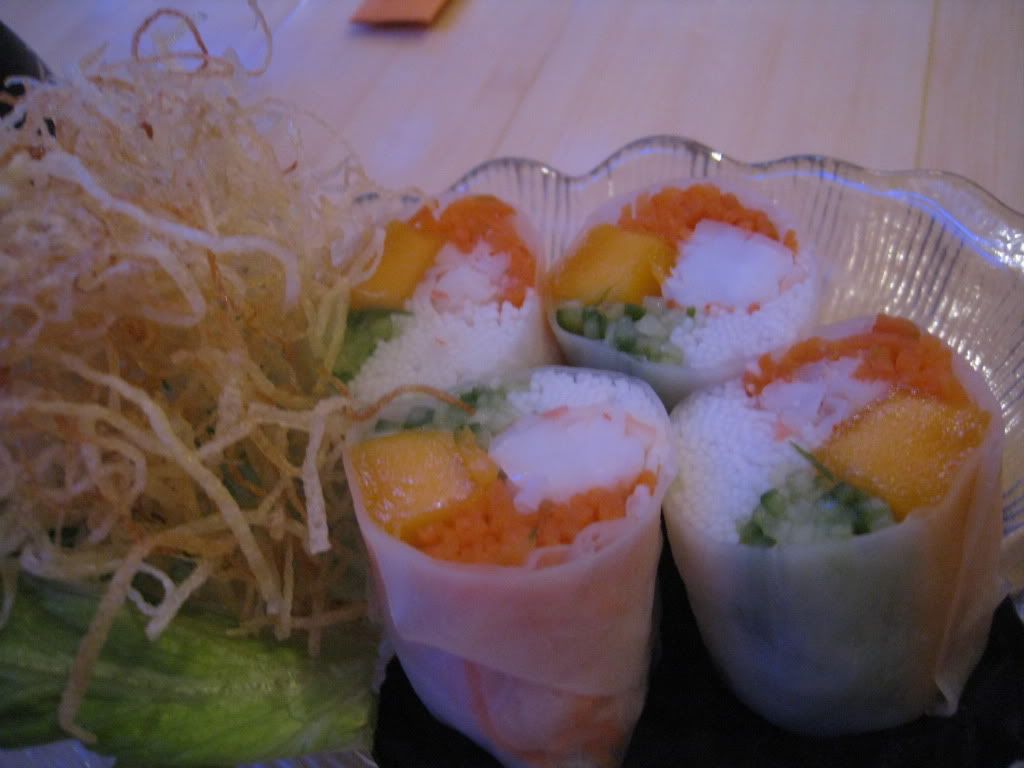
The shrimp and mango spring rolls were 28RMB for a small roll cut into four pieces and accompanied by friend shavings of onions and a large lettuce leaf. The mango is not fresh and tastes like jarred mango instead of fresh cut. The condiment vinegar was light, almost too light that you could not even taste it.
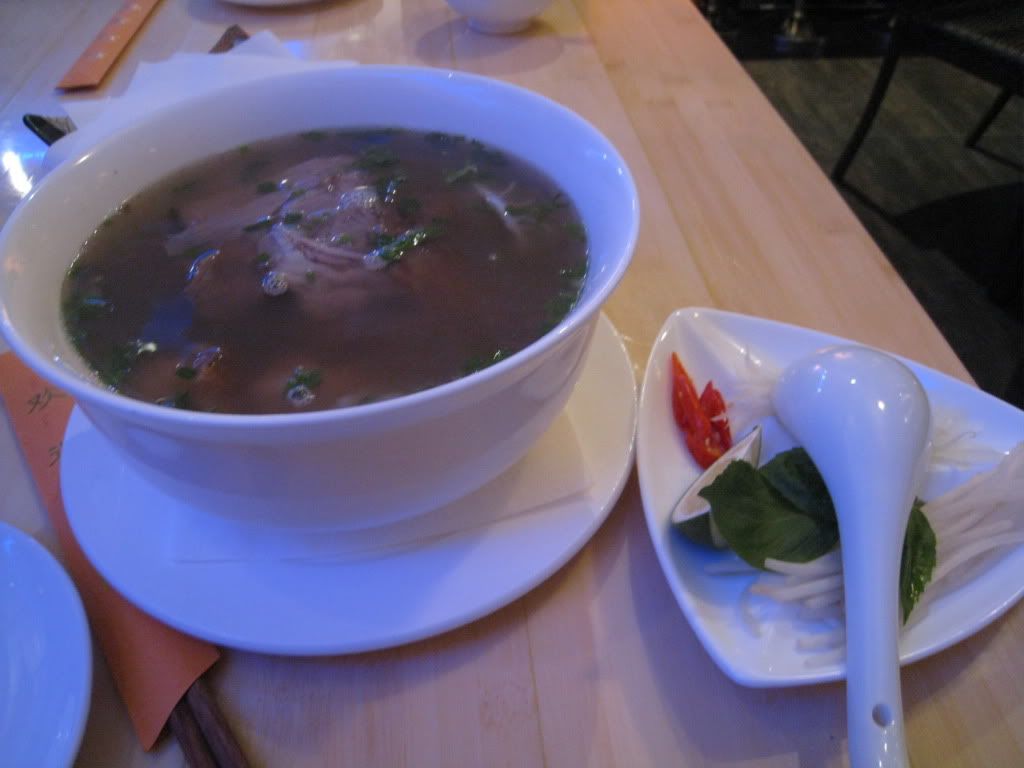
Now for the main event - the pho. Out of the variety of pho including different combinations of beef, one chicken, and one mushroom options, I opted for the house pho at 48RMB. This is a little more expensive than the pho at Pho 26. Just like Pho 26, the bowl of rice sticks came with practically no condiments. Are you kidding??? Where is my bunch of basil and other fresh green goodies to throw in my soup? The plate that contained these items just had three leaves, a chopped up chili, and limp sprouts. The broth was a little dark and showed little trace of grease and fat pools on its surface. The flavor, however, did not match the depth of its colored. The pho was light. The rice noodles slightly overcooked, but still lovely. The soup only had 2 meatballs, some tendons, and a few pieces of beef.
All you ever really get in Shanghai is a fix for pho. I give up. I'll just go to Vietnam and remember what the real thing tastes like.
Aniseed. Unit 3, Bldg 1, Lane 181 Taicang Lu, Xintiandi太仓路181弄1号楼3单 Shanghai, China
Decided to head over to the Aniseed location in Xintiandi. The reviews on CityWeekend were quite promising. Then again, a lot of the reviews of pho in Shanghai come from people who admittedly say they have never tried the real thing.
The shrimp and mango spring rolls were 28RMB for a small roll cut into four pieces and accompanied by friend shavings of onions and a large lettuce leaf. The mango is not fresh and tastes like jarred mango instead of fresh cut. The condiment vinegar was light, almost too light that you could not even taste it.
Now for the main event - the pho. Out of the variety of pho including different combinations of beef, one chicken, and one mushroom options, I opted for the house pho at 48RMB. This is a little more expensive than the pho at Pho 26. Just like Pho 26, the bowl of rice sticks came with practically no condiments. Are you kidding??? Where is my bunch of basil and other fresh green goodies to throw in my soup? The plate that contained these items just had three leaves, a chopped up chili, and limp sprouts. The broth was a little dark and showed little trace of grease and fat pools on its surface. The flavor, however, did not match the depth of its colored. The pho was light. The rice noodles slightly overcooked, but still lovely. The soup only had 2 meatballs, some tendons, and a few pieces of beef.
All you ever really get in Shanghai is a fix for pho. I give up. I'll just go to Vietnam and remember what the real thing tastes like.
Aniseed. Unit 3, Bldg 1, Lane 181 Taicang Lu, Xintiandi太仓路181弄1号楼3单 Shanghai, China
Tuesday, February 2, 2010
Baker & Spice
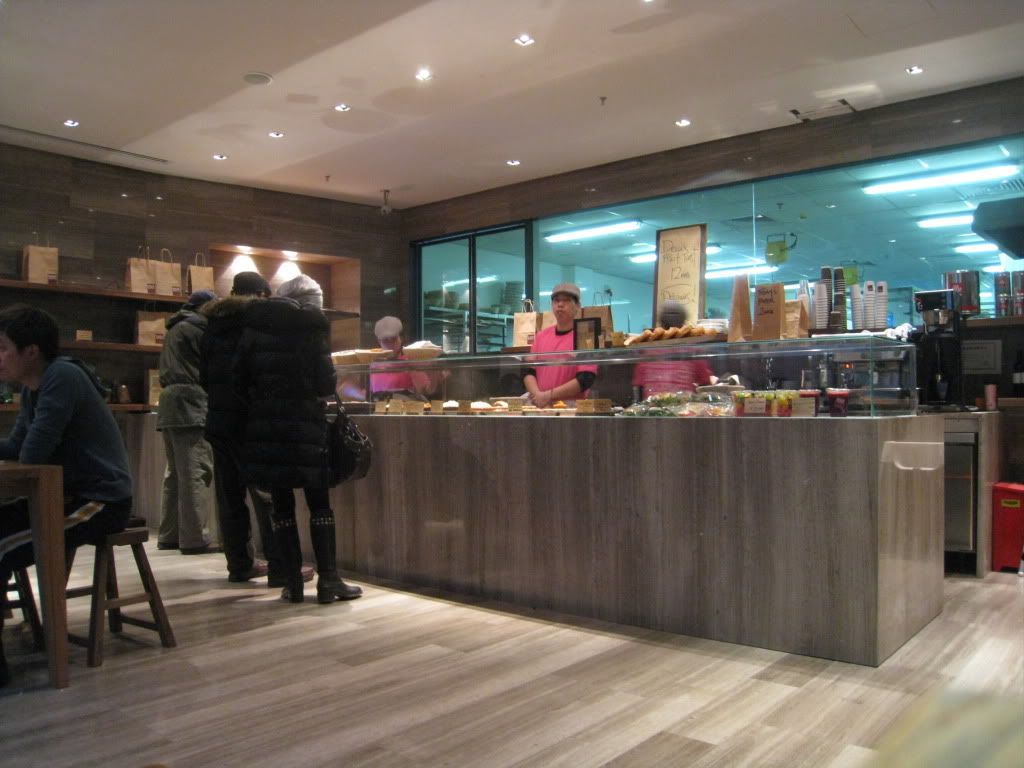
The new endeavor from the makers of Wagas, Baker & Spice has opened on Anfu Lu to serve as your yuppie neighborhood bakery (as well as bread supplier for the Wagas chain). Emphasis is on the large baking space in view from the actual retail area in the front. Large windows to this clean space ensure that the customer knows that the bread is baked here. The retail space has an emphasis on wood and natural accents to showcase the breads, pastries, muffins, and granola.
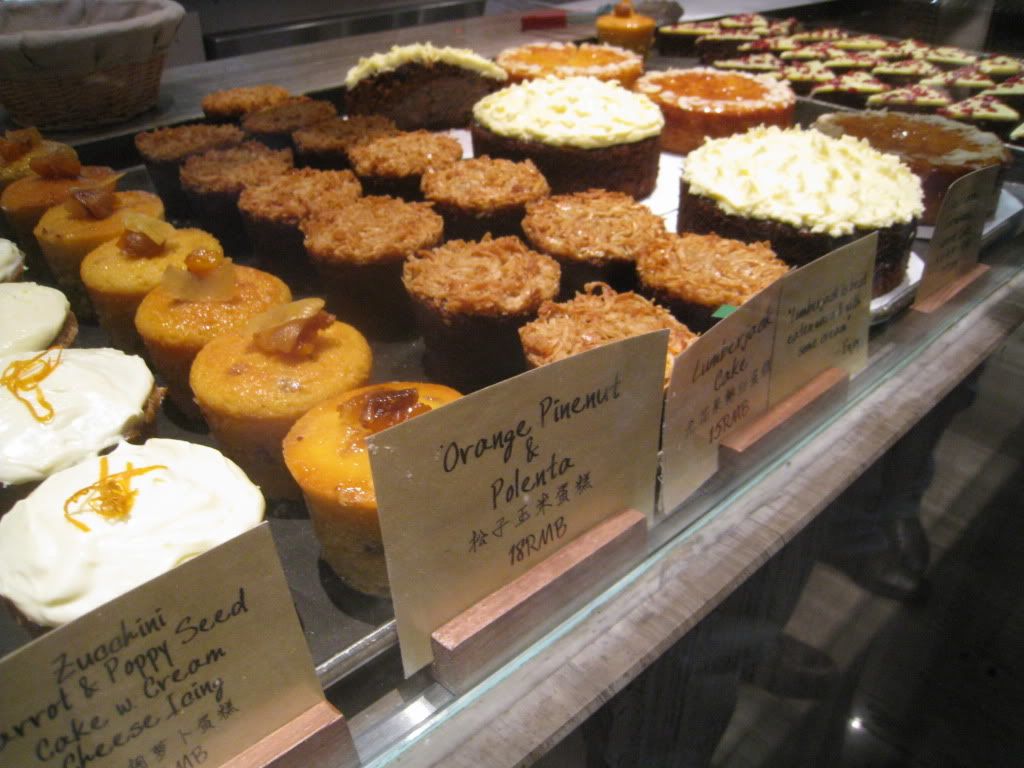
The display case was lined (though in a limited number) with cakes, pastries, and bread loaves in a way that was very attractive to the patron. The bread is good. That is the main selling point of this bakery. It is not a rock, it does not fall apart unnecessarily, it is not bland nor overpowered. Westerners missing a quality loaf of bread should come here and fork over way more than they would expect to pay in their home country for the staple that is now a luxury item in Shanghai.
On my one-stop visit, I was starving having not eaten breakfast nor lunch and it was almost 17:00. The zucchini, carrot, and poppy seed muffin with cream cheese frosting was a tempting buy at 15RMB. There were a selection of pre-made panini they will gladly heat and press for you ranging from 40-45RMB. The salami, spinach, pesto, cheese, and tomato one seemed like the most appealing option, though small for the price paid. 60RMB is a big hit to the local wallet. The panini was average, though the bread it was made with was very nice and not too chewy or soft. The muffin was a good fix as well, though a little crumbly and slightly dry, it was still light and flavorful.
Generally out of the way from major commercial areas in Shanghai, Baker & Spice is a decent local option. Don't expect to sit and hang out at this bakery though as there is only one long table and a few chairs. If you are in the area, check out Baker & Spice, but you can also taste the bread from your local Wagas chain.
Baker & Spice. No. 195 Anfu Road, Shanghai, China. 安福路195号1楼 Open daily 7:00-20:30
Dean Brettschneider at GlobalBaker.com
Wednesday, January 27, 2010
Dr. Wine
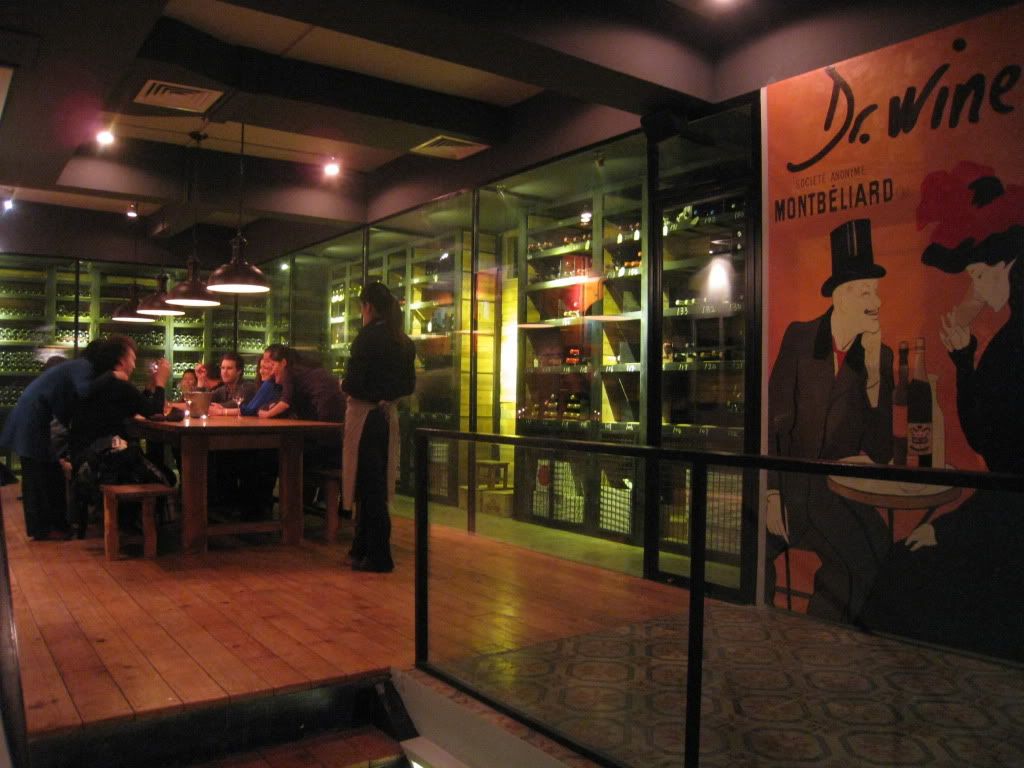
Dr. Wine is a new addition to the wine bar scene in Shanghai centrally located in Shanghai on Fumin Lu and Julu Lu. The ambitious space has promise with its attention to detail, photobooth, and random coats hanging in the co-ed toilets.
It is a large space with a ground floor bar and cozy seating area. Upstairs is a tasting room, more tables, and a glass-encased temperature-controlled wine storage room. All the bin numbers are made available and the area is warmly illuminated. The highlight of the upstairs area is the large, long wooden table surrounded by wine bins. Sitting at this table, you know the focus of your night is wine and to taste it, enjoy it, and drink more.
The wine menu ranged from 118RMB to 45000RMB, the cheapest being a French wine. Enoteca a few blocks away is still a little cheaper than Dr. Wine. Most of the menu is centered on French wines (apparently the owner is also French) with some notable selections from Italy and the Americas. First page on the menu is different kinds of water to start. The Cityweekend listing says there is a food menu with sandwiches, imported meats, and French paté, but that was not made available to the large party.
As a new luxury watering hole on the expat scene, it was easy to run into members of the 25+ Shanghai expat community all checking out the wine selection. It is a large, yet cozy and timeless environment to enjoy a glass of wine and conversation with friends, colleagues, and strangers.
Dr. Wine. 177 Fumin Lu, near Julu Lu. Shanghai, China富民路177号 近巨鹿路
Monday, January 25, 2010
Izumi
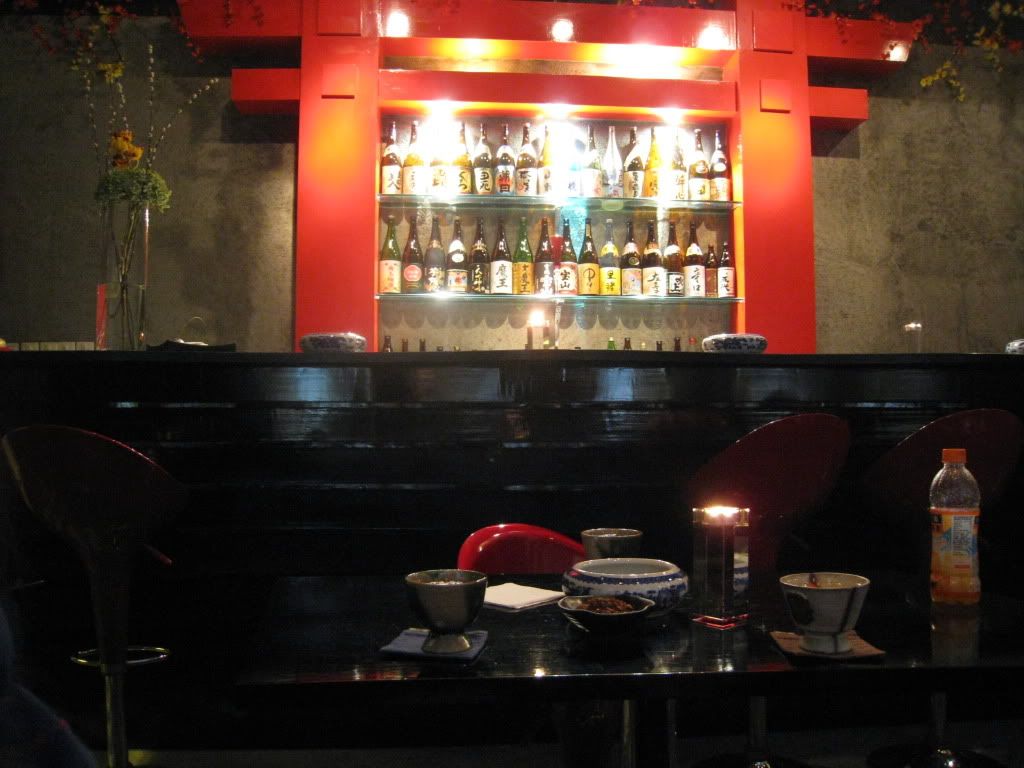
Preceding a fateful weekend, I was taken to what is qualified as the best Japanese bar in Shanghai, Mokkos, which serves shochu. Shochu is a distilled beverage from Japan averaging around 25% abv and made from sweet potato, rye, or rice. Mokkos is a lovely, small bar off Wuding Lu north of Jing'an Temple. The bar shelves go straight to the ceiling lined with bottles of shochu and on the lower shelves are even bottles with name tags for the frequent patrons. A pleasant place for conversation and a light, clean-tasting Japanese drink.
Since my initial experience in Shanghai, I have been somewhat fascinated with shochu and shochu culture, which has not really caught on in the Western world except to serve as a trendy drink of the moment favored by young women instead of old Japanese men. It is something I could continue to sip for ages and enjoy.
Shochu bars are popping up all over the place as it has become in fashion to open Japanese-style bars in Shanghai, granted they are often on the more expensive side, even for the expat wallet considering the quantity you get. This should not be confused with the quality of your drink.
Hence, the adventure to Luwan to Izumi, a few doors down from the second Constellation Bar. Izumi is a really small bar with quasi dark interior and red accents of faux cherry blossoms. A passerby would not consider stopping into this empty bar playing mainstream electronic and top 40 music. However, the promise of shochu lured me in.
The bartender did not speak any English, but he suggested to try the Tantakatan, made with shiso leaf (50RMB). This, along with the other shochus, were served on ice in ceramic cups and accompanied by spicy nuts. The taste of the Tantakatan was clean and crisp, though slightly earthy and reminiscent of a light tea. He said they just got it in and the bottel was not listed on the menu. Another tried was Den-En (35RMB) made with rye and tasted more grainy or earthy with an oak quality. Shiso Komachi was another favorite because it also tasted very crisp and light with a taste similar to the light aroma of flowers, but this was due to the shiso leaf (45RMB). The bartender offered a shiso leaf to smell and feel to understand where the flavors were coming from. It was very nice to have the bartender so involved in the selection process. Also on the menu were shochu-based cocktails along with tea and soft drinks.
Mmmm...My foray into the world of shochu is off to an outstanding start.
The hidden-away, neighborhood ambiance of Mokkos is preferred over Izumi, but I would not discount this bar completely out of the loop if you are looking for a quiet, secluded place to enjoy some shochu.
Izumi. 21 Yongjia Lu 永嘉路21号, by Maoming Lu. Shanghai, China.
Monday, November 9, 2009
Jia Jia Tang Bao 佳家汤包
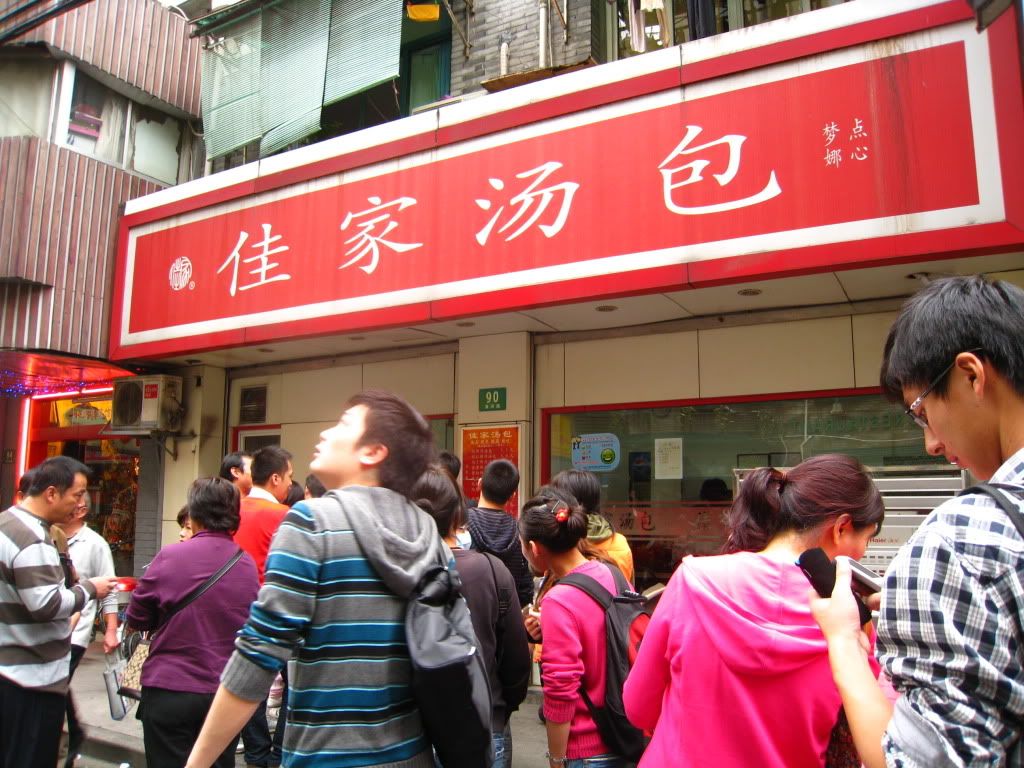
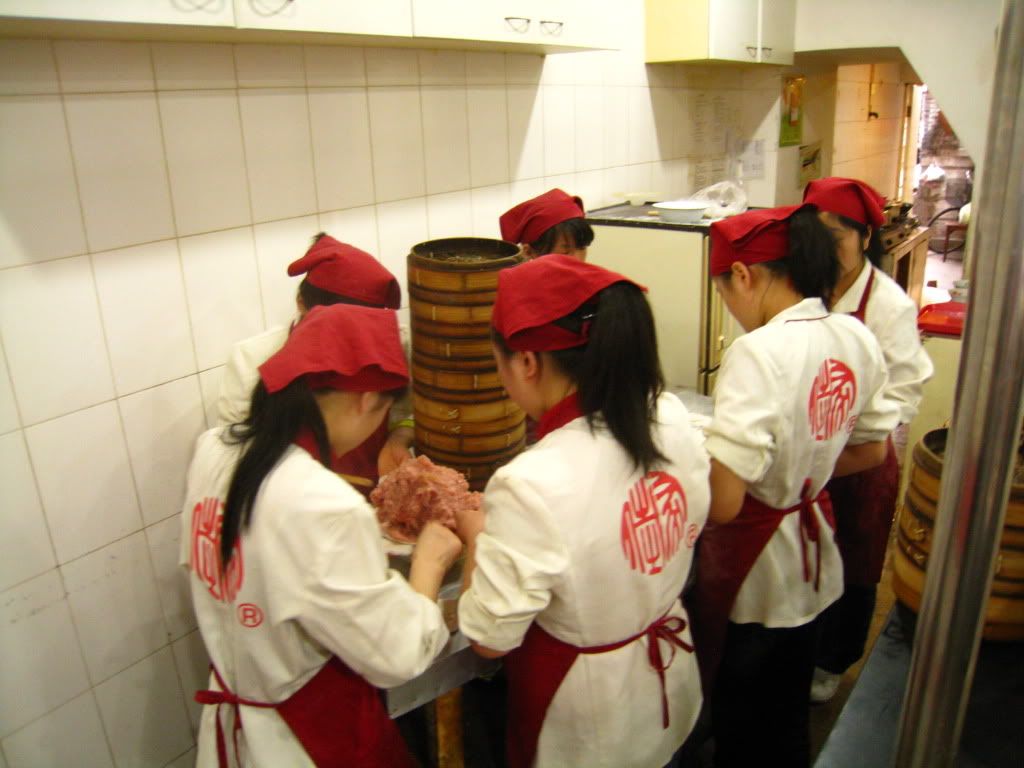
The alleged mecca of soup dumpling or xiao long bao is located north of People’s Square at Jia Jia Tang Bao 佳家汤包. At half eleven there is already a long line standing outside waiting for one of the 30 or less chairs in the dining area. It is best to get there in the morning or before noon as the restaurant closes when they run out of their offerings, which are made to order by a team of six women furiously filling and pinching together dumpling dough. The menu behind the cashier shows which items are no longer available as the red tags are flipped over to show that the kitchen is out. After all the cheap items are gone, all that is usually left are the more expensive crab dumplings.
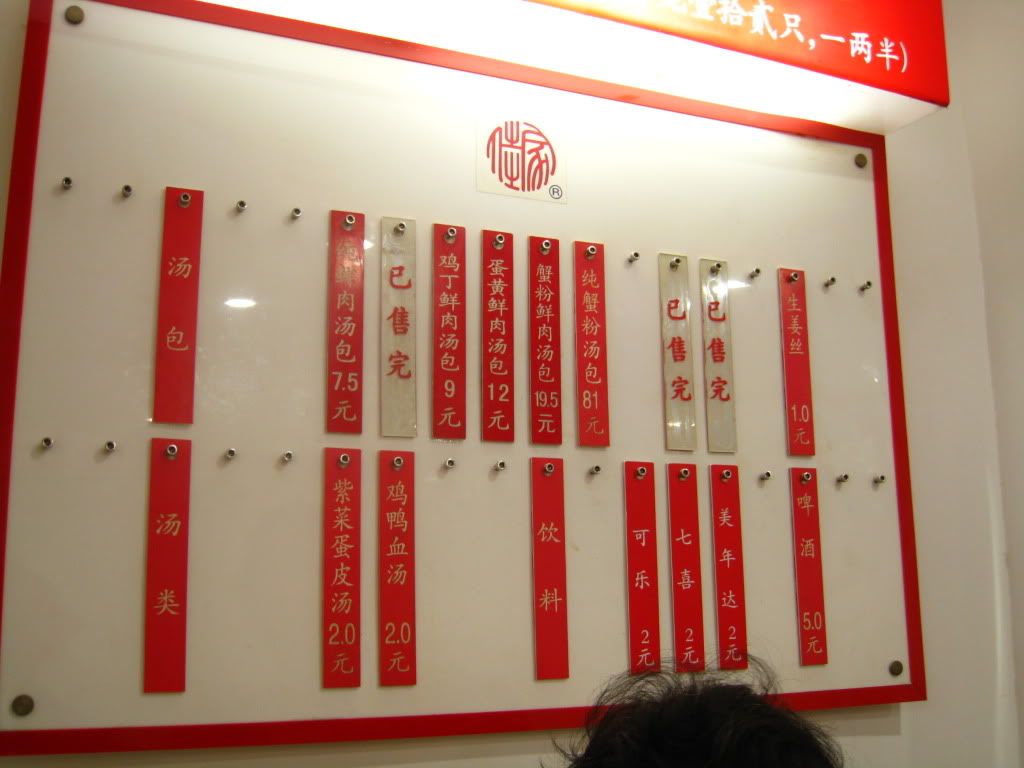
Here's the translated menu: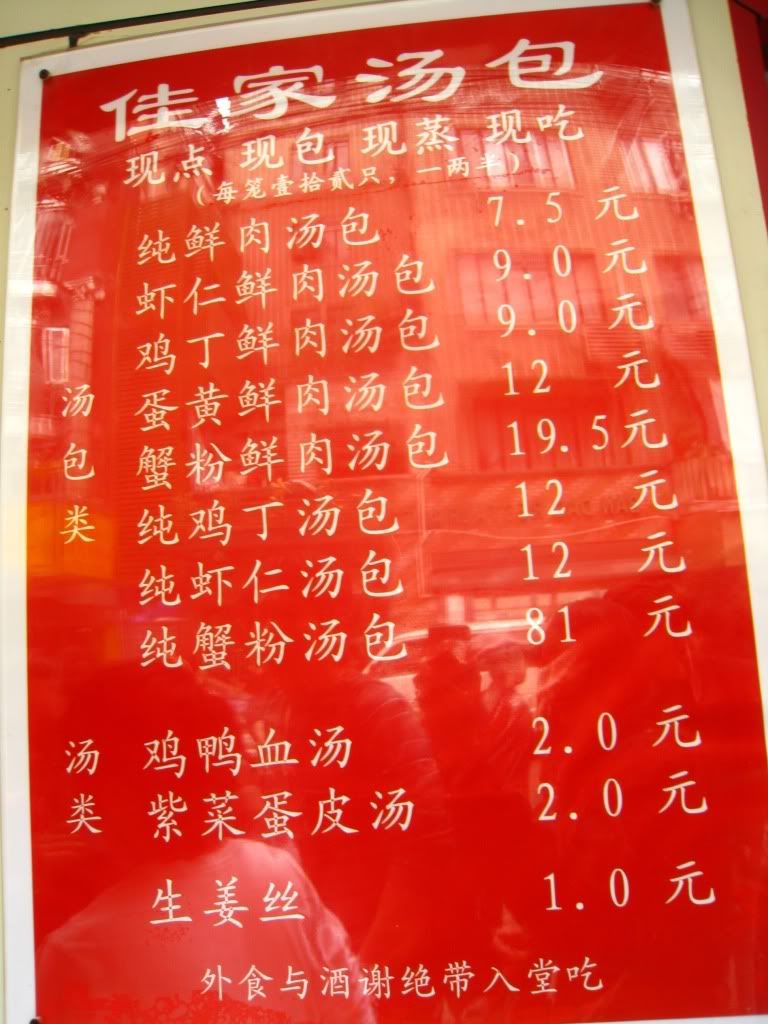
Standard pork XLB - RMB 7.5
Shrimp and pork XLB - RMB 9
Chicken and pork XLB - RMB 9
Egg yolk and pork XLB - RMB 12
Crab and pork XLB - RMB 19.5
Chicken XLB - RMB 12
Shrimp XLB - RMB 12
Crab XLB - RMB 81
Chicken and duck blood soup - RMB 2
Seaweed and egg drop soup - RMB 2
Fresh shredded ginger - RMB 1
Our eyes must have been bigger than our stomachs as we asked for 3 orders of pork, crab and pork, and crab with 2 orders of ginger – the whole spectrum of crab and pork for 2 people. 81RMB for crab tang bao seemed like a lot for something that is considered cheap street food, but we decided to splurge because eventually we would have to endure the long line again just to try it. Most people ordered the blood soup to eat with the xiao long bao, most likely to help with the digestion of the heavy filling and to get the spoon optimize consumption. We did not go for the soup option.
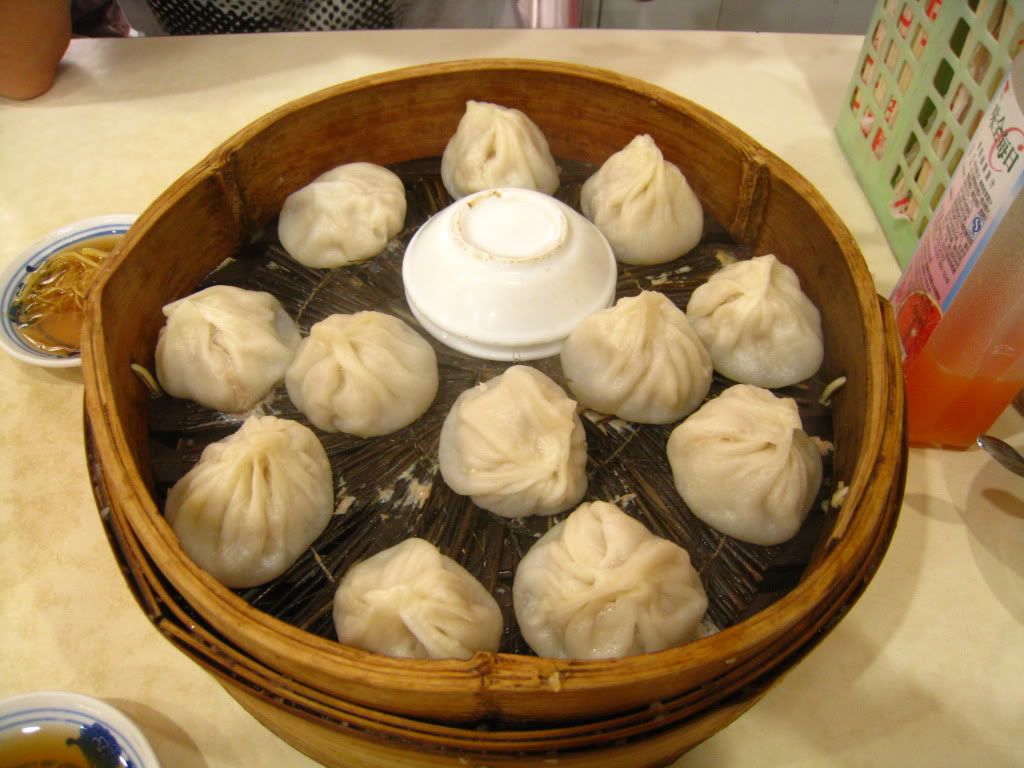
First out was the steamer of pork xiao long bao. So beautiful, hot, and filled with delicious, savory soup. The perfectly pinched skins were very thin and the broth abundant and flavorful. This was an excellent start. The servers were right to bring out the pork xiao long first because the crab and pork and crab xiao long bao had a stronger, heavier flavor in comparison to the already delectable pork xiao long.
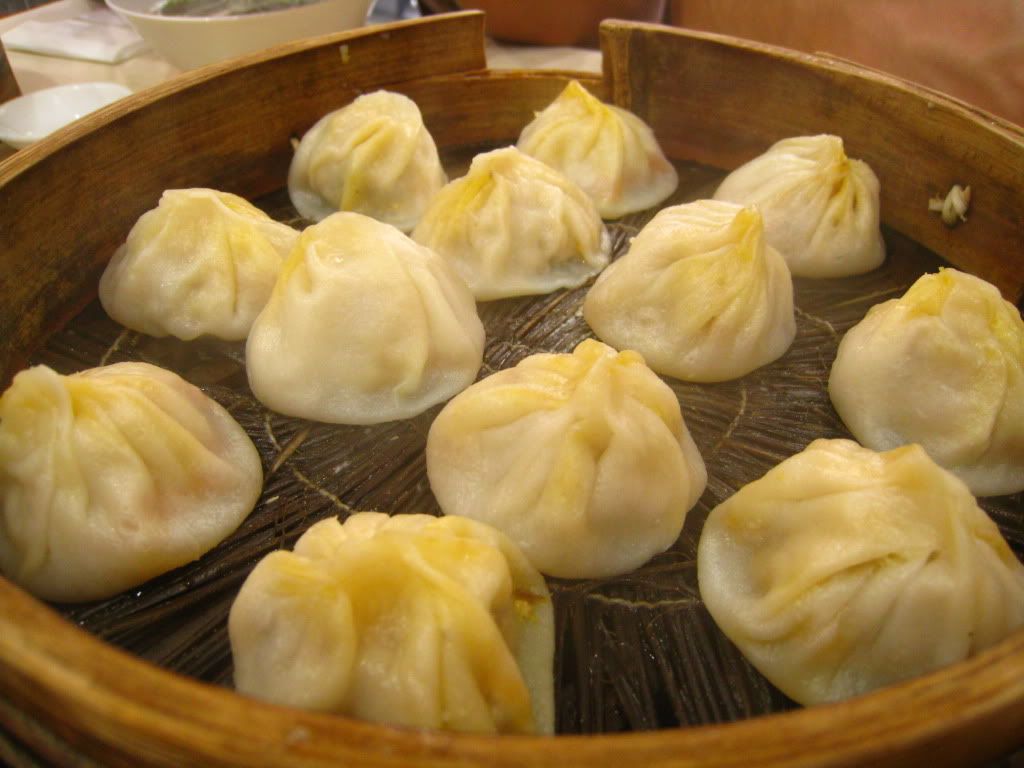
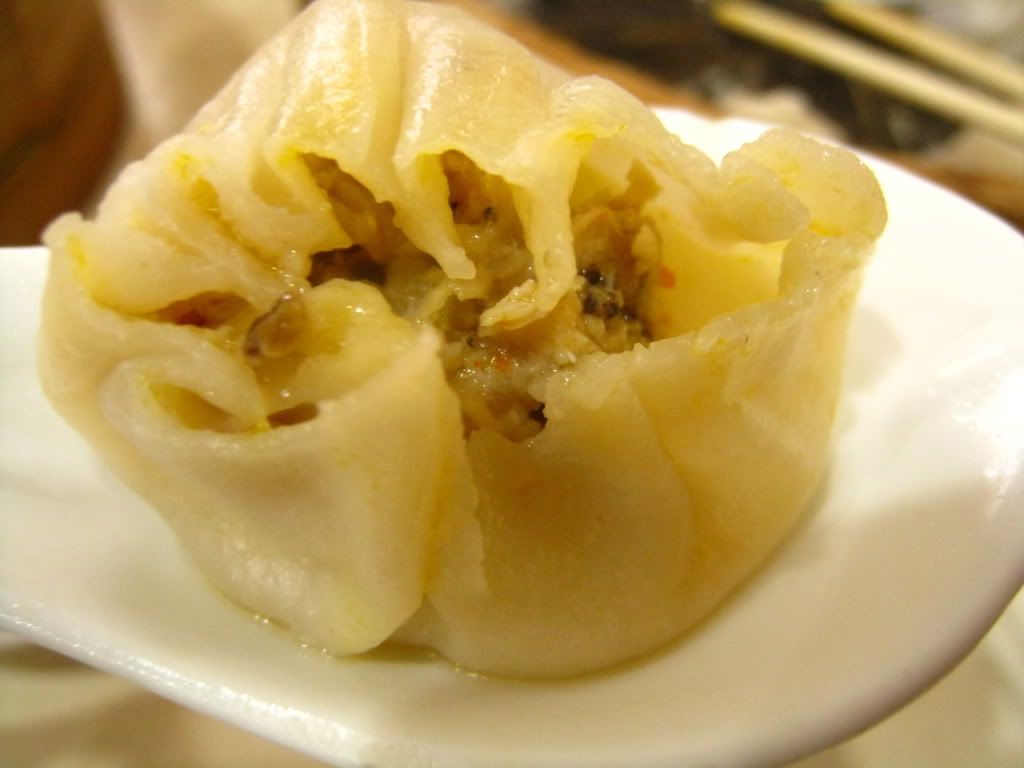
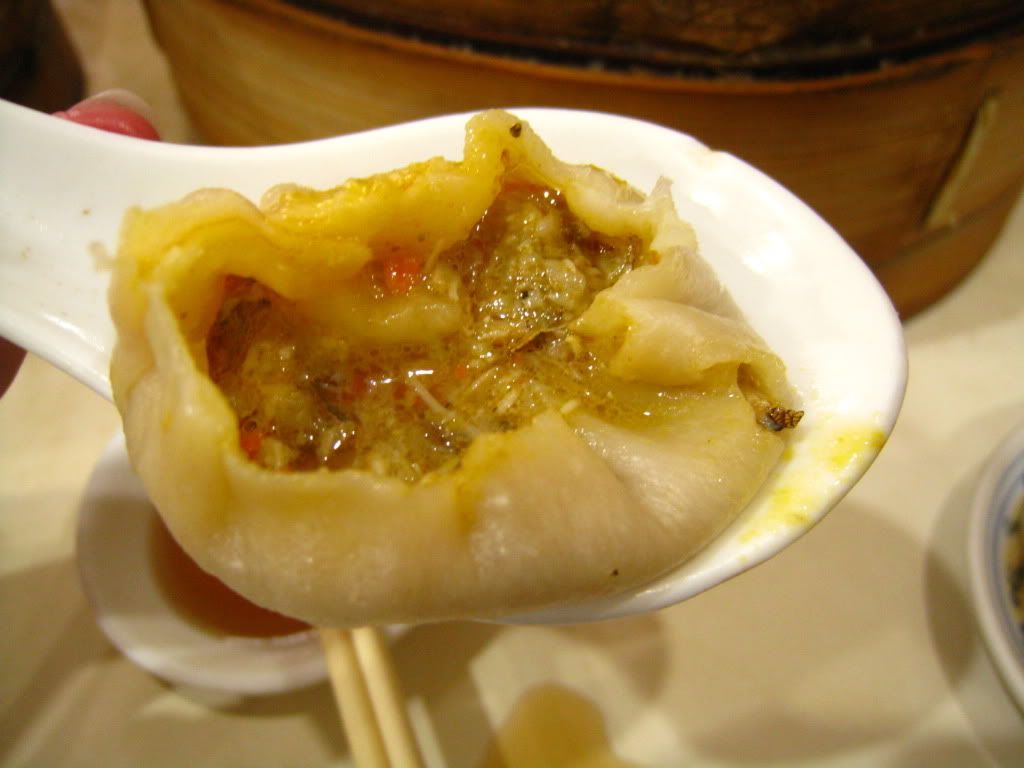
The skin on the dumplings is so thin that the roe inside the crab and crab and pork dumplings is visible. And on closer inspection, you almost swear you can see the soup floating inside.
While xiao long bao is the small, bite-sized dumpling, the tang bao is supposed to be its larger, goliath cousin, maybe even requiring a straw for consumption. The crab tang bao (filled with meat and crab roe) were slightly larger than a sand dollar. They were served as 2 steamers with 6 in each. The filling did not really hold together as a solid mass, but was more a delicious mess of crab, roe, and soup.
We were right to go from pork to crab and pork to crab soup dumplings because the flavor of each dumplings was stronger and more pungent than the preceding one. After a taste of the crab dumpling, the flavor of the pork xiao long bao was relatively bland although it is indeed excellent. For two people, this order was more than satiating as we could barely hobble out the door afterward.
This is definitely the best spot for xiao long bao. Not only does the long queues of locals indicate that the xiao long bao is good, the prices and informal atmosphere make it accessible for anyone to try.
Jia Jia Tang Bao 佳家汤包. 90 Huanghe Lu, Shanghai. China. People's Square near Fengyang Lu. 黄河路90号, 近凤阳路.
Subscribe to:
Comments (Atom)