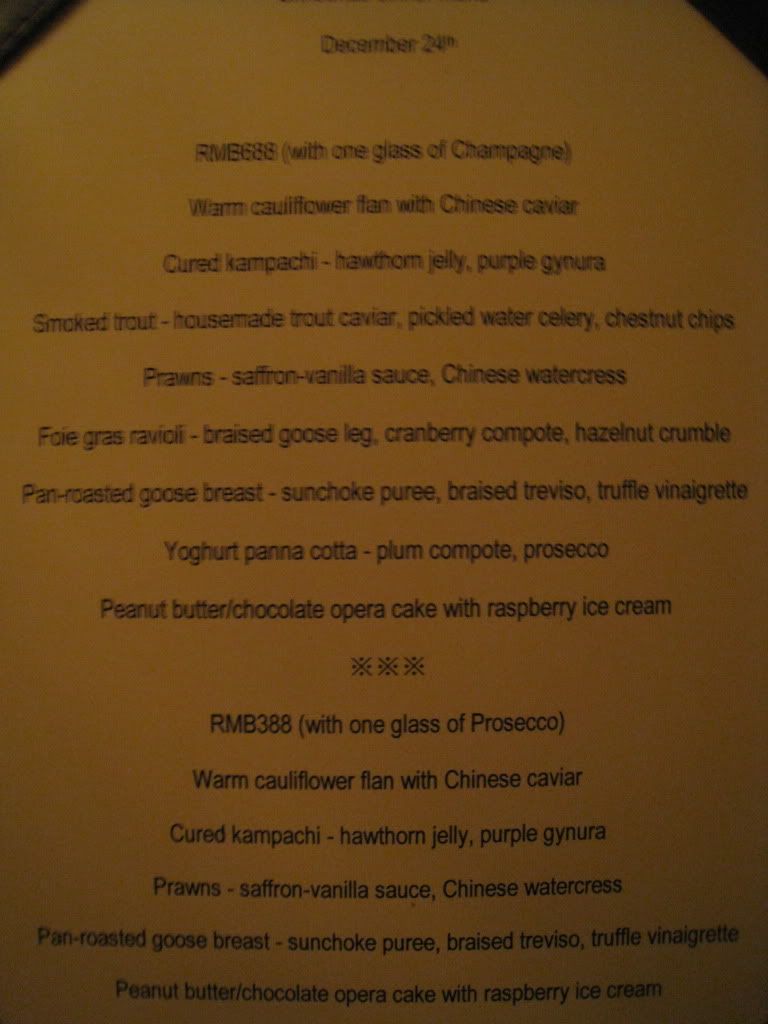
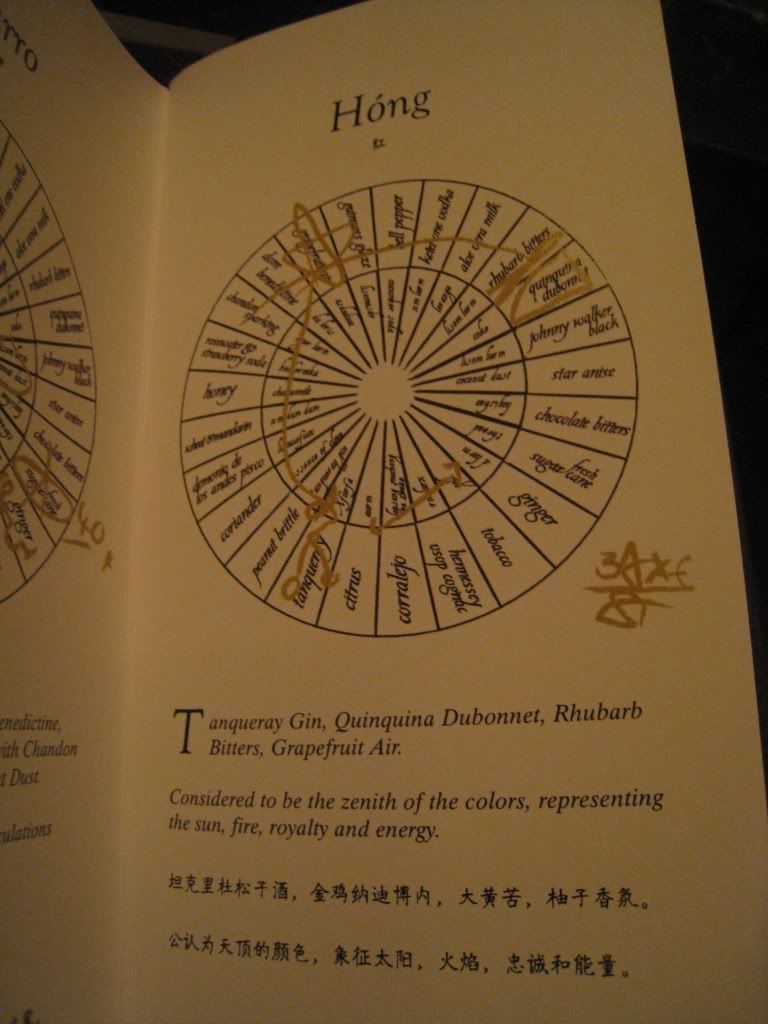
I would also like to say as much as I am opposed to taking photos with flash in a dining room, the camera being used was not up to par for the task so concessions were made. Hence, the hodgepodge of flash and no-flash shots.
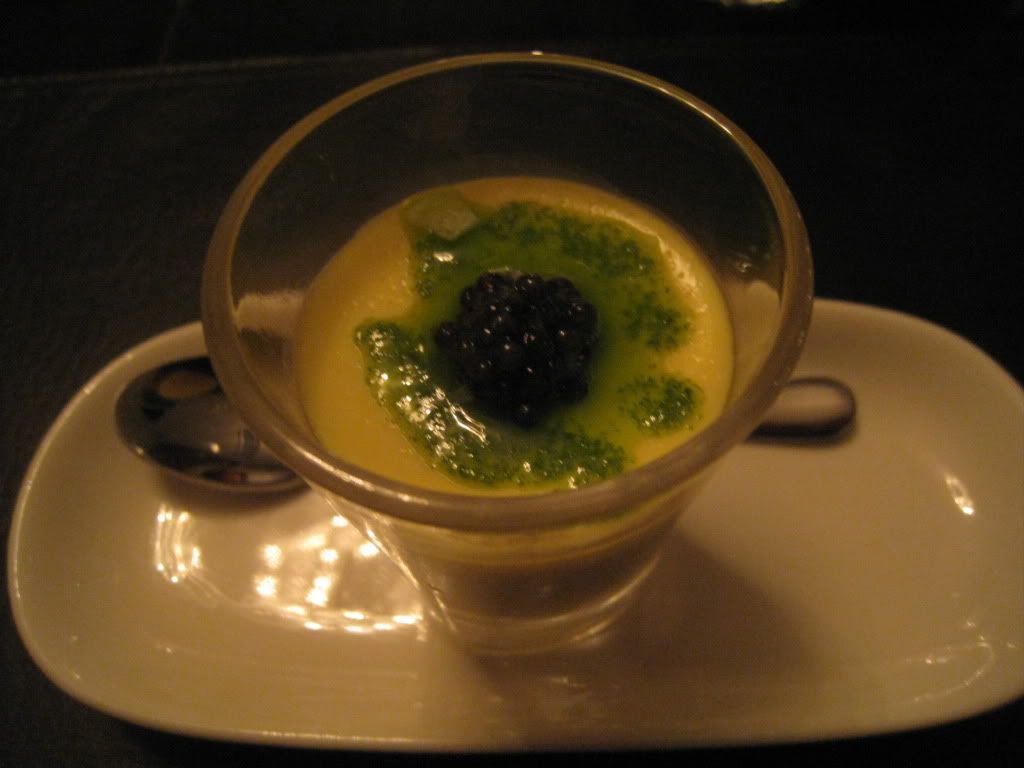 First off was the Warm Cauliflower Flan with Chinese Caviar served in a shot glass and a little metal spoon (note this is not a "mother-of-pearl" spoon to avoid giving the caviar a metallic tinge, but this should not be something to complain about given the circumstances). The origins of the caviar was not made clear aside from the indication that it is "Chinese," but not even the sort of fish it was harvested from was known. The flan was light and delicately sweet, hinting only of cauliflower. The caviar was delightfully salty, slightly acidic, and bitter, cutting into each creamy, warm bite of eggy flan in a way that will widen the horizon of the palate.
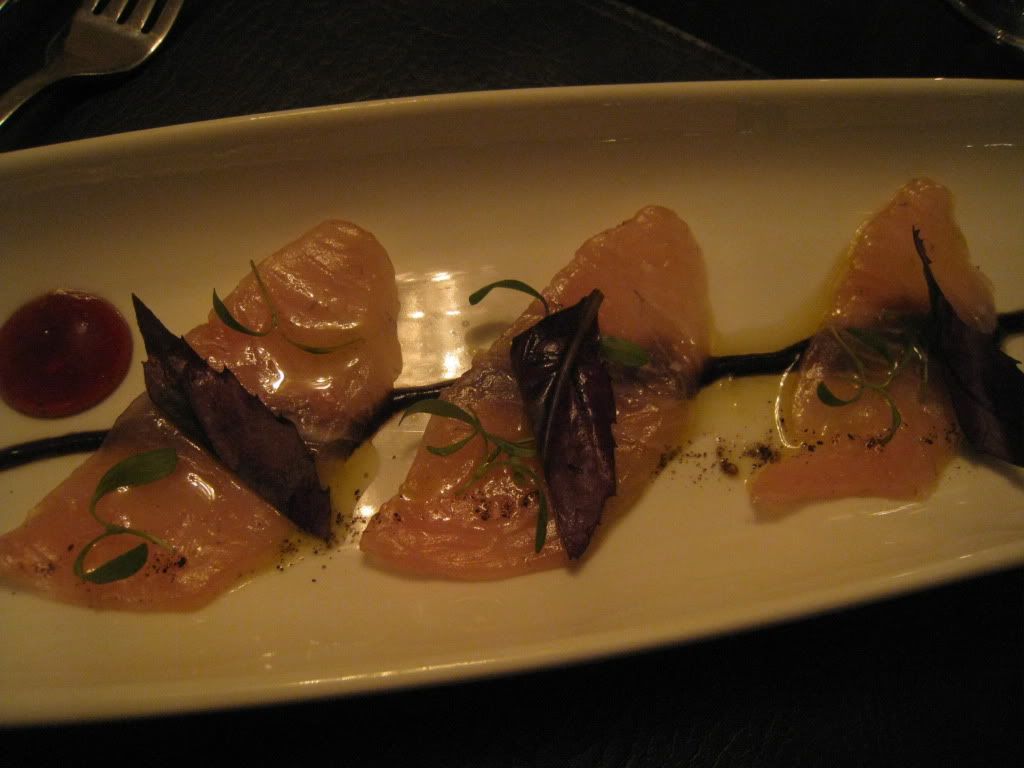 Next we were served the cured kampachi with hawthorne jelly and decorated with purple gynura leaves. As soon as the dish is set down, truffle aromas permeate the air. It was similar to the cured fish from Goga (Brad Turley's restaurant in Shanghai). It was not a heavy dish being cool and not over-seasoned to emphasize the cured kampachi and also anticipating the other courses to come in the meal. The Hawthorne jelly gave it a slightly sweet taste, bringing out the fresh sweetness of the fish.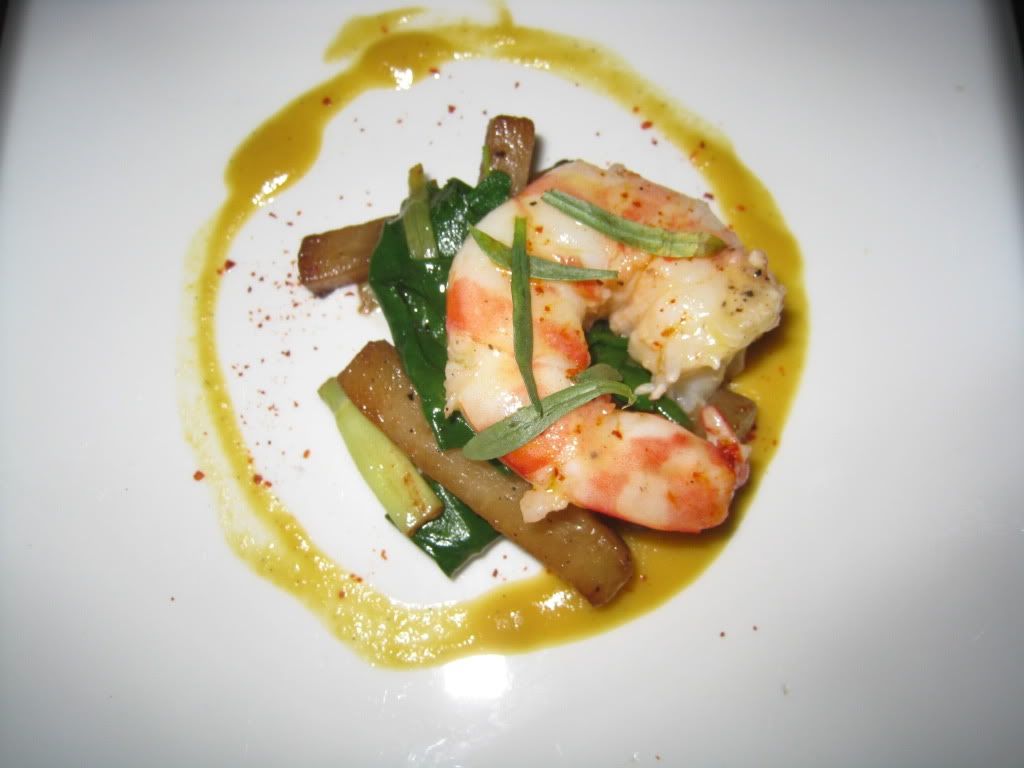
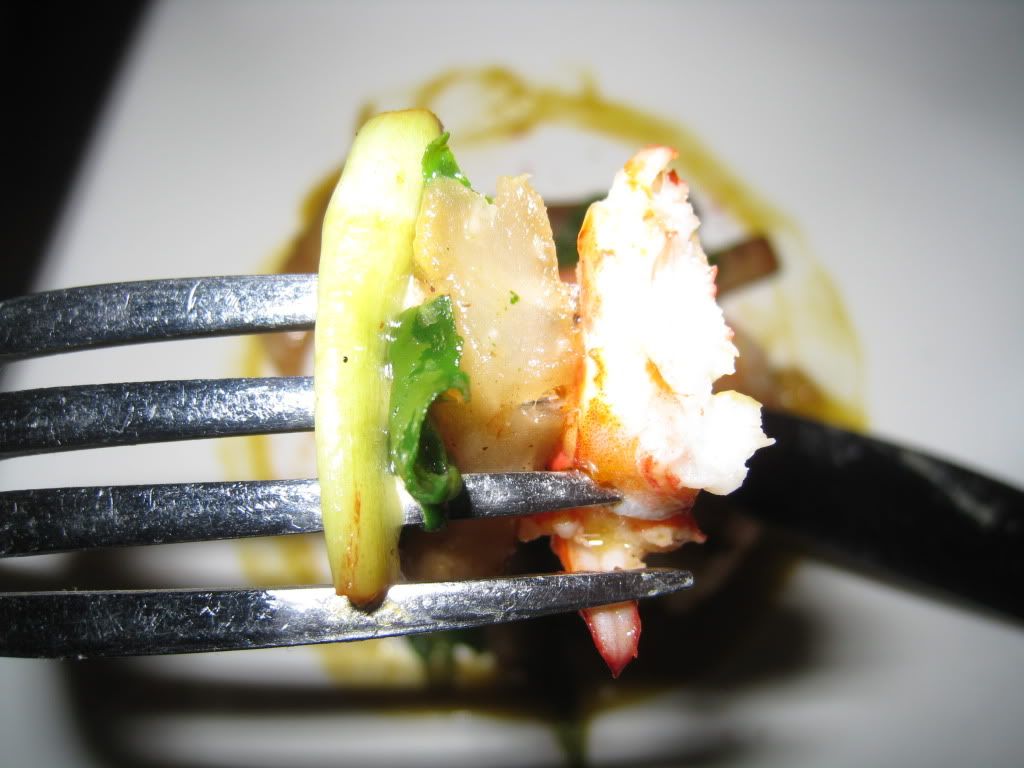
Prawns had a saffron-vanilla sauce and rested on Chinese watercress. It was only one moderately sized prawn, which made you wish there were two instead of one. Following the cured kampachi, the saffron-vanilla sauce continued the slightly sweet savory palate. Perhaps this sweetness permeating the entire menu is an ode to the fact that the restaurant is in Shanghai and also is celebrating the Shanghainese sweet-tooth. Cutting into the prawn, watercress, and other roasted vegetables in the dish, I carefully put each equal-sized piece on my fork with a swirl in the saffron-vanilla sauce to get the perfect bite.
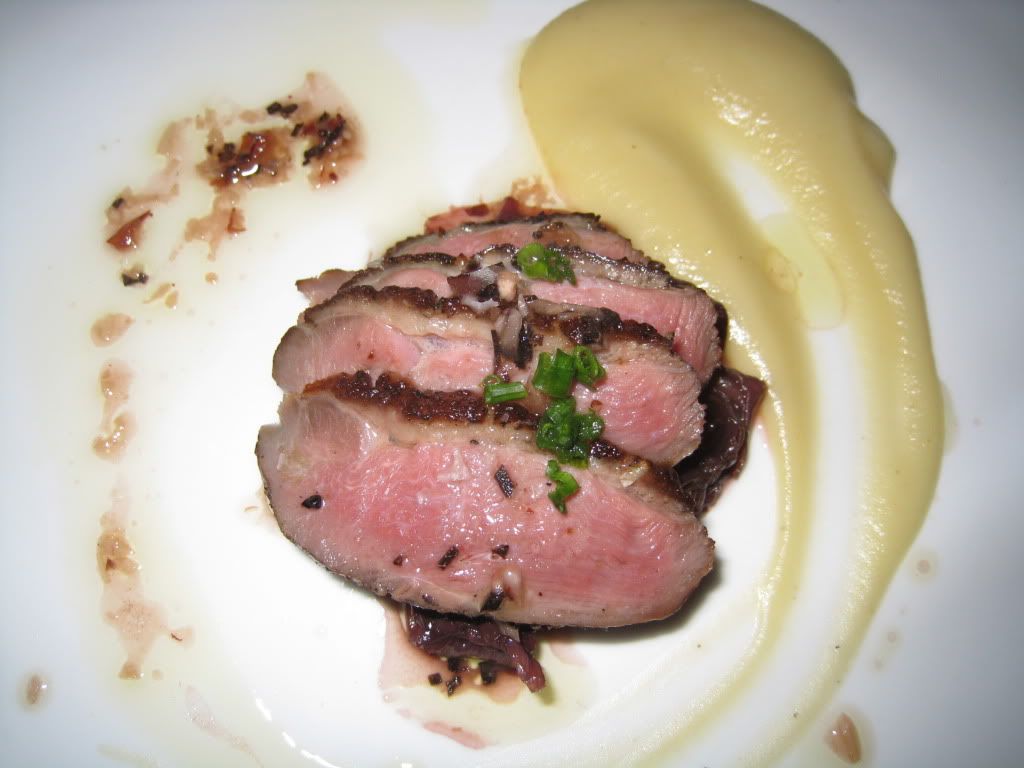 A traditional American Christmas meal is not complete without the holiday goose. However, Austin Hu did not present the table with an entire goose, but rather a sliced pan-roasted goose breast with sunchoke puree, braised treviso, and truffle vinaigrette. The goose tasted game-like and rich, warming the senses as well as filling the stomach. Using goose instead of other fowl made this course taste more decadent only for its more rare use in Shanghai and everyday meals because of its rich flavor and fattiness.
Before the dessert course, there was a long break. The server asked if we would like coffee or tea to accompany our dessert or act as a digestif.
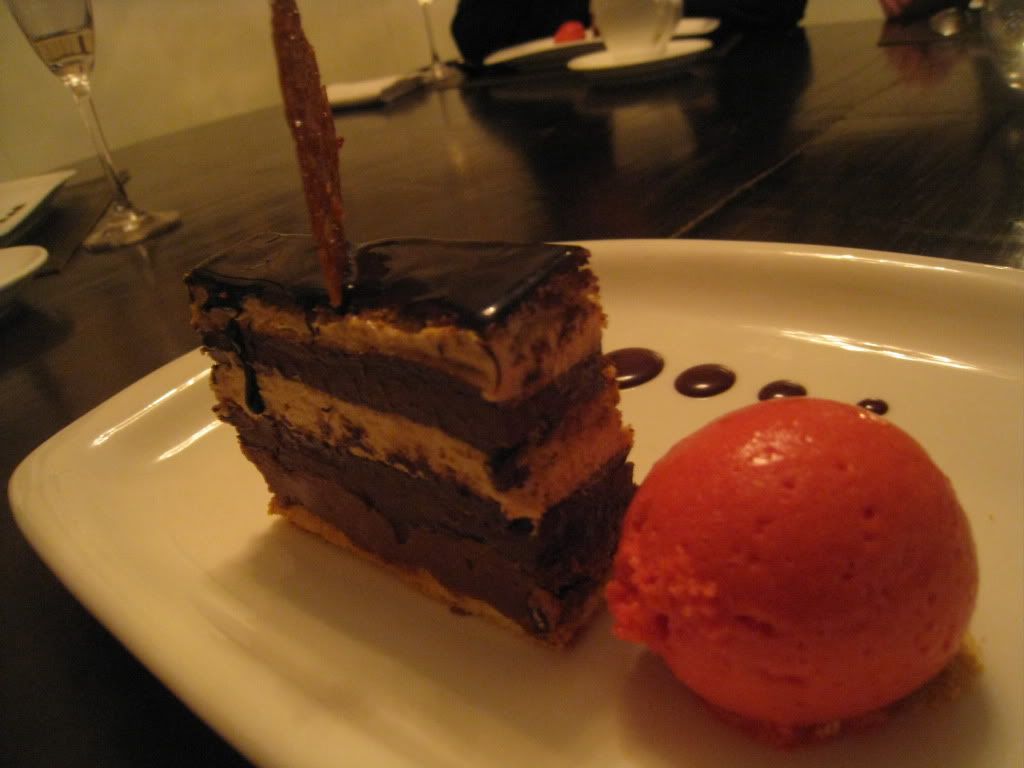 The dessert was a peanut butter chocolate opera cake with raspberry ice cream. The raspberry ice cream was more a sorbet than ice cream for the clear lack of silky dairy texture. The cake served at room temperature was not undercooked or too dry. The tartness of the raspberry balanced the richness of the chocolate.
Compared to the other courses in the meal, the cake was relatively large and you would almost say the portion was generous. If your stomach was not full from the small tastings, the peanut butter chocolate opera cake will definitely fill any voids left. A fellow diner had stated before the meal that everything was delicious, but so small. After consuming the incredibly rich cake, that same diner was decidedly full almost as if to say that the cake served the same function as rice at the end of a meal.
The Christmas Eve meal was thoroughly enjoyable. Eaten in small bites, the entire meal could be found as filling as the diner is meant to relish in the flavors and not find gluttonous satisfaction in a large volume of food. As a pillar of American fine dining in Shanghai, I would have hoped for more takes on classic American Christmas dishes than bringing in the fusion of Chinese culture. Though, being in Shanghai, the menu represented the finer touches of each.

 I just read this fascinating article on
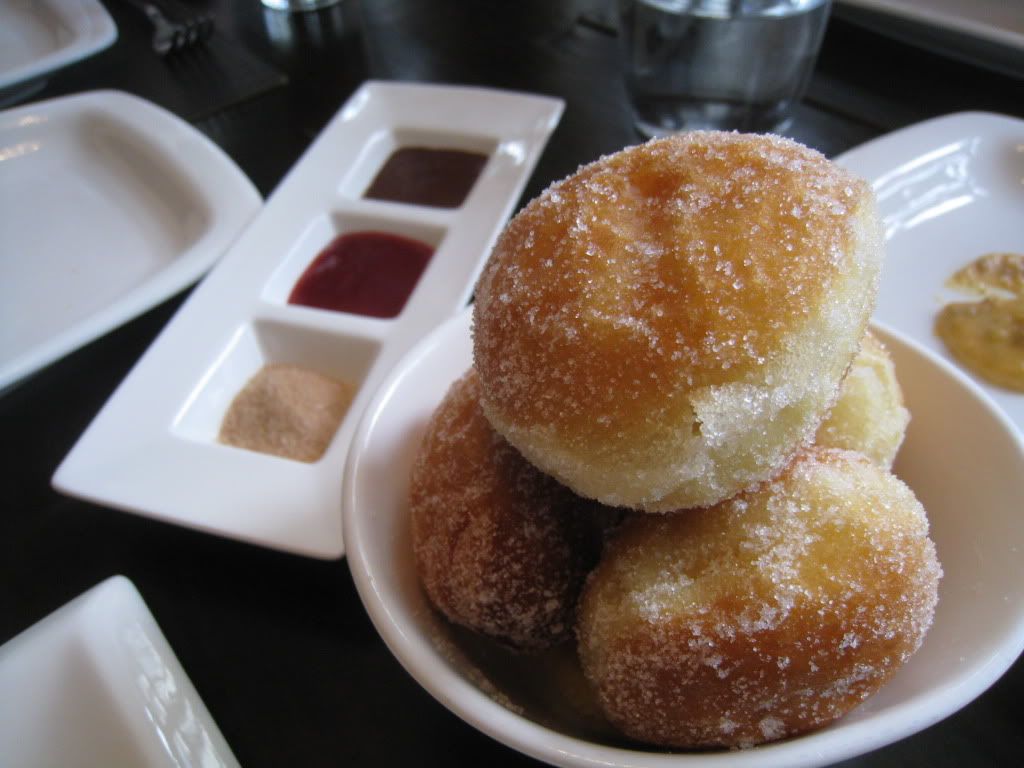
  Brunch is a weekend institution. It is not breakfast and it is not lunch. It is a way to spend time free of work responsibility and sharing conversation with friends over a comforting meal. Brunches are best when lazy requiring no set beginning or end, though dimming light is an indicator that perhaps Sunday dinner should have already started. In Shanghai, brunch tends to span between the hours of 11:00 to 15:00 accommodating the late-risers, church-goers, and everyone else in between needing midday nourishment. The options in Shanghai are endless, with the hotel brunches pushing their more expensive buffets in every free expat magazine. The majority of other brunch options involve a set meal with 2-3 courses, coffee or tea, and a pastry. Seeing the menu at Madison, everyone who had not brunched there before was surprised to see that there was no set meal option on the menu. With a decent-sized group ordering a myriad of items off the menu, the cost per person was actually less than the set menus of popular brunch spots, like Azul, which is right downstairs. You would expect the complete opposite when ordering a la carte!
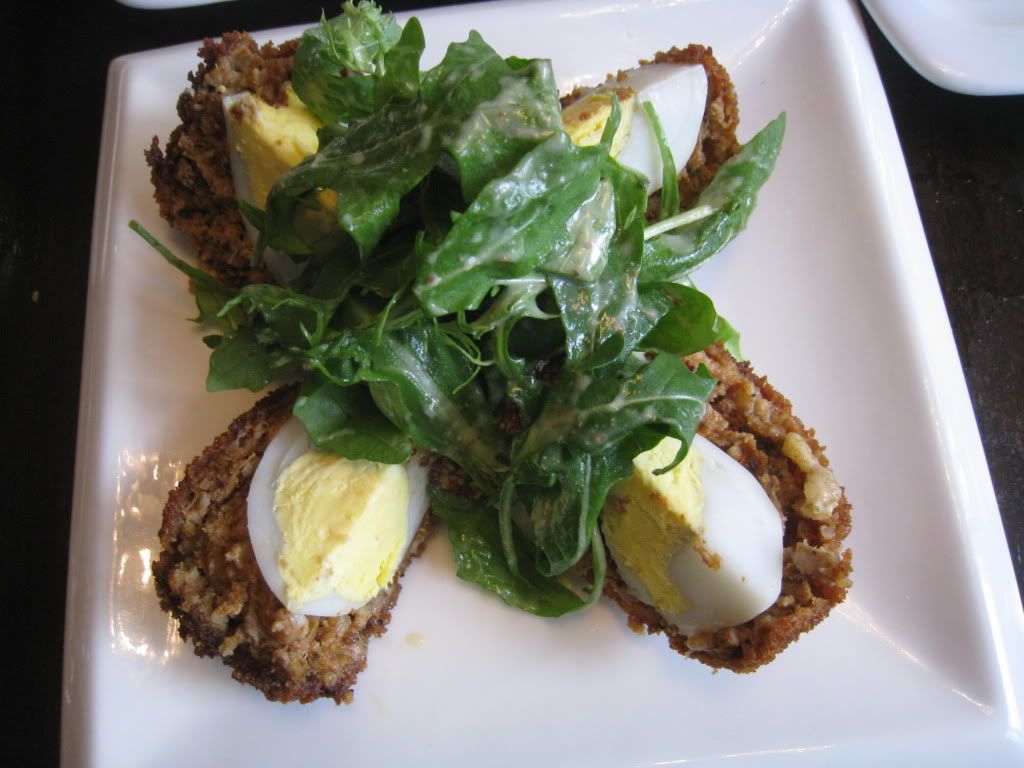
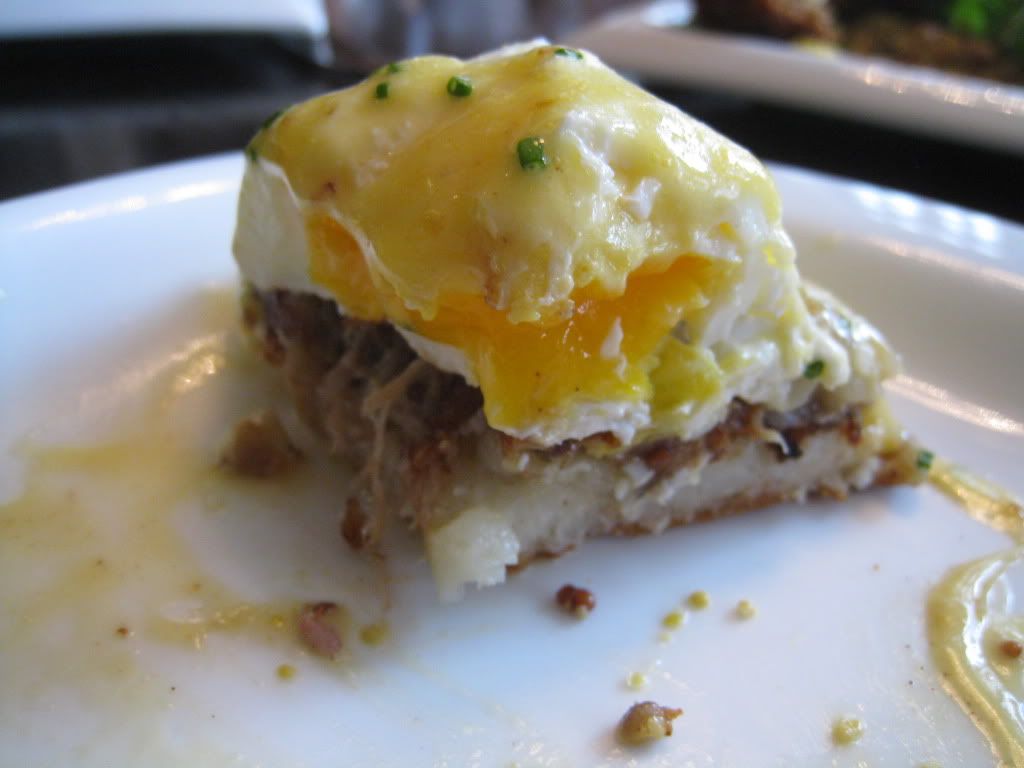
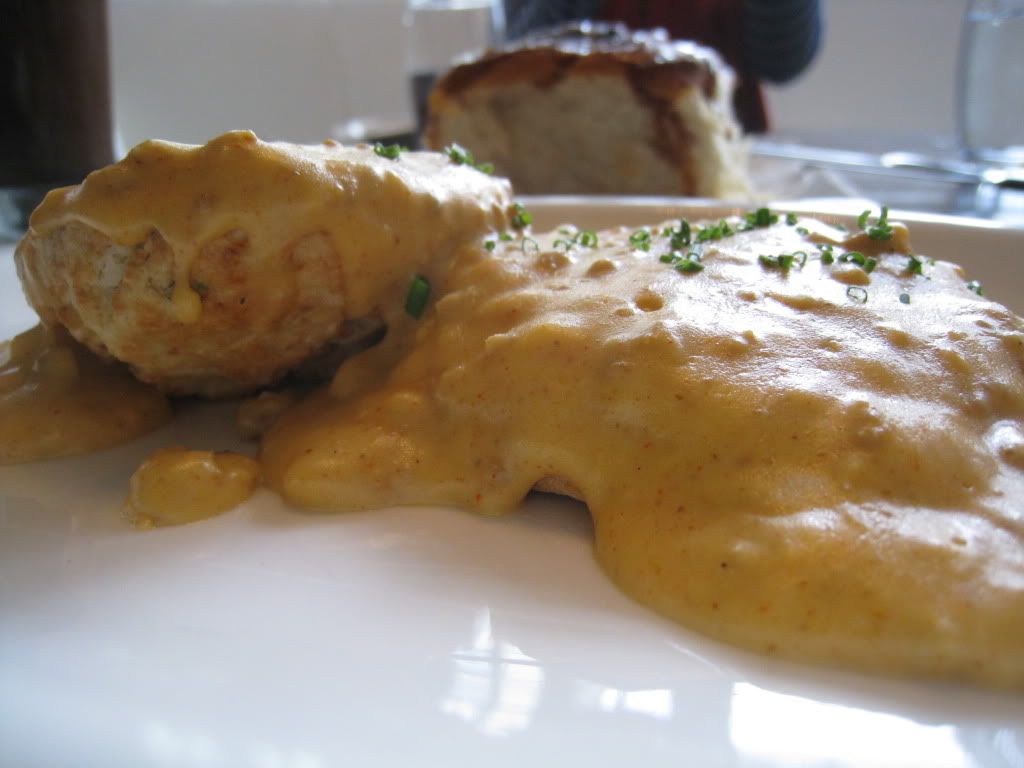
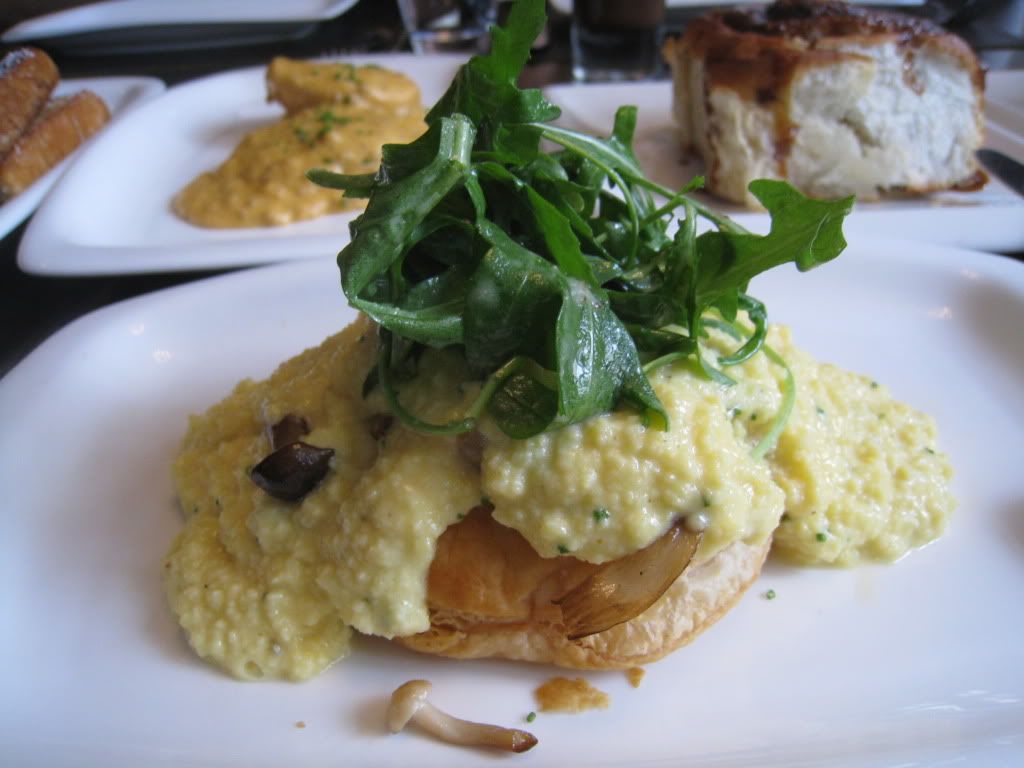 All the egg options had a great twist to them, though we neglected to try the deviled eggs. My indifference to the choice probably came from the fact that I know of university students who have made their own in their dining halls. The scotch eggs were completely devoted to duck. The duck eggs were encased in duck sausage and had a healthy dollop of whole-grain mustard and rocket on top. It was cut into quarters, which made it easy to share. The scrambled eggs were a favorite. The eggs were not dry nor runny with all sorts of mushrooms and served on top of a puff pastry round. Immediately when the server puts the plate down, you need to attack as the pastry would go soft from the wet egg on top. There was also a hint of truffle oil in the scrambled eggs. The eggs Benedict came out with a healthy serving of hollandaise sauce over pig trotters and muffin. The shredded pig trotters were compacted into a flat disk that flaked apart nicely when cutting into the egg and the bread it sat upon. The hollandaise sauce was thick and not too acidic, complimenting the pig trotter.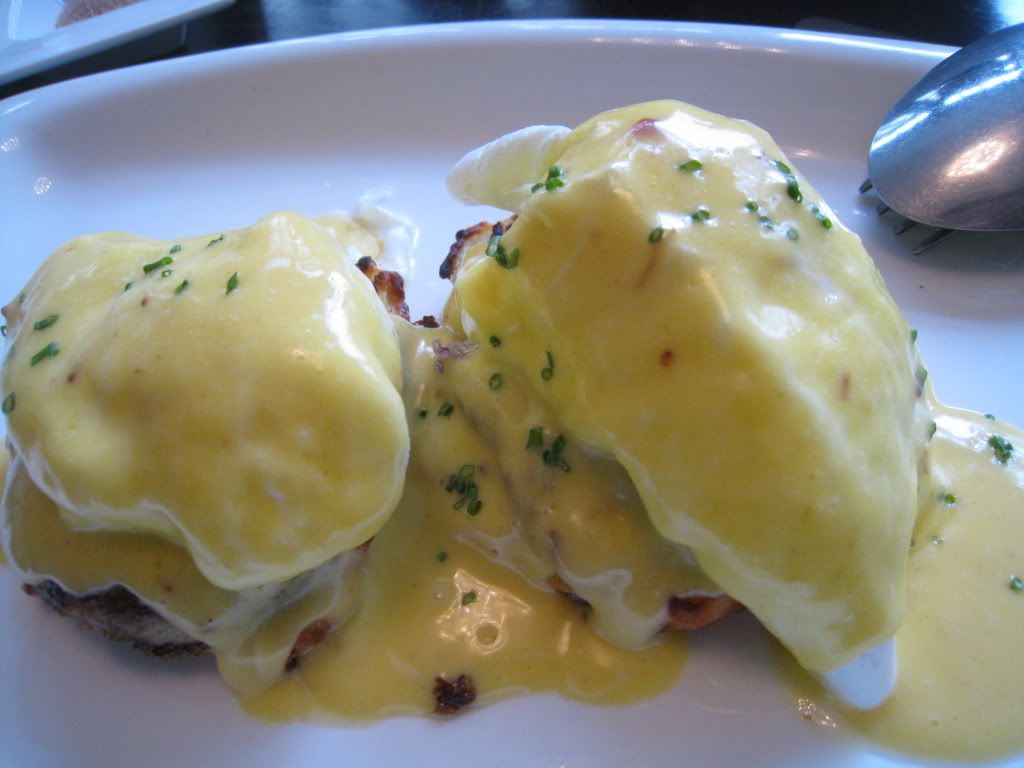


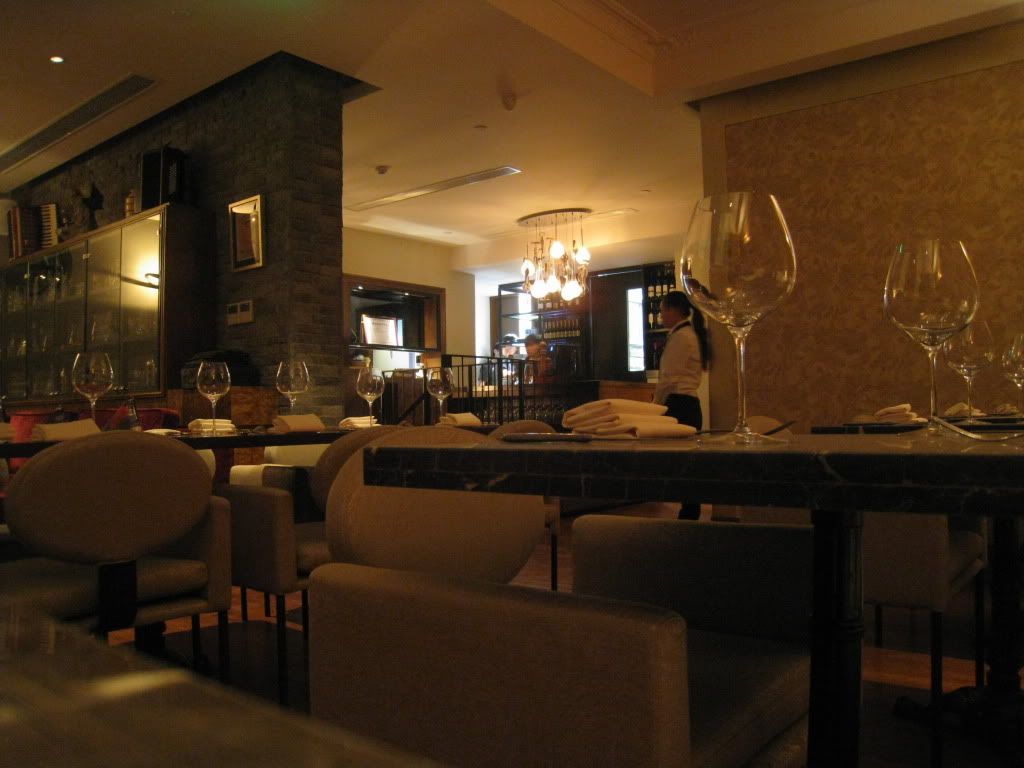 Before its grand opening, I went with a couple of friends to check out Kelley Lee's newest venture, The Alchemist, which is focused on creations exploring the bounds of molecular gastronomy. Outside the kitchen, all the creations are overseen by Ryan Noreiks, from Brisbane, Australia. The atmosphere is swanky, cozy, and not so loud making it ideal for after-work drinks, conversation, or a date. The chandelier created out of spoons is a unique touch and gesture to experimentation.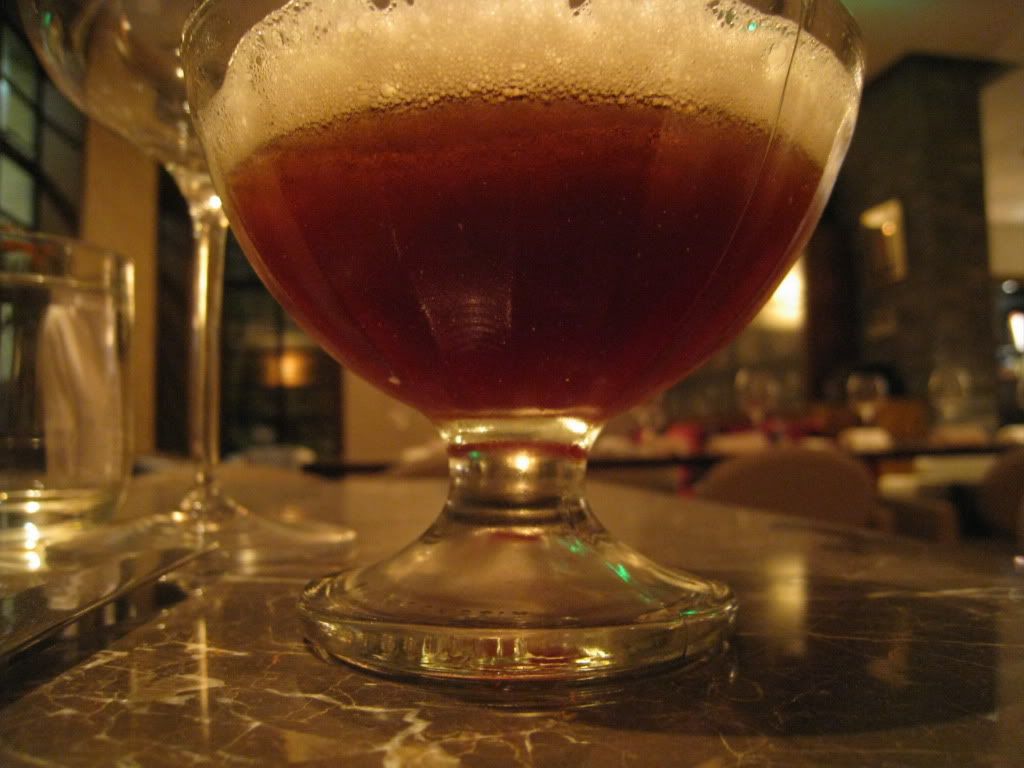
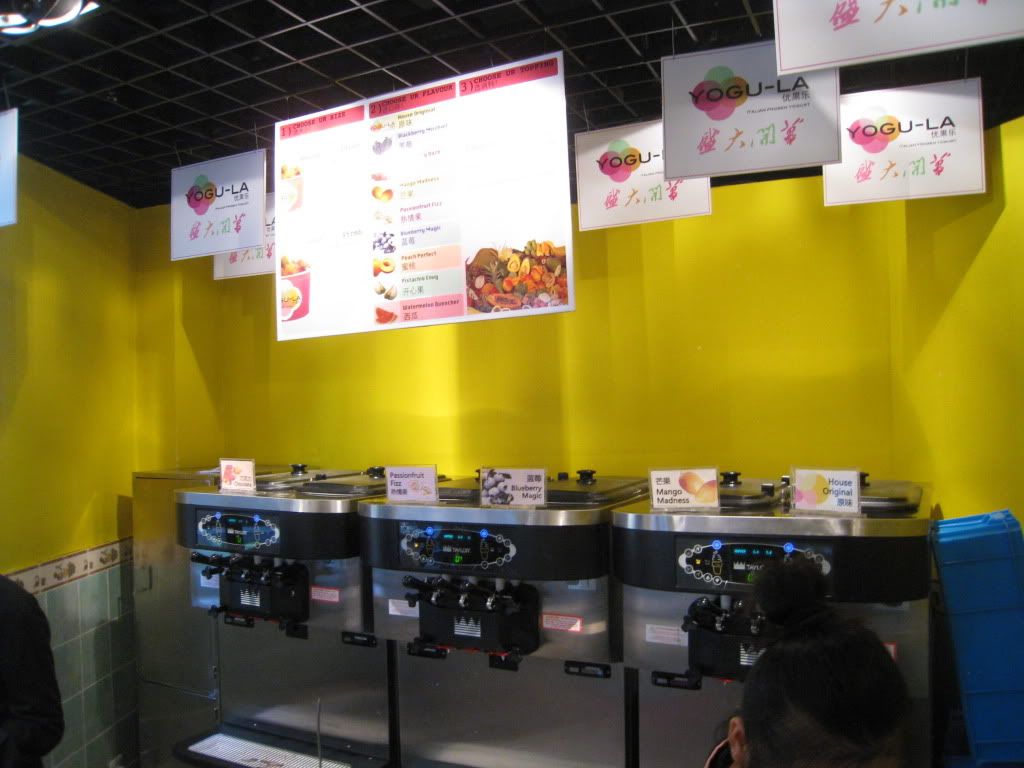
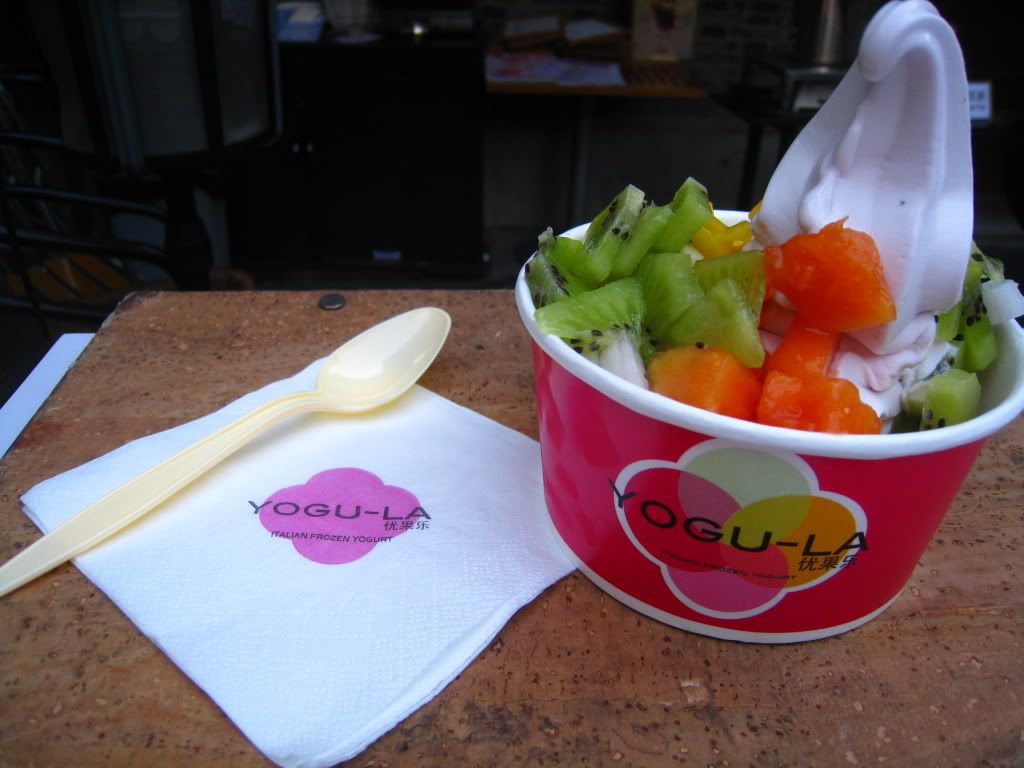 The frozen yogurt phenomena surged from California and hit the shores of Shanghai, receding and leaving a few shops behind. Yogu-la is a new frozen yogurt shop in the affluent Xintiandi boasting Italian roots and fresh fruit toppings reminiscent of those you would find at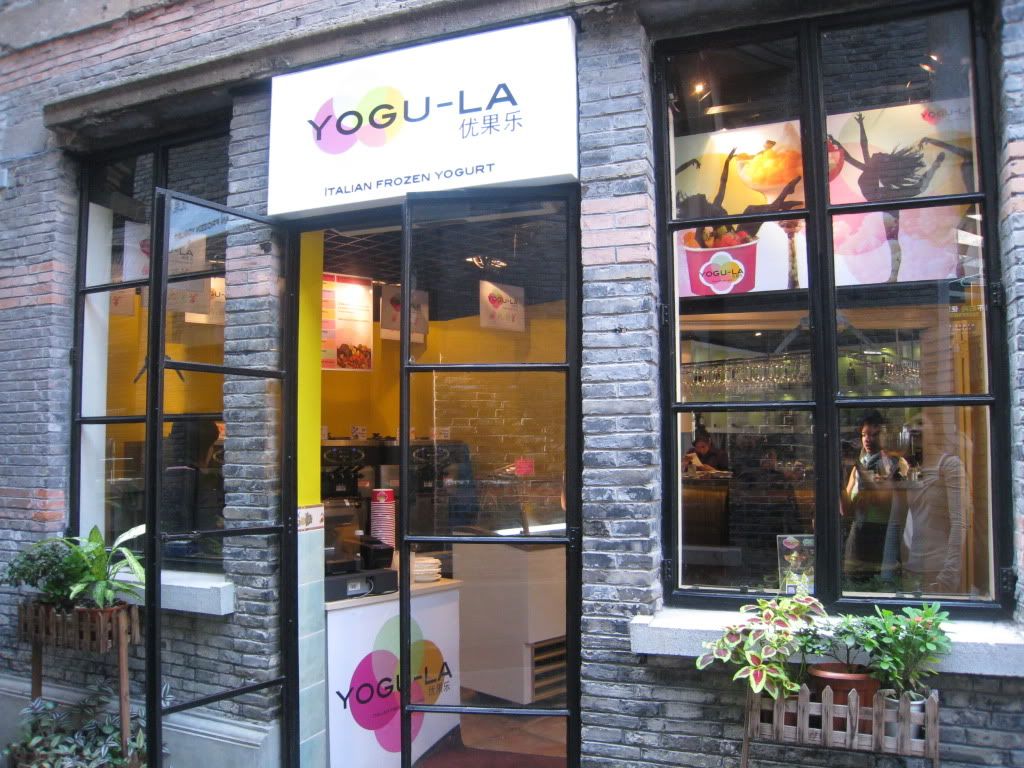
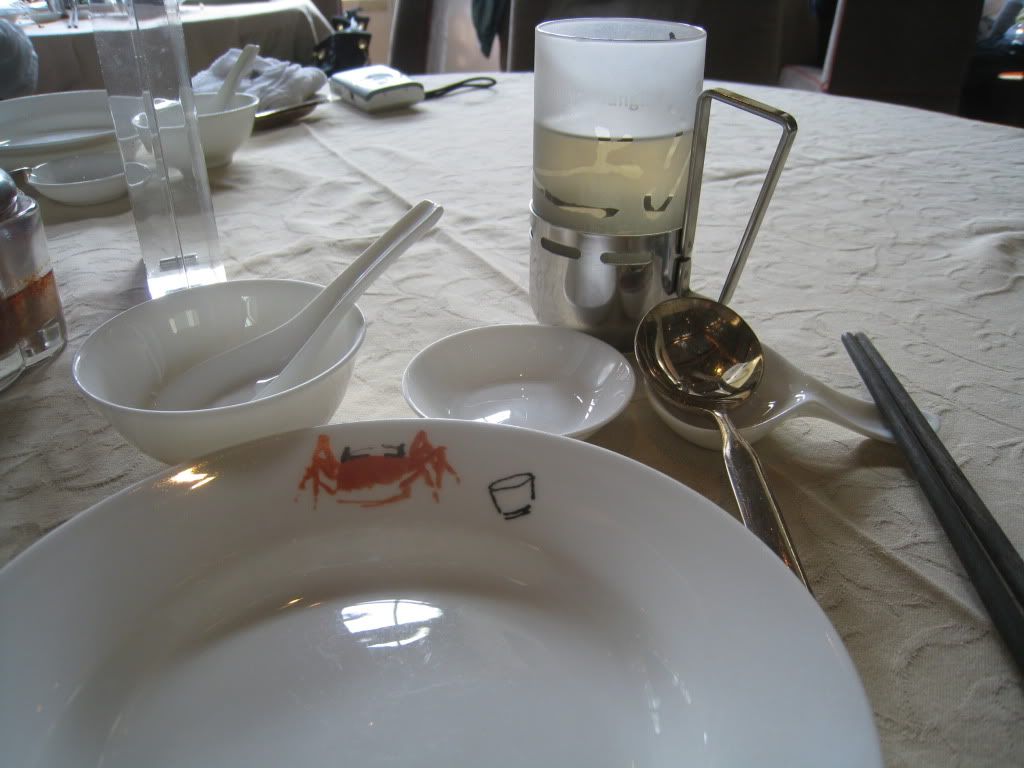
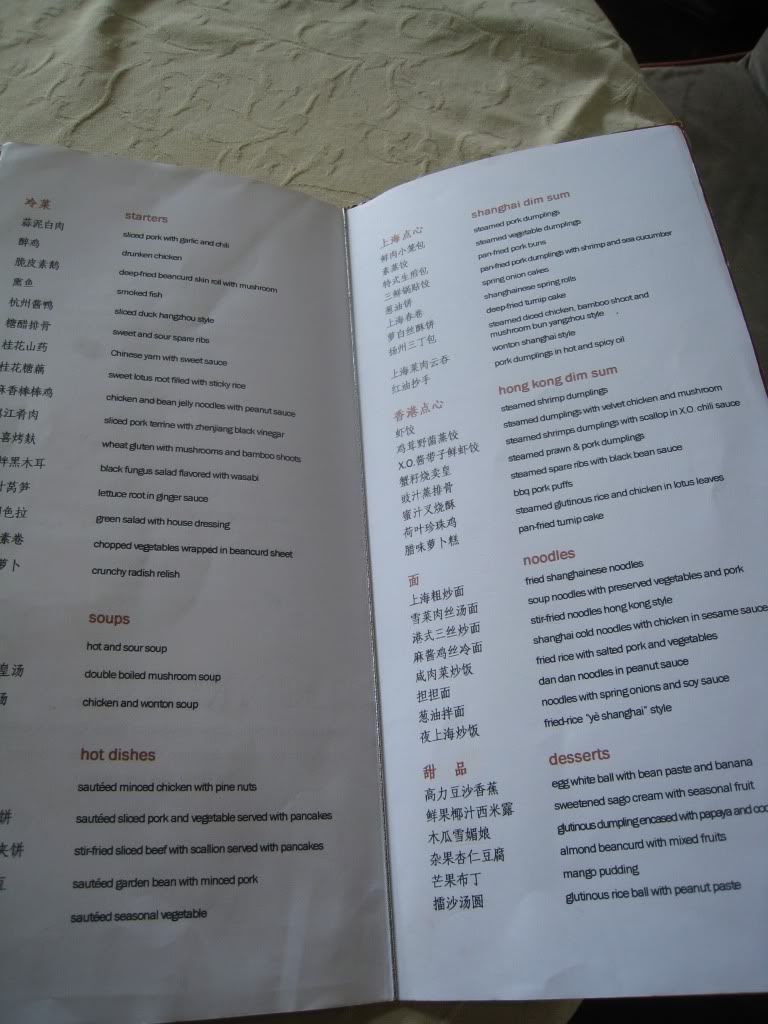
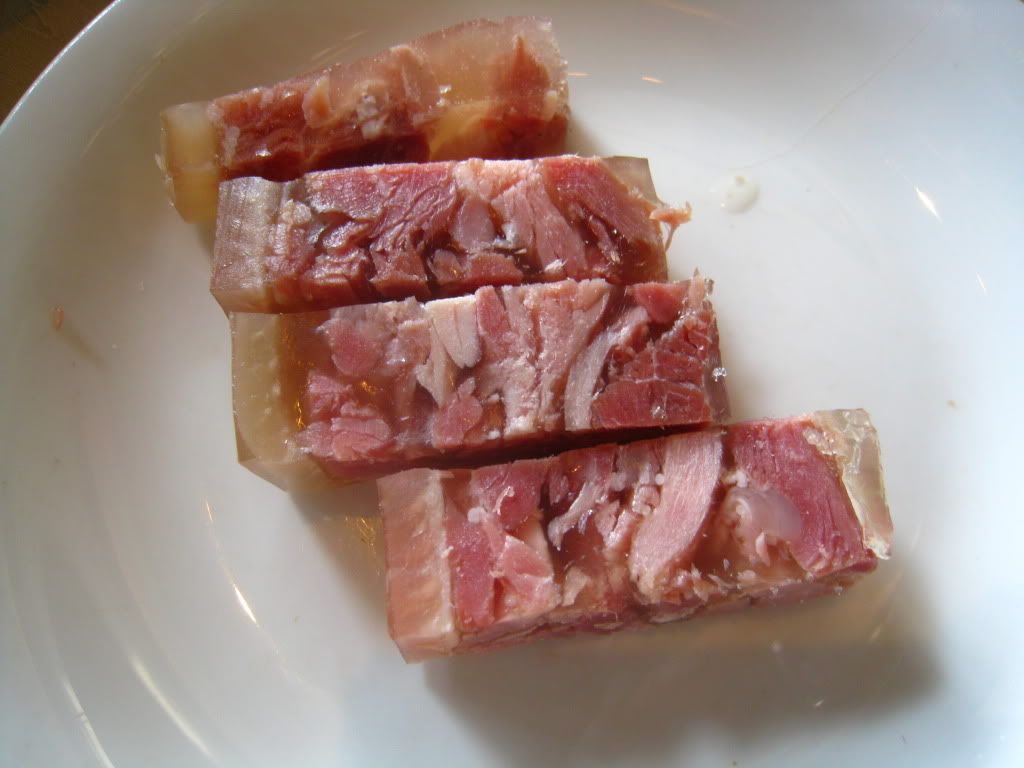
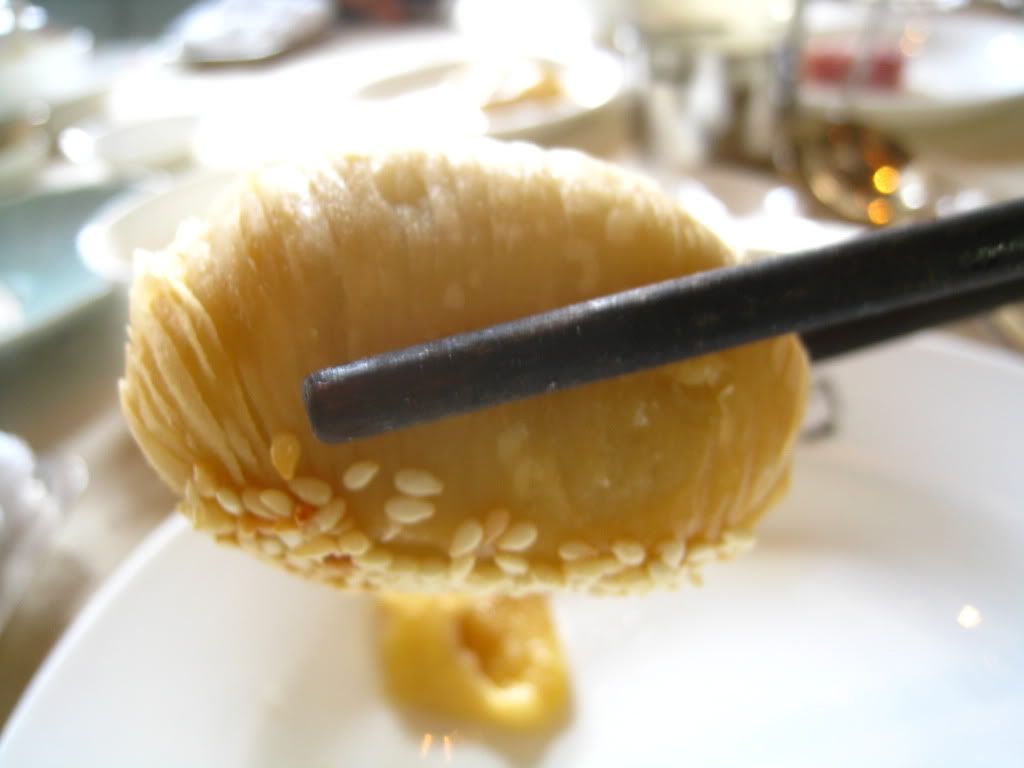
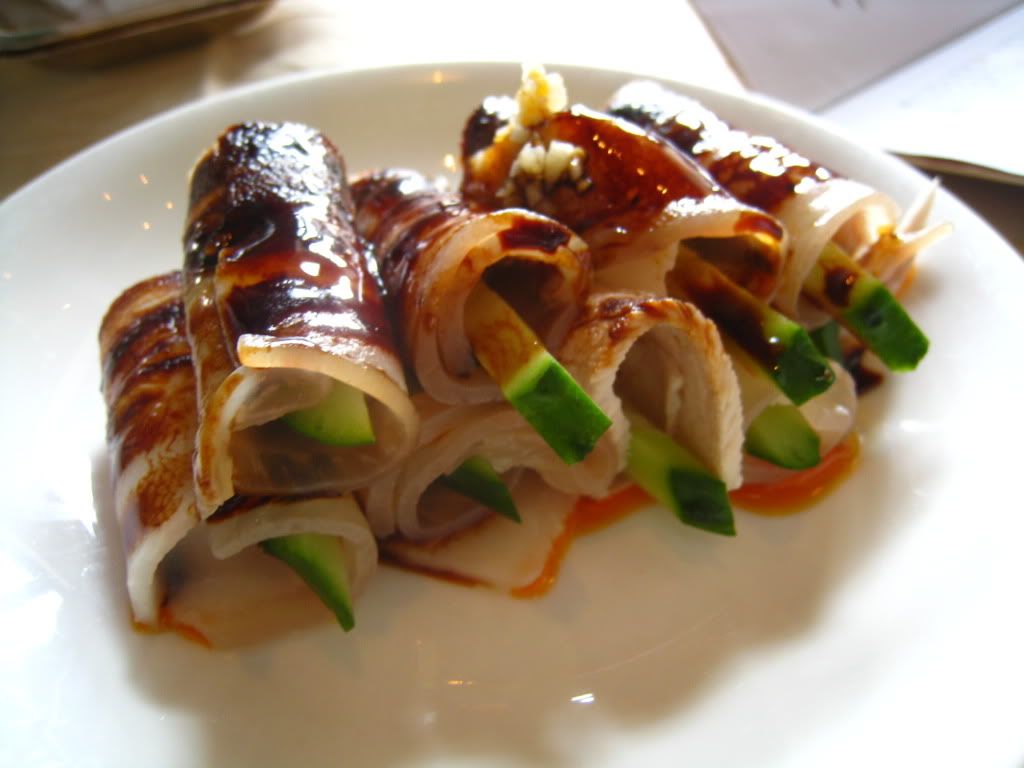
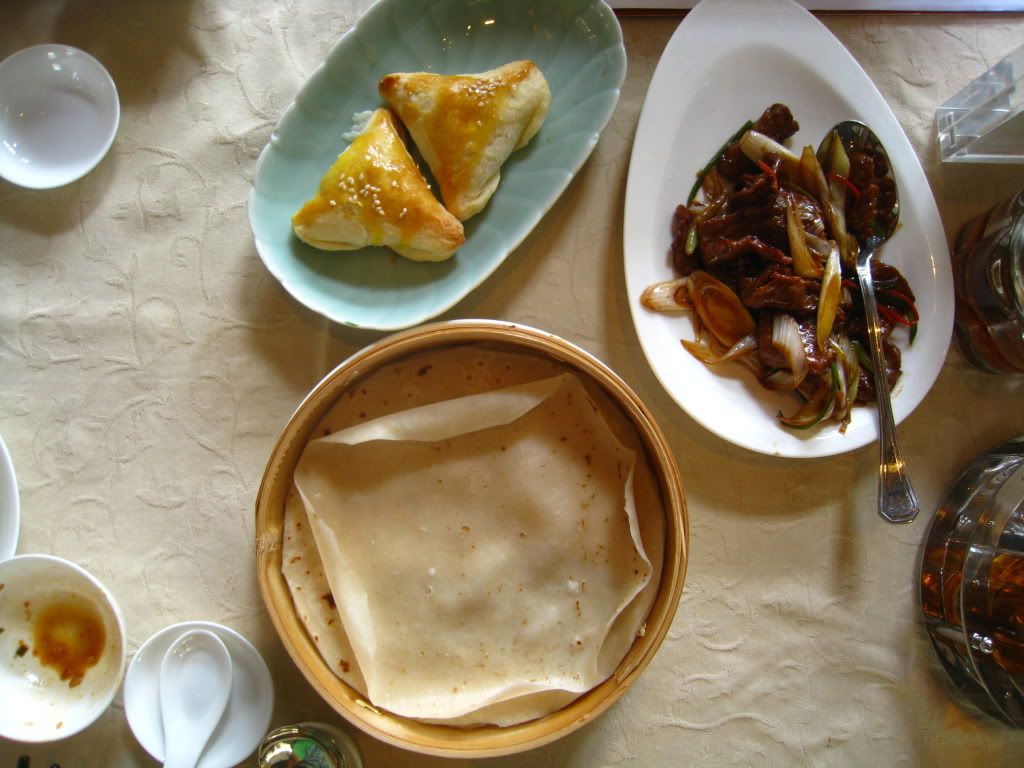
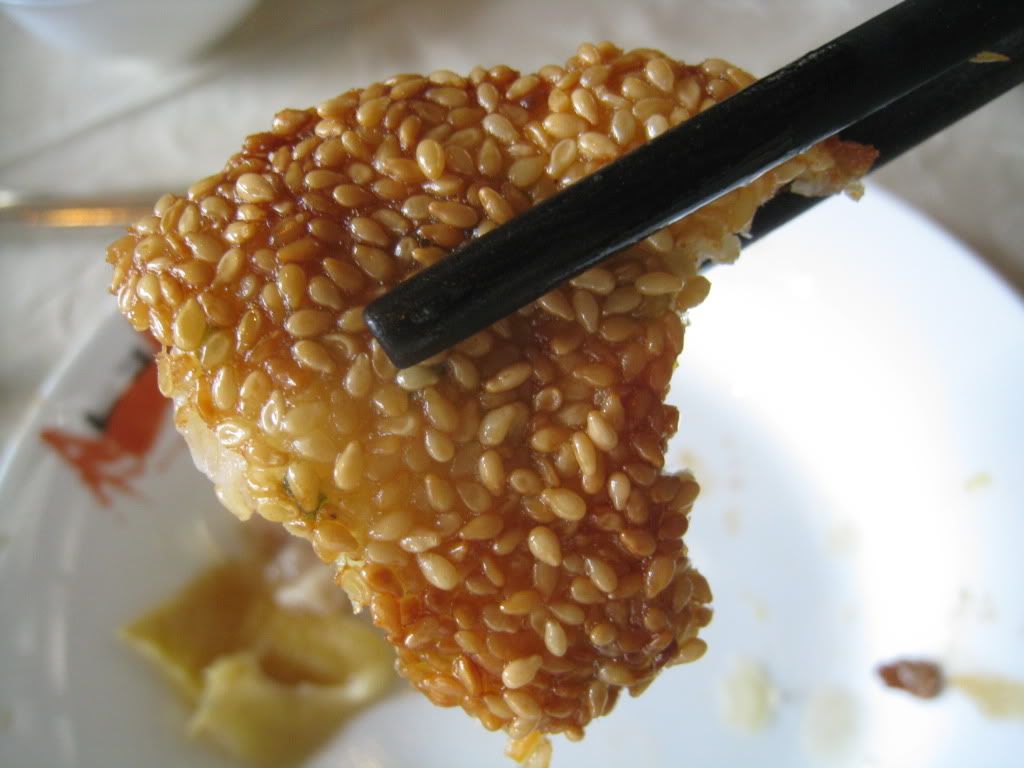
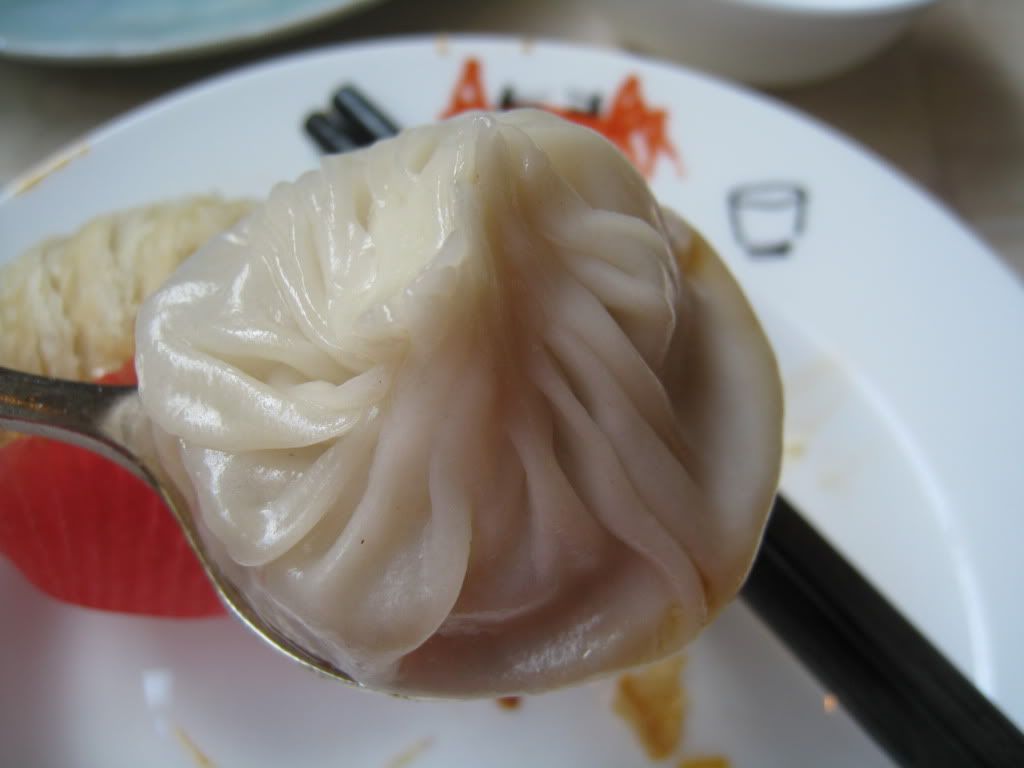
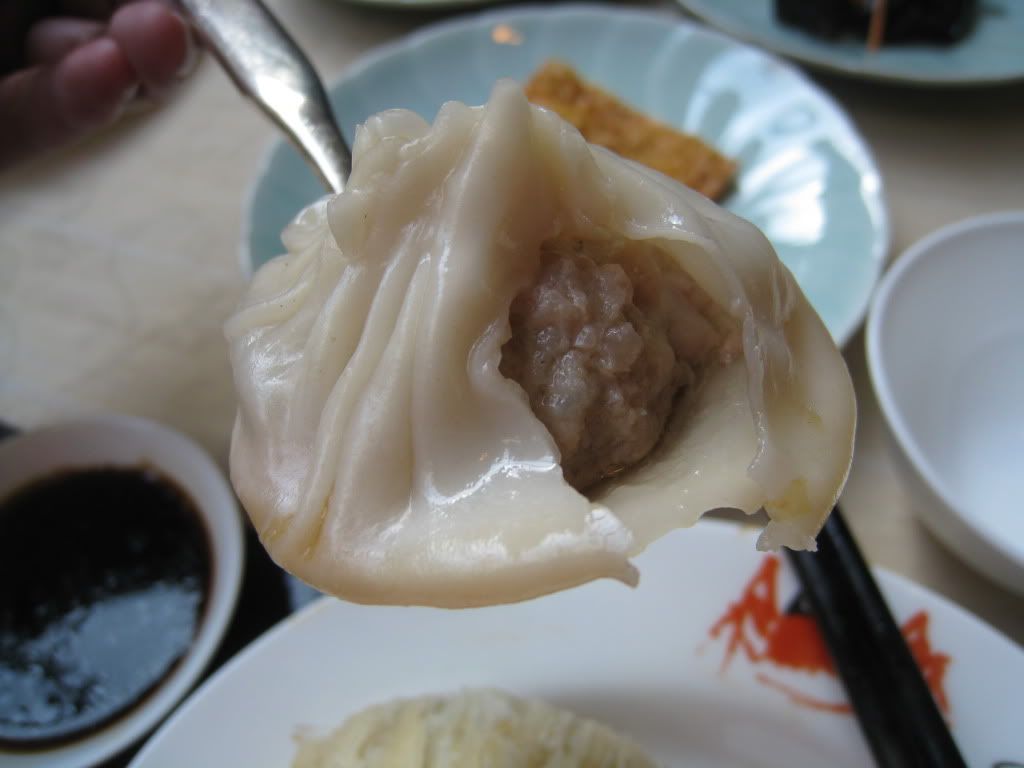
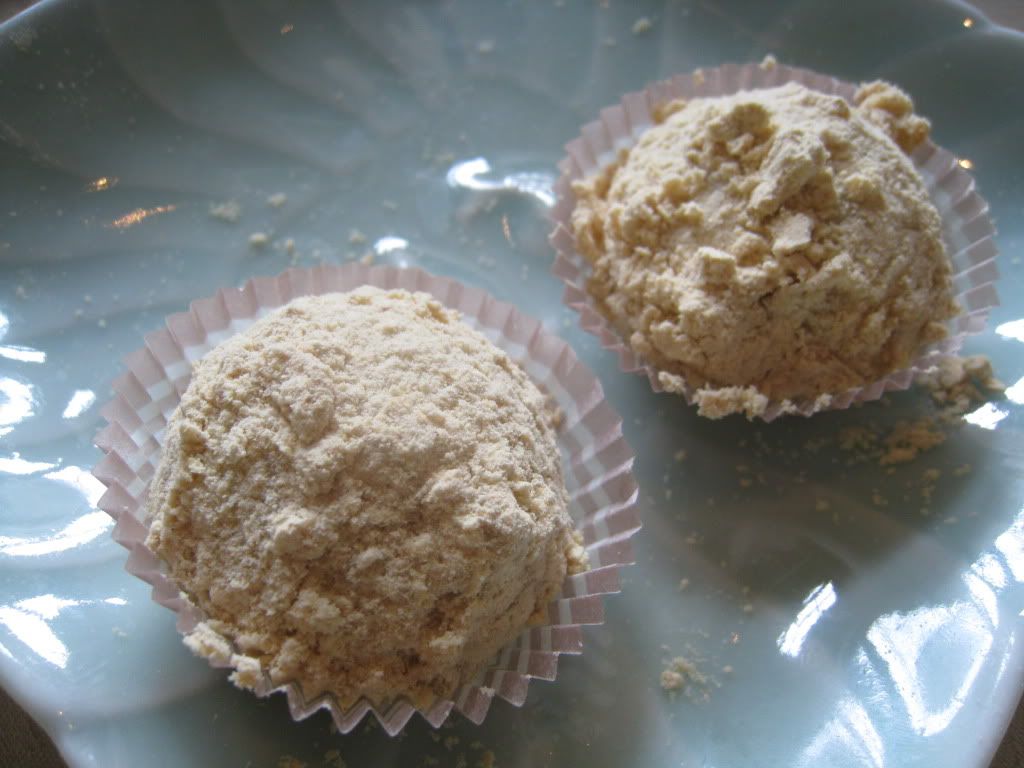
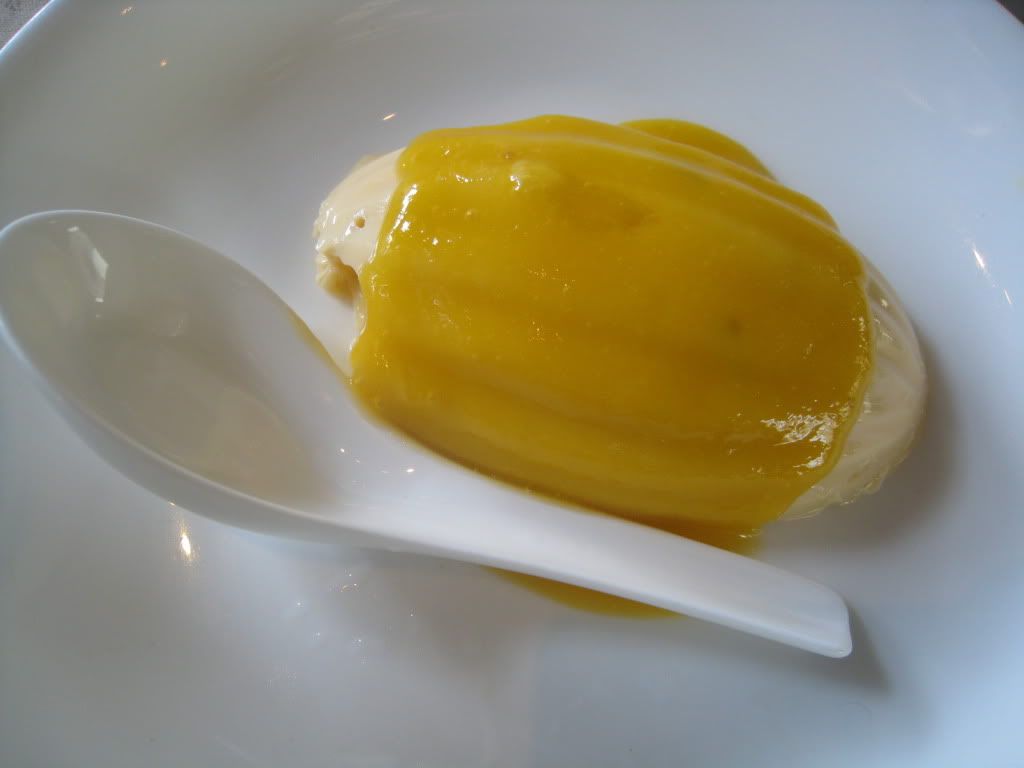
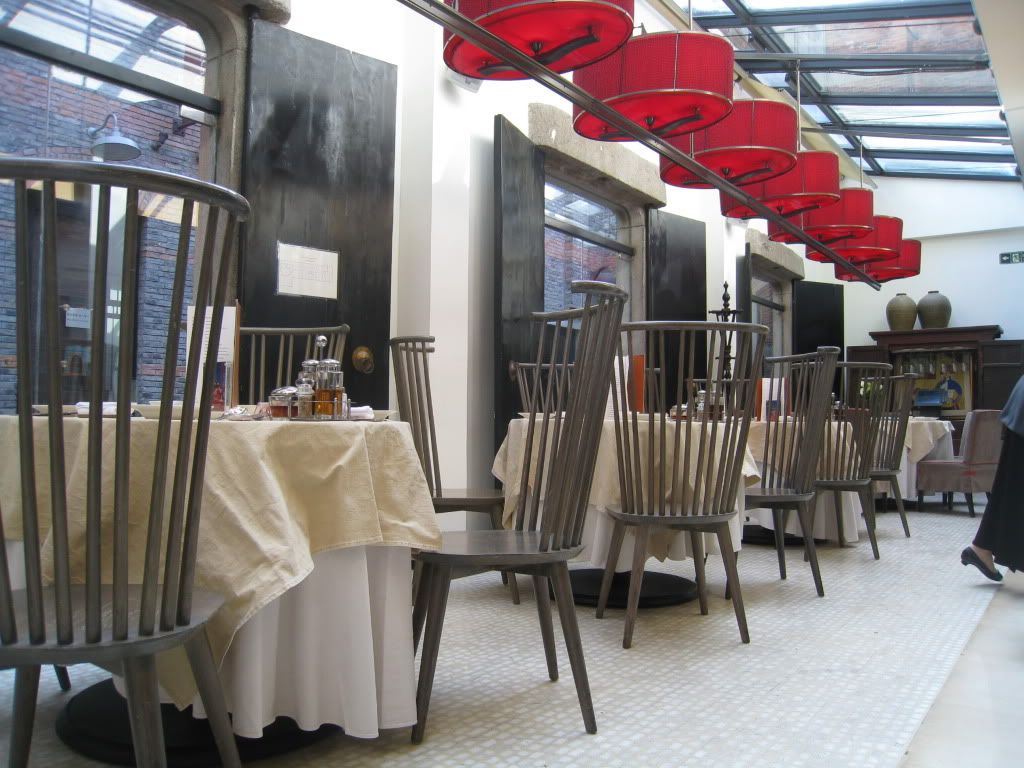 Ye Shanghai has this great weekend brunch deal for 98RMB all-you-can eat inclusive of tea. If you pay a little more, you can get an entree like roast duck. A little more RMB means that you can also get free-flow sparkling wine. That is not bad for a brunch deal, especially considering that the classy restaurant is located in Xintiandi, known for its more up-market establishments. Ye Shanghai takes a modern look at classic dim sum selections from both Shanghainese and Hong Kongese cuisine. The dining room reflects this philosophy and during brunch, it is well-lit and cozy without being so pretentious. Though, it is quite unfortunate to see that the patrons are mostly waiguoren instead of Chinese. That should not be a deterrent, however. The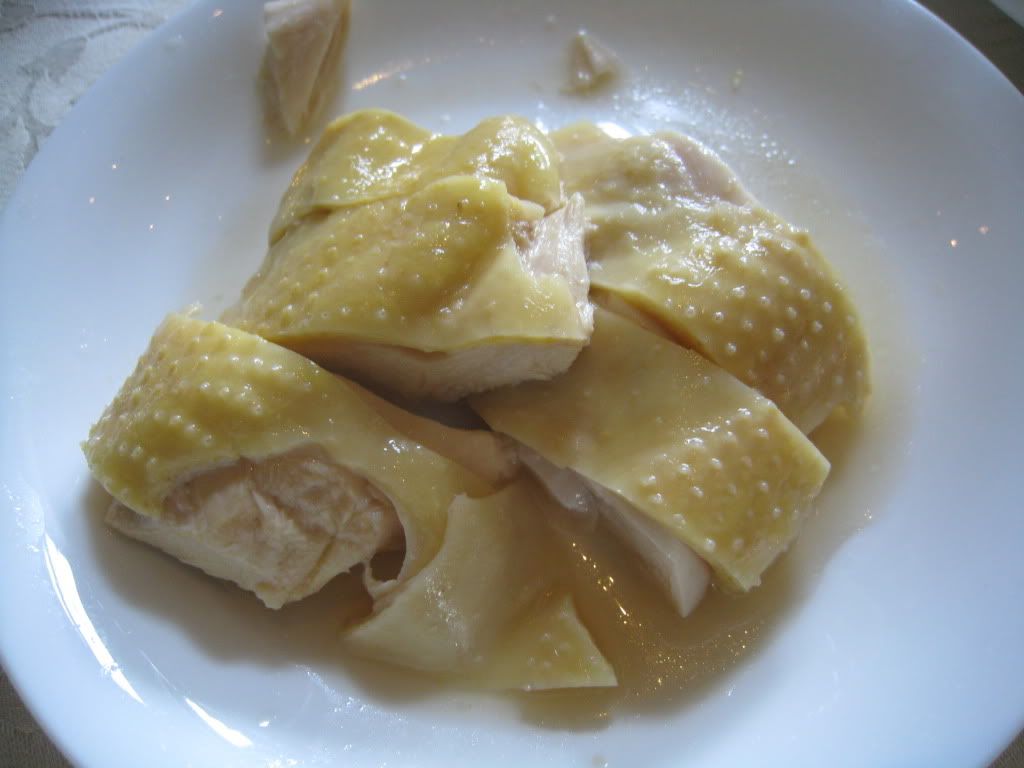
 Merci - when associated with chocolate - is supposed to mean the "finest Assortment of European Chocolates with a brand name that literally means thank you, there is no better way of expressing heartfelt gratitude." Merci is actually a brand of French chocolate manufactured by a German company.
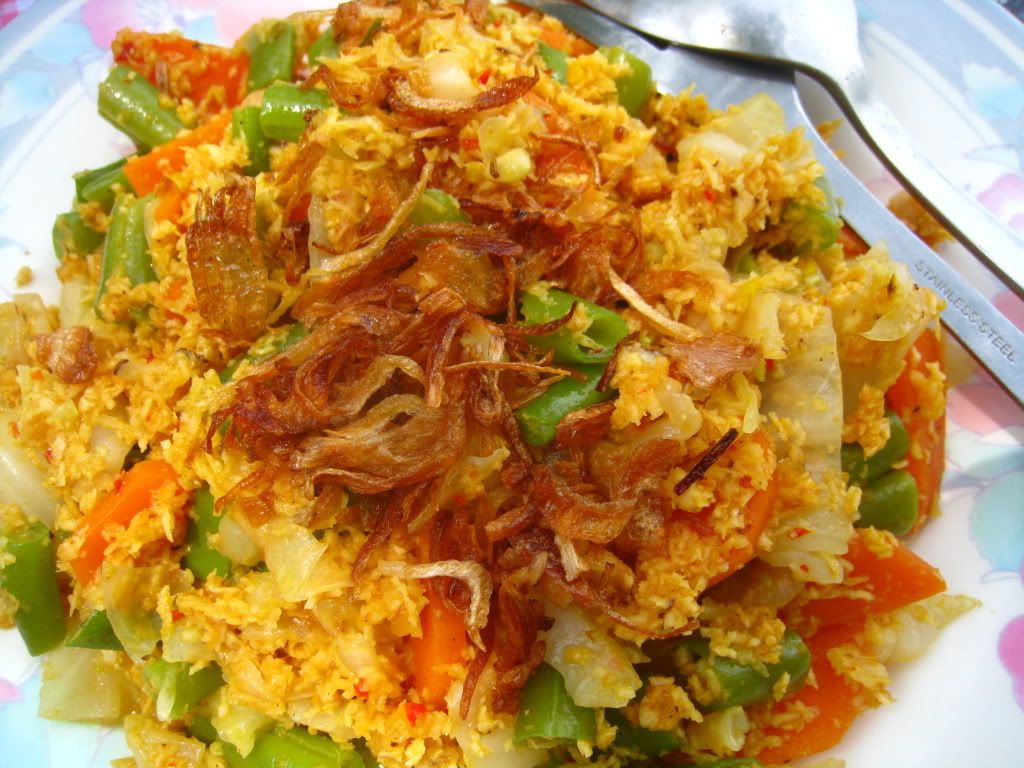 Indonesia is littered with warungs offering a place to eat and displaying the dishes each specializes in with a large sign or by name. Most of them have typical dishes on their menu, each focusing on either rice (nasi) or noodles (mie). Considering that my hosts in Java took me around to try the special dish at whatever given place, I may have missed out on some of these items. Not eating with a host though has given me the opportunity to try the dishes that other travelers I have encountered have come to loathe due to the seeming lack of variety as the menus are consistent throughout. Research and a curious appetite will address these woes!
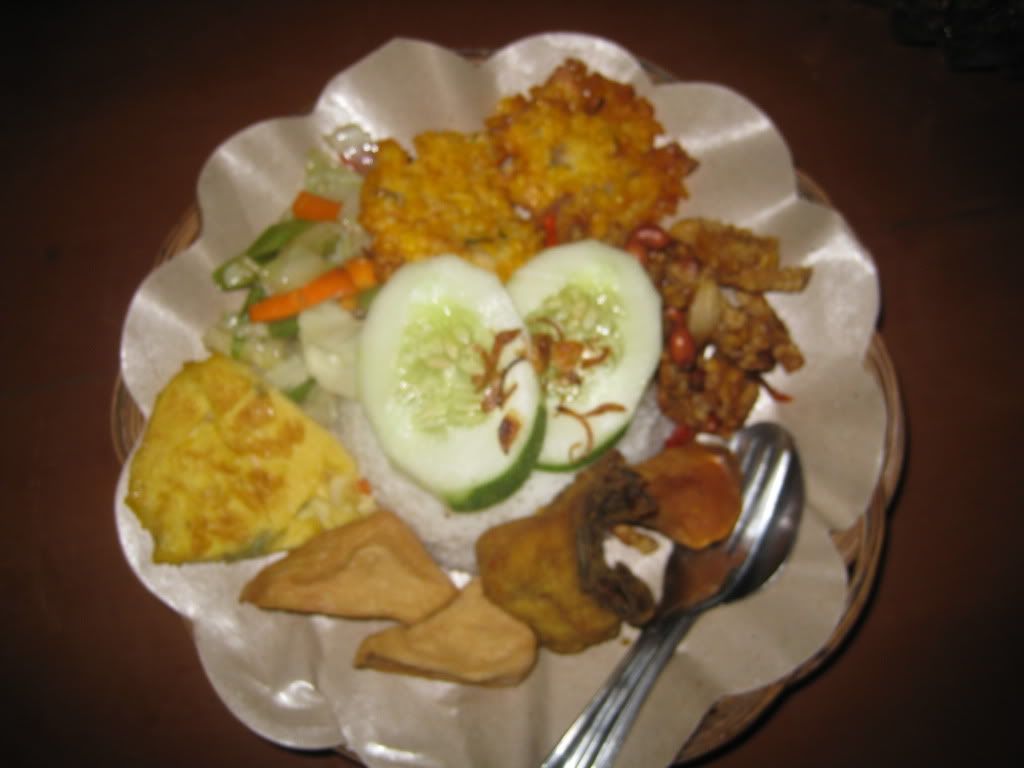 In the village of Gili Trawangan away from the beach side, there was only one small restaurant advertised on the main street for Indonesian food coincidentally called Warung Indonesia. The majority of places along the main drag focused more on the present Western clientele. The only exception was the market area where street carts set up in the evening to cook up local fare at a price substantially cheaper than an iced tea at a restaurant. I recalled a recommendation to order nasi campur, which I opted for. It is a mixed plate of vegetables, meats, and other items surrounding a mound of rice all salty, savory, slightly bitter, slightly sour. You get a little bit of everything, including tempe! Nasi campur is a great choice if you are having trouble deciding exactly what to eat. The combination is satisfying and it tastes delicious as well.
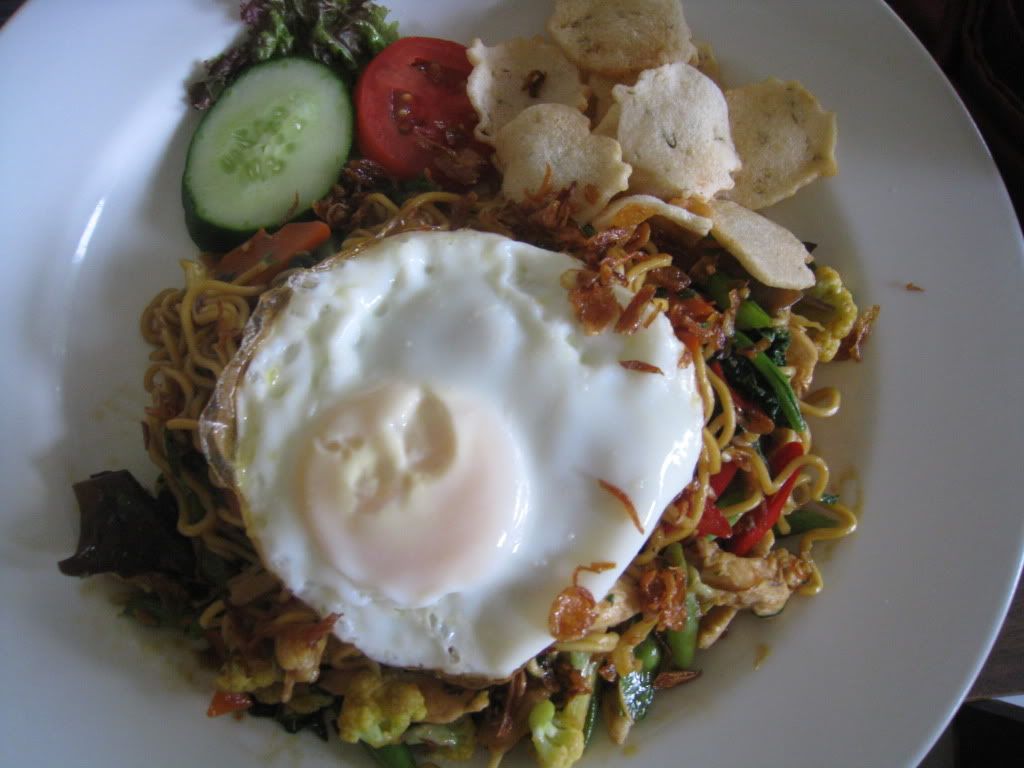 Back in Ubud, after all that rice, it was time to indulge in some noodles. Warung Ijolumut had a more environmental and spiritually-geared environment (and free wifi) compared to other warungs toting local food with flags bearing Chinese characters and bright green walls. This warung costs slightly more than others in the area, but you pay for other amenities that are found at that location. The mie goreng looked like instant ramen noodles tossed with vegetables and served with an egg on top. The noodles were nothing special and tasted like they were pan-fried in soy sauce with a hint of chili. It is your standard fried noodle dish, but is good for sensitive stomachs because it is not spicy, heavy or too oily.
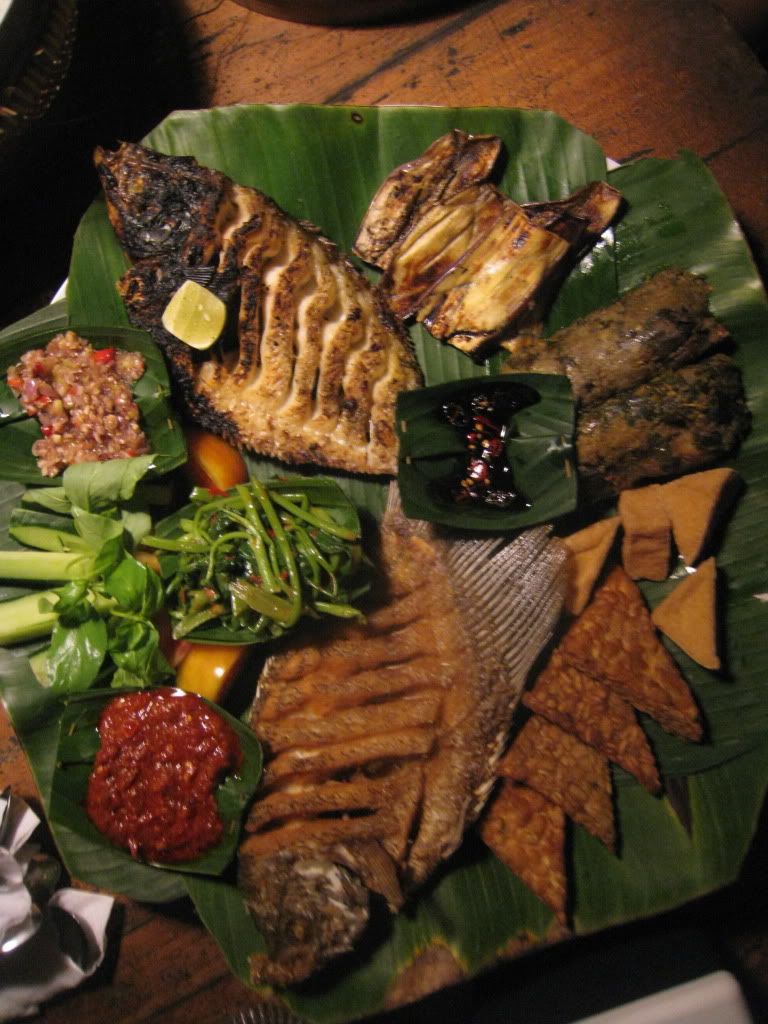 Just off the main road in Ubud is Warung Mina, specializing in seafood dishes. Ubud is at least an hour away from the coast, but no matter. Being a large group sitting crowded in one of the dining huts, we opted for a couple of the specialty fish platters. There was one grilled fish, a fried fish, tempe, raw sambal, sambal, a sort of fish cake, other smaller fish, kang kong greens, and other raw vegetables. The fried fish was cooked in coconut oil while the grilled fish had a lighter taste. Personally, I prefer the grilled fish since the coconut oil does not bode well with me for some reason. With the large platter, each bite can carry a different combination of items such as tempe with grilled fish and the acidic sambal. It gives you the opportunity to test out different combinations of flavors making the consumption of this place a great adventure that rapidly ends as your fellow diners are demolishing the plate at a similar, energetic rate.
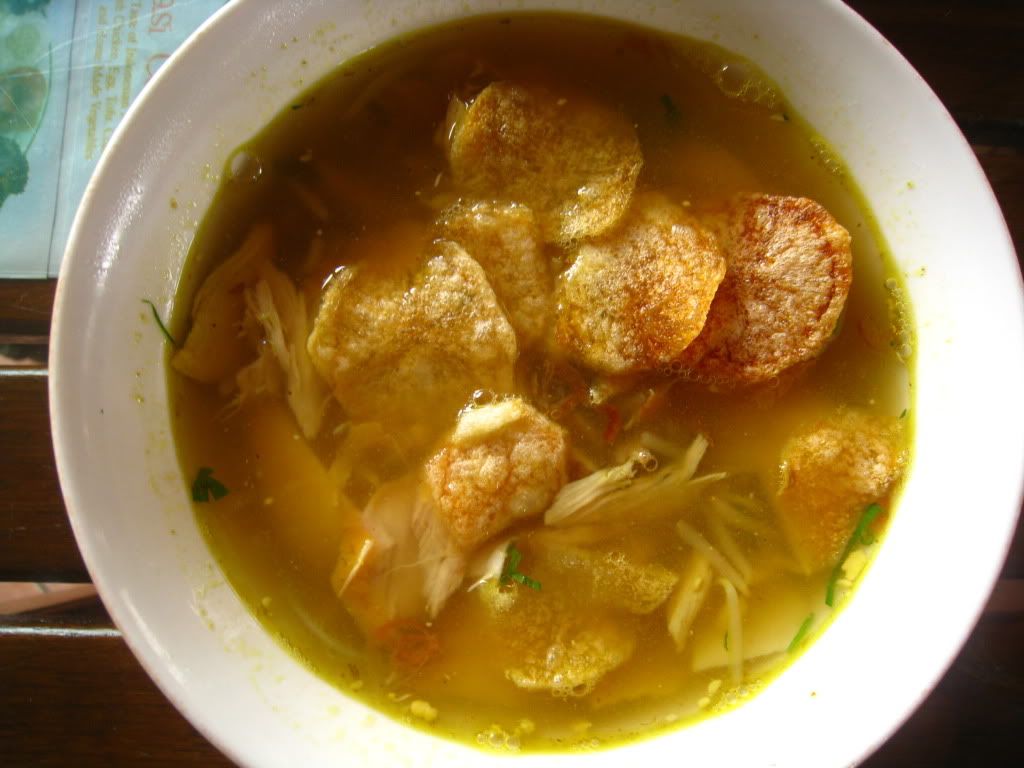 The bule crew in Ubud was raving about the soto ayam at Mangga Madu's. Soto ayam is a soup with chicken and some glass noodles or basically an Indonesian version of chicken noodle soup. It is not intended to be a main course (at least at this establishment) so the portion is small. The soup is not spicy at all, but the server will bring sambal if you so desire. The broth is flavorful and lines your insides with a comforting warmth. The chicken was not anything outstanding though, more serving as a source of protein lending its flavors to the broth. Considering the strong flavors associated with Indonesian cuisine, the soto ayam seemed relatively weak, but is a pleasant break from the traveler's grind.
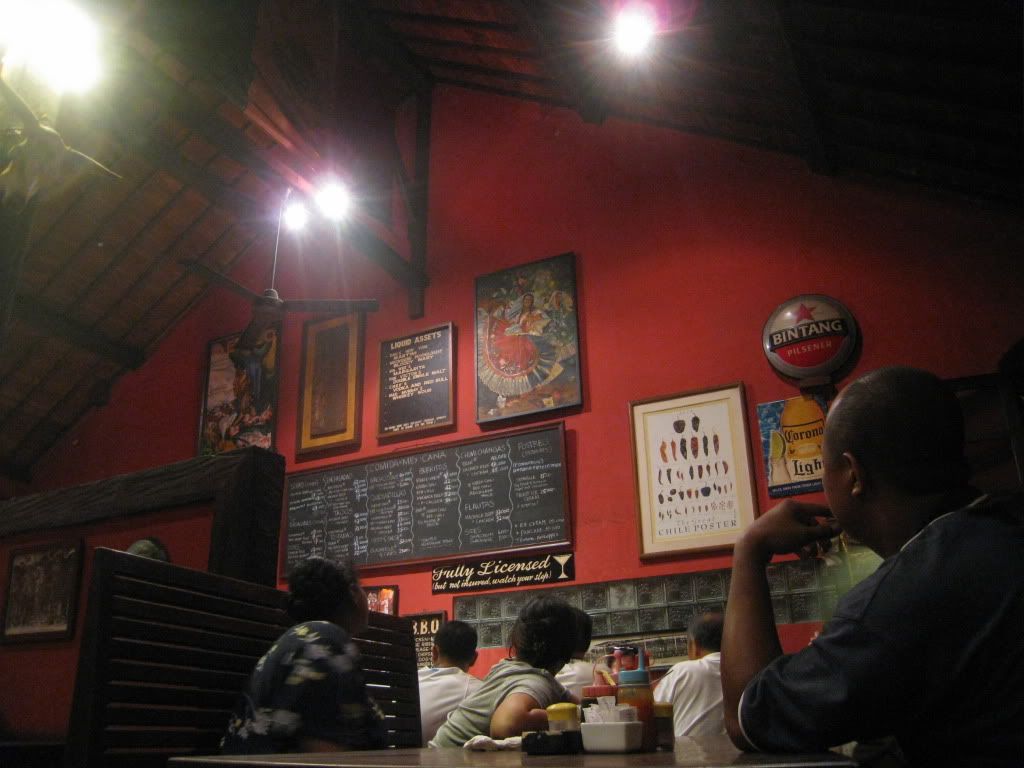
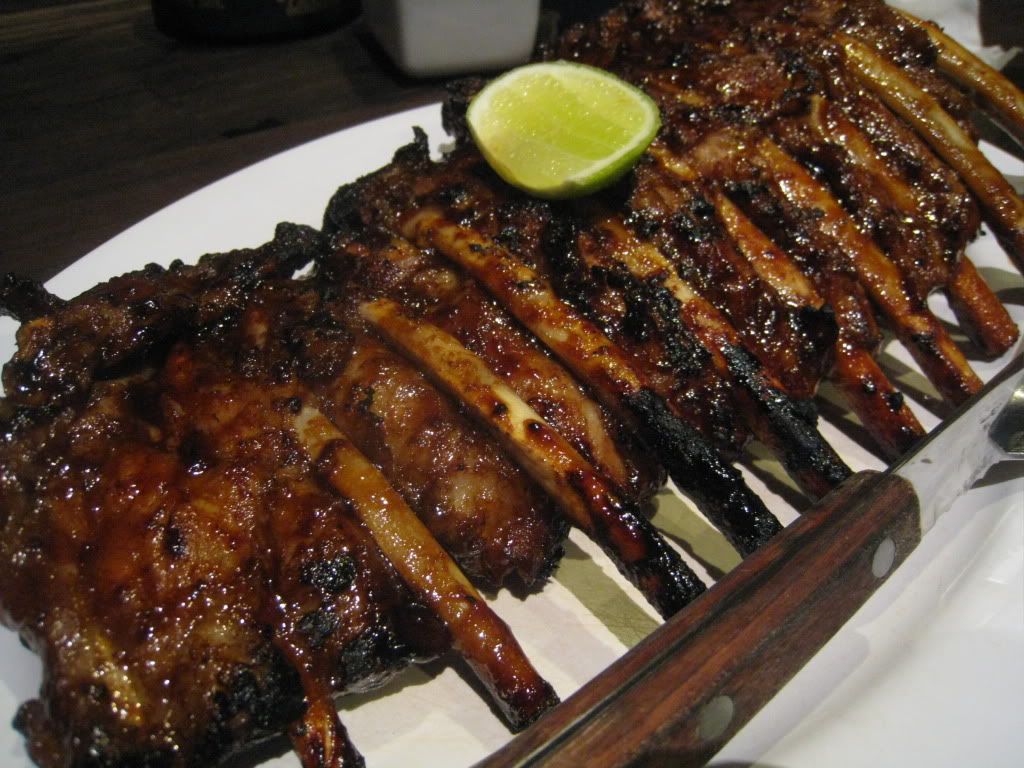
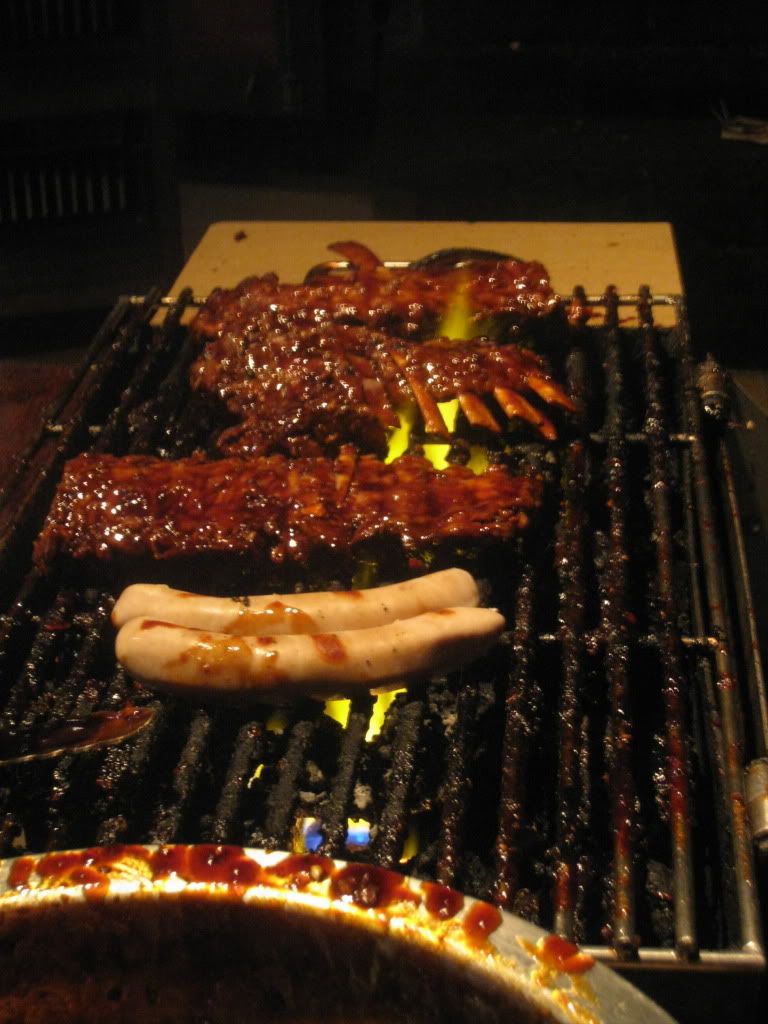 In Jakarta, while my host was making this extensive list of dishes you have to try that are unique to a city in Indonesia, the rave reviews of the spare ribs at Nuri's stood out the most. It could be that the portion was so generous, one person could barely finish the rack. It could also be that the pork is so tender that it slips right off the bone. Or maybe the sweet sauce slathered on the ribs when they are cooking. Maybe the 70,000Rp price tag could be a deterrant for one Indonesian or a gastronomic investment with high returns. Either way, these ribs must have made a strong impression. After reaching Ubud, I had to stay true to my promise that I would visit Nuri's Warung to taste the prized deliciousness of pork flesh. The location of the restaurant is said to be "20 minutes walking from the center," at least according to the guy at the front desk who takes his motobike everywhere, even to go 20 meters around the corner. It did not look so far on the map, but it was a far trek and the journey seemed even longer since it was raining. If that much pork was supposed to be consumed, the least we could do for ourselves is burn a few calories beforehand. At the entrance of the restaurant, there is a vat of pork spare ribs already brined, seasoned, pre-cooked, or whatever has to be done to get the ribs ready for the grill. Once the order is placed, the ribs are placed immediately on the grill and the aroma swirls through the entire open-air restaurant. You can hear a faint sizzle from the sugars in the sauce caramelizing on your ribs. The ribs are served alone with no frills except for a wedge of lemon. If you want any sides, that will be added to your tab. My host was right. The spare ribs were tender, juicy, falling off the bone, and had a slight caramelization from the grill. Yum. The plate looked huge, but I managed to polish it off easily sparing no shred of meat. It was well worth the splurge if you are on a budget. Happy and full, the walk back in the pouring rain reminds you just how much that trek outside of the center of Ubud was worth it for those ribs.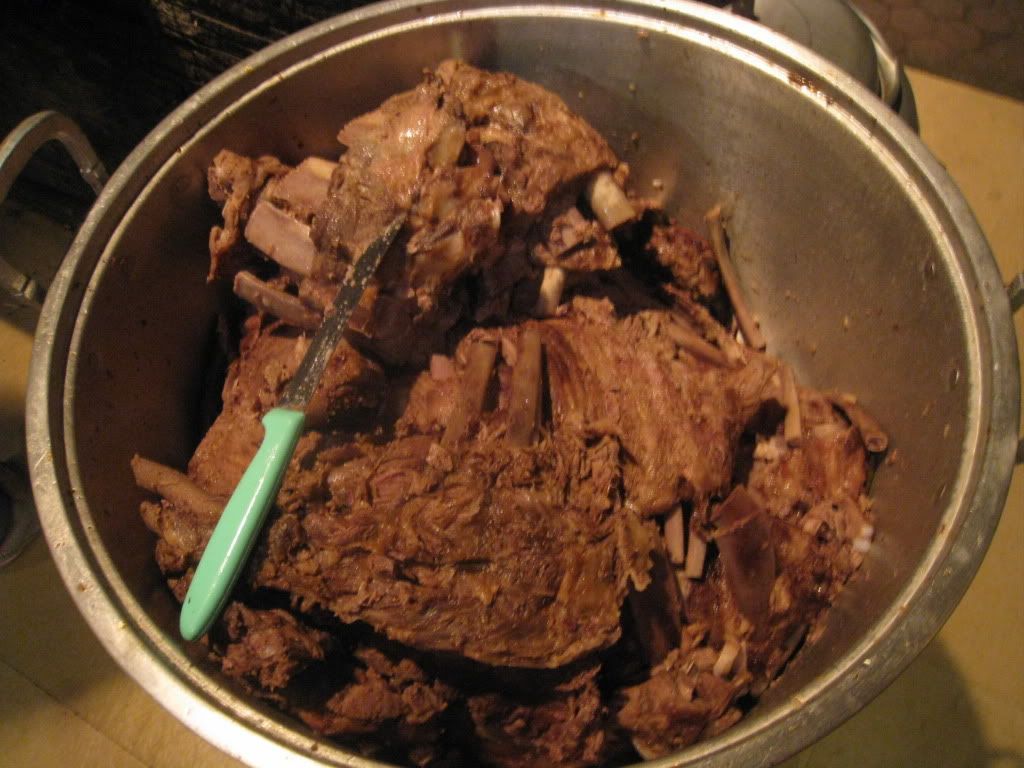
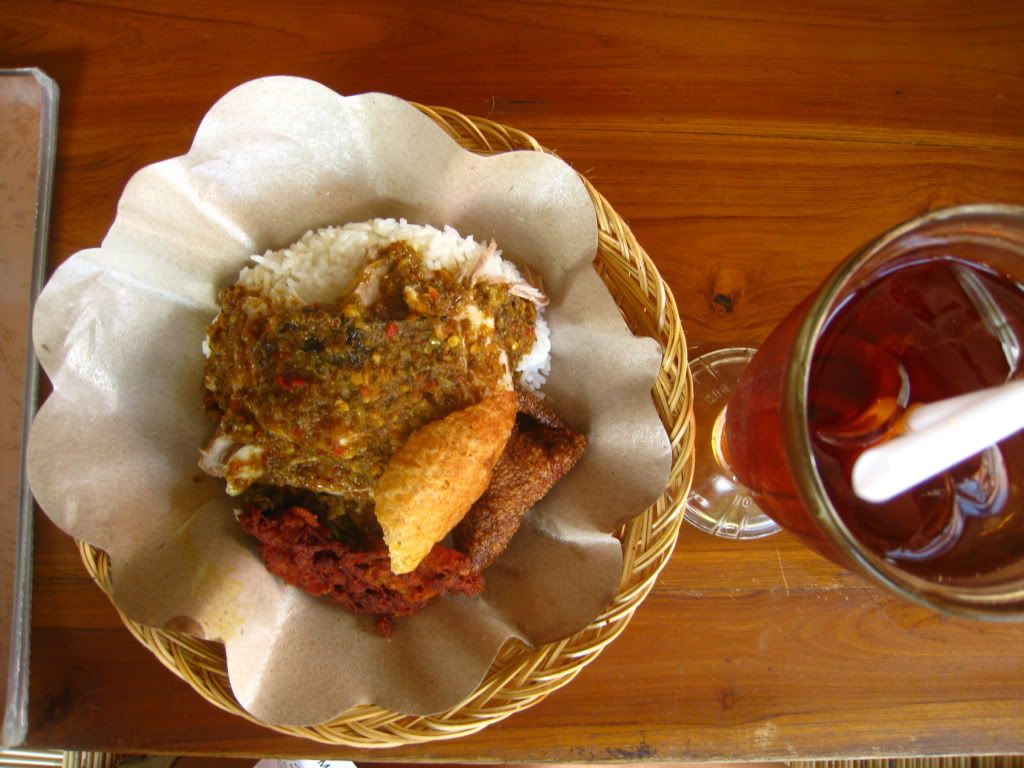 Java chooses beef, but in Bali, pork reigns. Babi guling or suckling pig is the ultimate Balinese dish that made Warung Ibu Oka Babi Guling famous, now a site of foodie pilgrimage in Ubud (at least the Chowhounders or other tourists claim so and the push from Anthony Bourdain does not hurt either). The slow-cook spit-roasting process results in tender meat and crispy skin. This quest for babi guling was another solo mission backed by determination to taste luscious pork.
 I sat down at a table with two other small parties finishing their meals. I opted for the Babi Guling Special plate at 30,000Rp and an iced tea with no sugar. The menu centers around all that can be created from the roasted pig, particularly the skins and meat. There was another set plate at 50,000Rp that came with soup and the babi guling came out on a heaping portion on a plate separate from the rice, but it looked too filling. The Babi Guling Special was served in one plate. The base is rice, fried pork skin, roasted pork skin, pork meat, a sort of chunky, spiced vegetable sauce or marinade on top of the meat, and a special salad with a sour and bitter hint. Basically, the plate had the best of everything that comes from the roasted suckling pork. For every bite, I tried to create the "perfect" bite by adding a little bit of each thing on the plate to my spoon. The pork was very tender and savory. The pork skins were also extremely crispy and carried a nice flavor from the roasting. The special salad that came with the dish balanced out the flavors and the iced tea finished each bite nicely.